
Our blog
Founder to Freedom Weekly
Skip the business guru noise. Every week, we deliver battle-tested insights on building valuable companies, founder interviews you can actually learn from, and exit strategies that work in real life.
Finance
Cloud Based Accounting Software: A Guide for Growth Companies
A practical guide to choosing cloud based accounting software by revenue stage, with real pricing, a migration playbook, and diligence advice.

Finance
Unit Economics: The Complete Guide for Growing Companies
A founder's guide to unit economics: the formulas, benchmarks, and cash-flow connections a CFO actually uses to decide when to scale or pause spending.

Finance
Financial Ratios: The Founder's Guide to What They Actually Mean
A practical guide to financial ratios for growth-stage founders: formulas, good ranges by stage and capital structure, and what to do when a ratio moves against you.

Finance
C-Suite Explained: Roles, Salaries, and When to Hire
A practical guide to the C-suite: roles, hierarchy, pay, and when a $2M-$50M company needs full-time versus fractional leadership.

Finance
Free Finance Calculators and Tools for Founders
Free calculators for burn rate, runway, cash flow, margins, unit economics, dilution and valuation, grouped so founders can find the right tool fast.

Finance
Risk Management in FP&A: Guide
Turn FP&A risk into measurable triggers—driver-based forecasts, 13-week cash views, hiring gates, reserves, and named owners to act before cash runs out.
Finance
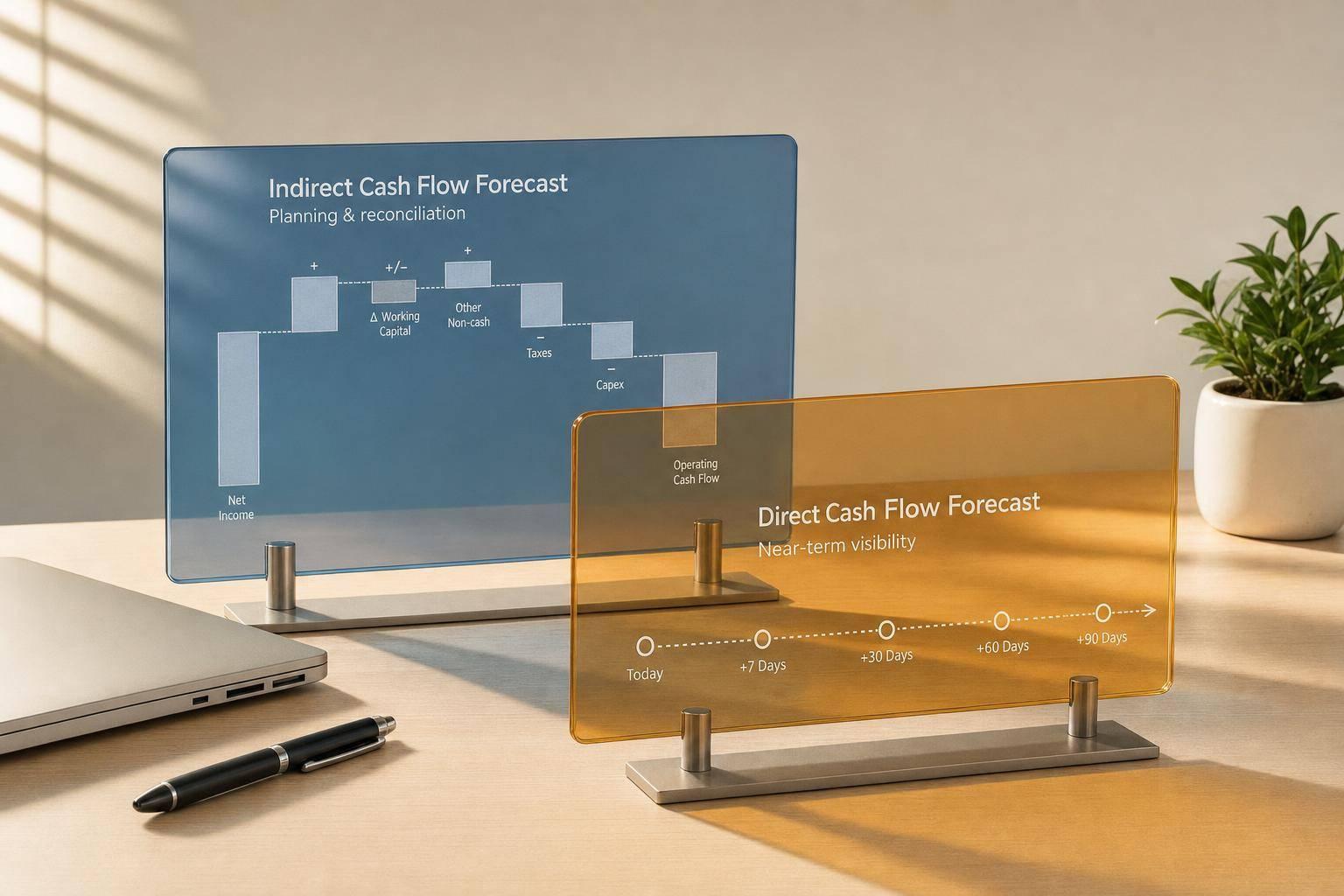
Direct vs Indirect Cash Flow Forecasting
Use direct forecasts to manage near-term cash and indirect forecasts to explain profit-to-cash gaps for planning.

Finance
Top Funnel Stage Metrics for Revenue Forecasting
Track five stage-level metrics—entry, exit, drop-off, stage velocity, and source conversion—to reveal forecast risk and time revenue accurately.
Finance
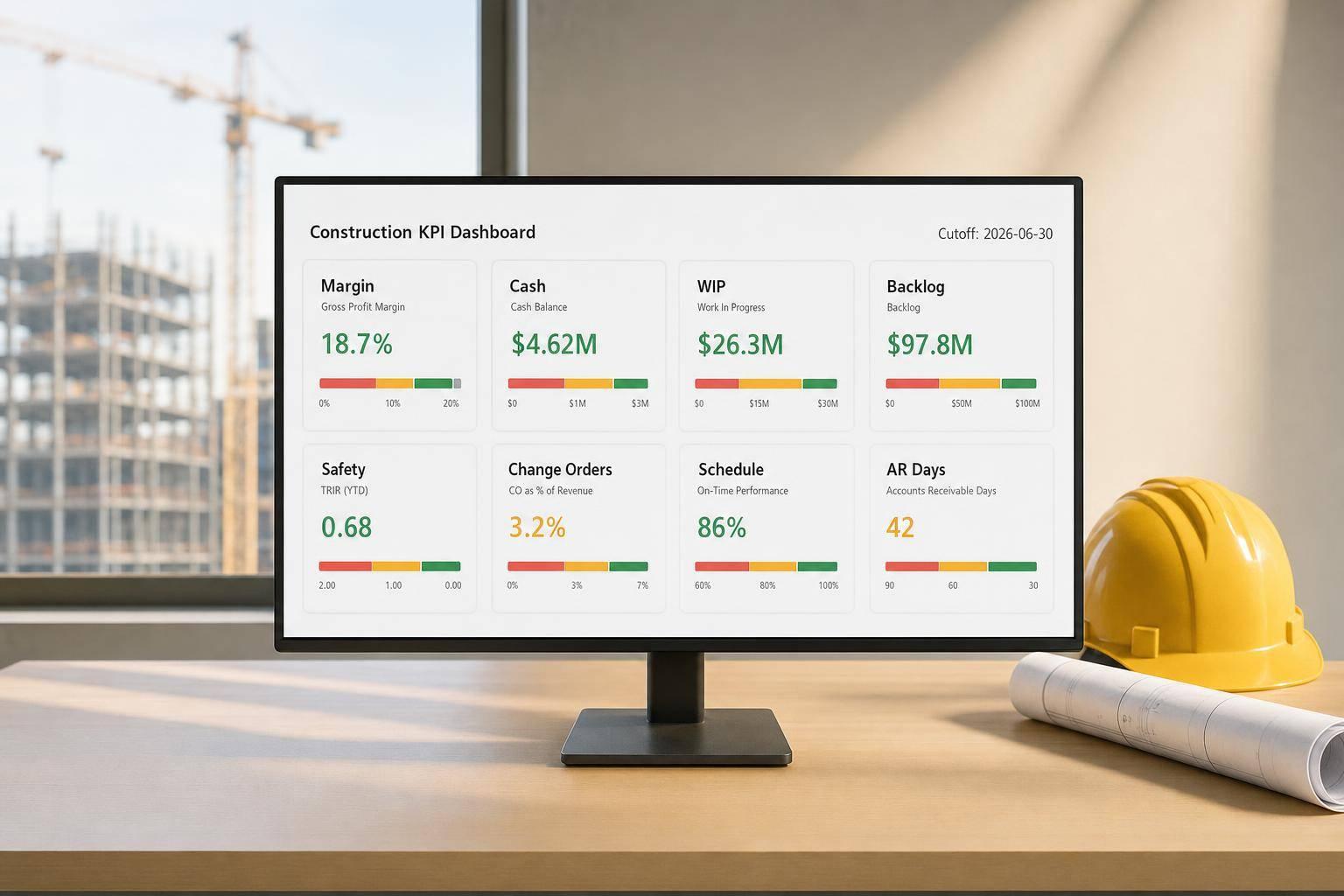
Construction KPI Dashboard Guide 2026
Keep dashboards tight: 6–8 owned KPIs, one cutoff date, and clear thresholds to catch margin fade, cash pressure, WIP, and backlog risk.

Finance
Cash Reserve Models: 5 Ways to Allocate Surplus
Hold 3–6 months of core costs, then use percentage, runway, threshold, seasonal or covenant models to allocate surplus.

Finance
Incremental CAC vs Blended CAC: Key Differences
Blended CAC shows company-wide acquisition cost; incremental CAC reveals the true cost of the next customer and guides budget.

Finance
What Drives Synergy Premiums in M&A Deals?
Paying a synergy premium only makes sense when savings are concrete, time-bound, and net of integration costs.

Finance
DAF vs CRT for Tax-Smart Diversification
Compare DAFs and CRTs for diversifying low-basis stock: DAFs offer simple tax-free giving; CRTs provide income and deferred gains.
Finance
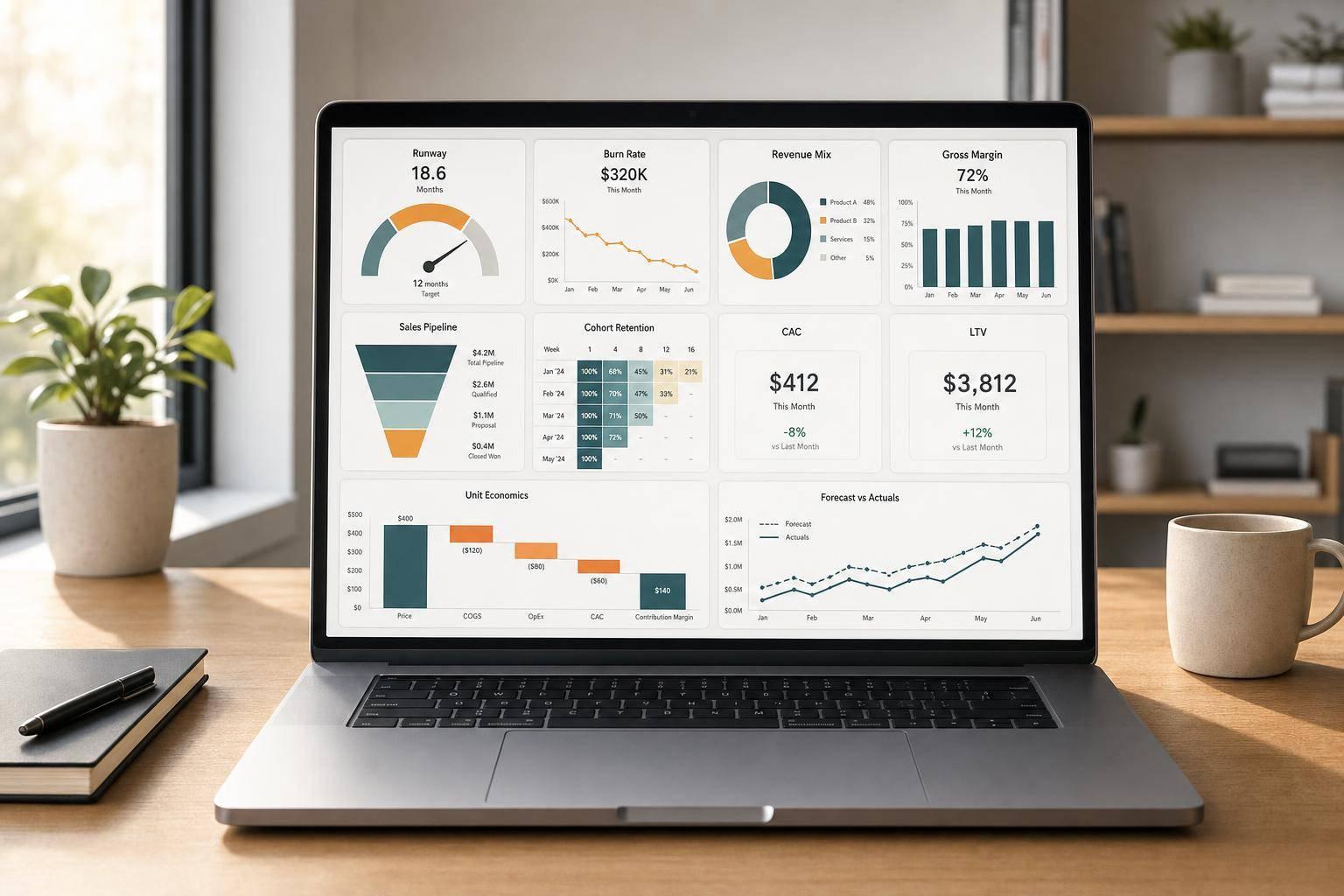
10 FP&A Dashboard Charts for Growth-Stage Firms
Ten essential FP&A charts—runway, burn, revenue mix, margin, pipeline, retention, and unit economics—for growth-stage decisions.

Finance
Debt Rate Risk Management for Growth Firms
Map floating debt, set fixed-vs-floating targets, use swaps/caps, and run quarterly stress tests to protect runway.

Finance
Convertible Debt Risk Guide for Seed Startups
Understand how convertible notes add interest, maturity pressure, and hidden dilution—and when they work as a short bridge to equity.

Finance
Consumer Goods Exit Planning: Strategic vs PE Buyers
Compare strategic vs private equity exits for consumer brands: cash at close, valuation, rollover equity, earnouts, and founder roles.

Finance
Cash Flow Forecasting for Seasonal Demand
Map receipts and payments, use 13-week and 12-month forecasts, and run monthly reviews to avoid seasonal cash shortfalls.

Finance
What Breaks First in Multi-Location Process Scale
When locations multiply, reporting, service, payroll/inventory, and manager capacity fail first—fix with a shared COA, SOPs, and KPIs.

Finance
How MRR Cohort Analysis Guides SaaS FP&A
Use first-billed-month MRR cohorts to detect retention risk, forecast revenue by cohort, and tie hiring to cash runway.

Finance
Recurring Expense Management for Growth-Stage Firms
Define recurring costs, centralize vendor registers, require approval by contract value, and tie spend to margin and CAC payback.

Finance
Founders Guide to QSBS $10M Cap and 10X Rule
A founder's checklist for QSBS: confirm C‑corp status, track issuance/83(b), compare $10M vs 10x limits, and keep clean records before exit.

Finance
How OpEx Shapes Cash Flow in Growth Stage
Manage OpEx timing, keep fixed costs lean, tie variable spend to collections, and use a weekly 13-week cash forecast.

Finance
Why Founder Ownership Drops Too Fast in VC Deals
Round size, pre-money option pools, SAFEs and down rounds compound to rapidly erode founder equity; model your cap table first.

Finance
Building Finance Data Pipelines for Live Dashboards
Hybrid finance data pipelines with raw, cleaned, and finance-mart layers for same-day cash and revenue visibility and layered reconciliations.

Finance
Drop-and-Swap vs Swap-and-Drop: Tax Rules
Labels don't decide taxes - timing, who holds title, and investment intent determine whether drop-and-swap or swap-and-drop survives IRS scrutiny.

Finance
Chart of Accounts Design for Growth-Stage Companies
Lean 35–60 account CoA: separate revenue, COGS and OpEx; use dimensions, numbering gaps, and clear posting rules for scalable reporting.

Finance
How to Model Subscription Revenue LTV
Cohort-based gross-profit LTV — not revenue — reveals the real economics of subscription businesses when tied to CAC and payback.

Finance
Revenue vs EBITDA in E-Commerce Valuation
When e-commerce deals use revenue vs EBITDA multiples, see which businesses fit each method and which metrics (margins, churn, LTV:CAC) move value.

Finance
Levered Beta vs Unlevered Beta: Industry Use
Use unlevered beta to compare business risk; relever to your target D/E to get levered beta for CAPM, WACC and valuations.

Finance
SaaS LTV Formulas: 4 Methods Compared
Compare four SaaS LTV formulas - lifespan, churn, cohort, and contribution margin - and when to use each.

Finance
DCF Modeling for Renewable Energy Assets
Practical DCF checklist for valuing renewables: production, contracts, CapEx/OpEx, tax credits, financing, terminal value, and stress tests.

Finance
Best-Case, Base-Case, Downside: Revenue Plan
Use three forecasts—best, base, downside—with numeric triggers tying hiring, spend, margins, and runway to revenue outcomes.

Finance
Revenue Forecast Model: SaaS Driver Method
Model monthly SaaS ARR with a driver-based waterfall: demos to wins to new ARR, plus separate renewals, churn, and expansion.

Finance
Trademark Valuation: Guide for M&A Deals
A trademark only boosts deal price when it's legally clean and proven to drive revenue—otherwise buyers demand discounts or protections.

Finance
Control Thresholds in VC Term Sheets
How board seats, class votes, and investor vetoes shift founder control; calculate ownership cutoffs before signing.

Finance
Labor Cost vs Revenue: Ratio Guide
Track labor cost as a share of revenue to spot hiring, pricing, and runway risks before margins erode.

Finance
Top-Down Revenue Forecasting: Guide
Estimate revenue from TAM→SAM→SOM using market share, pricing, and scenario checks—then validate against bottom-up forecasts.

Finance
Overtrading Risks in Growth-Stage Companies
Rapid sales can drain cash - track DSO/DIO/DPO, run a rolling 13-week cash forecast, and tighten collections, inventory, and payables.

Finance
Best Use Cases for What-If Modeling Software
Prioritize 3–5 high-impact drivers and run best/base/downside scenarios across SaaS, healthcare, legal tech, home services, and energy.

Finance
From Spreadsheets to FP&A: SaaS Planning Guide
Replace fragile spreadsheets with driver-based FP&A for SaaS: standardize metrics, connect ARR/churn/CAC/headcount, and automate reporting.

Finance
Freemium Unit Economics: CAC, LTV, Conversion Math
Monthly cohort math for freemium SaaS: track conversion, ARPU, gross margin, churn, and CAC payback to ensure cohorts are profitable.

Finance
Power BI Financial Reporting: CFO Guide
Unify actuals, budgets, and forecasts in Power BI to automate board reporting, monthly close, KPI tracking, cash flow and forecasting.

Finance
Third-Party Contract Checklist for Finance Teams
Finance-focused pre-sign checklist to flag pricing, cash, liability, data, audit, renewals, and exit risks in vendor contracts.

Finance
How VC-Backed Startups Track Burn and Runway
How VC-backed startups calculate net burn, use a 3-month average, tie hiring to runway, and set raise-by dates.

Finance
7 Inventory Cash Flow Tips for CPG Brands
Seven practical fixes to free CPG working capital: cut low-value SKUs, tighten PO timing and safety stock, improve supplier terms.

Finance
Cash Flow Risk Monitoring: Guide for Founders
Simple cash monitoring for founders: daily balances, rolling 13-week forecast, core liquidity metrics, alerts and dashboards.
Finance
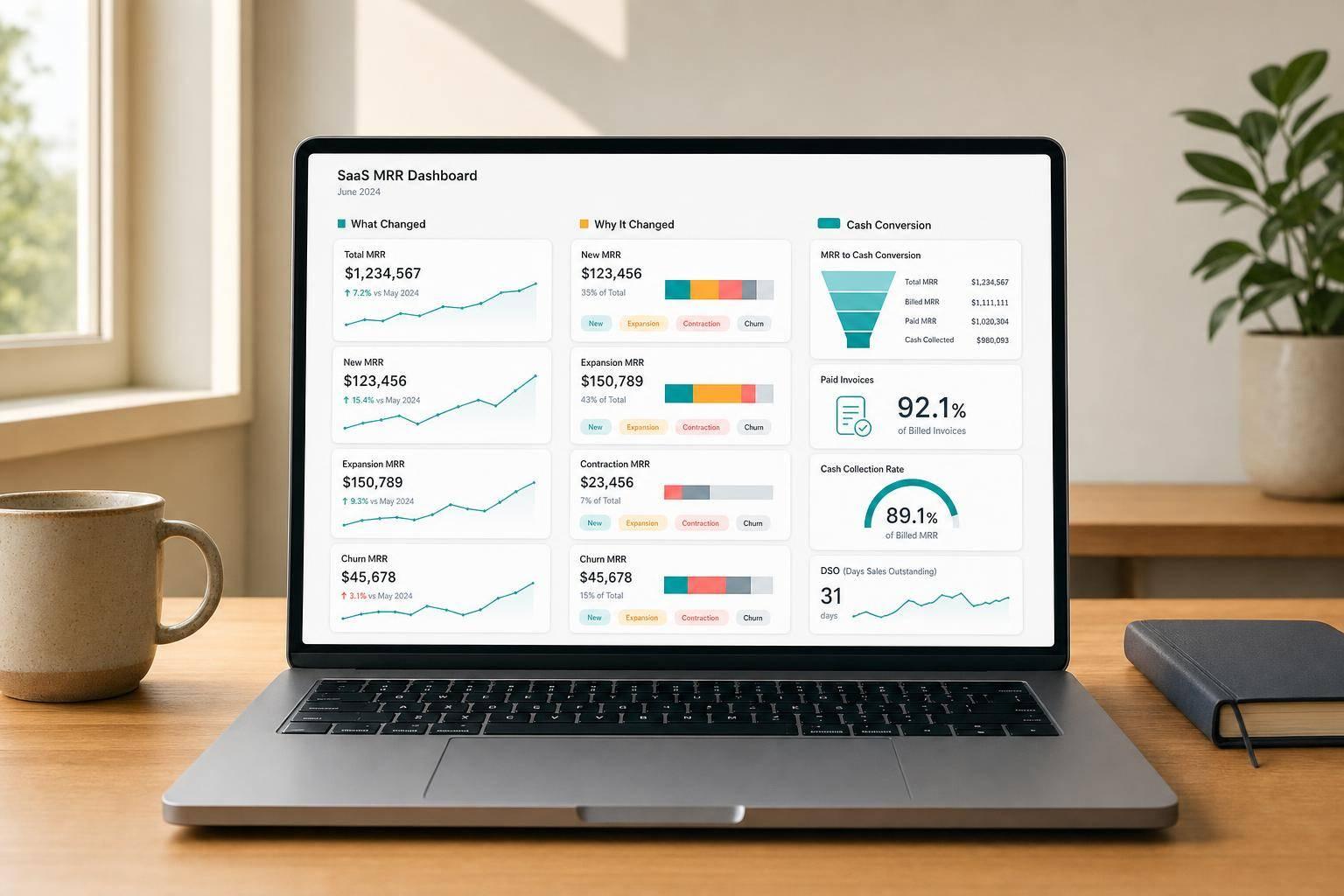
SaaS MRR Dashboard Template: 12 Metrics
A one-page SaaS MRR dashboard using 12 metrics to show what changed, why it changed, and whether booked revenue converted to cash.

Finance
Debt vs Equity for SaaS: Capital Structure Guide
Guide to choosing debt, equity, or a blend for SaaS based on ARR, retention, burn, CAC payback, and runway.

Finance
SaaS, Health, Home Services: Valuation Gaps
Explains why identical revenue can command different prices—SaaS, healthcare, and home services valuation drivers and fixes.

Finance
Churn and CLV Models for FP&A Teams
Churn determines customer lifetime and CLV — use cohort, survival, ML, or probabilistic models to align forecasts, CAC, and retention spend.

Finance
How to Build Driver-Based Revenue Models
Tie bookings to measurable drivers—leads, win rate, deal size, and churn—to build monthly, testable revenue forecasts.

Finance
Portfolio Company Value Creation: Guide
Value creation begins on Day 1: set a Day 0 baseline, own 3-5 drivers, run a 100-day plan, and bake finance & reporting into exit readiness.

Finance
How Buyers Value Contract Manufacturers
How EBITDA quality, maintenance capex, working capital, capacity, and customer concentration shape sale price for contract manufacturers.

Finance
Contribution Margin Analysis in M&A Diligence
How contribution margin (CM1/CM2) reveals which products, customers, and channels are truly profitable during M&A diligence and ties to GAAP.

Finance
How Real-Time Budgeting Cuts Version Control Risk
Single live budget model with audit trails and permissions to stop spreadsheet version drift and speed monthly planning.

Finance
Utilization Rate vs Capacity Rate: FP&A Comparison
Shows why utilization guides revenue/margin while capacity drives hiring, and how to align both with shared hour assumptions.

Finance
Digital Transformation Cost Model for Manufacturers
5-10 year TCO guide for manufacturers covering software, hardware, integration, training, support, and hidden costs driving overruns.

Finance
Cash Burn Problem, Unit Economics Break-Even Fix
Track contribution margin, CAC payback, break-even MRR and monthly runway to stop cash burn and inform pricing, hiring, and spend.

Finance
How AI Forecasts Late Customer Payments
Use invoice history to score open invoices before due dates, prioritize collections, and improve 13-week cash forecasts.

Finance
ARR vs. MRR in SaaS Revenue Models
When to use MRR vs ARR in SaaS, how to calculate each, what to include/exclude, and why you should report both.

Finance
ARR Forecasting for Growth-Stage SaaS
Build a monthly driver-based ARR waterfall tied to pipeline, renewals, expansion, contraction, and churn with scenarios and backtests.
Finance
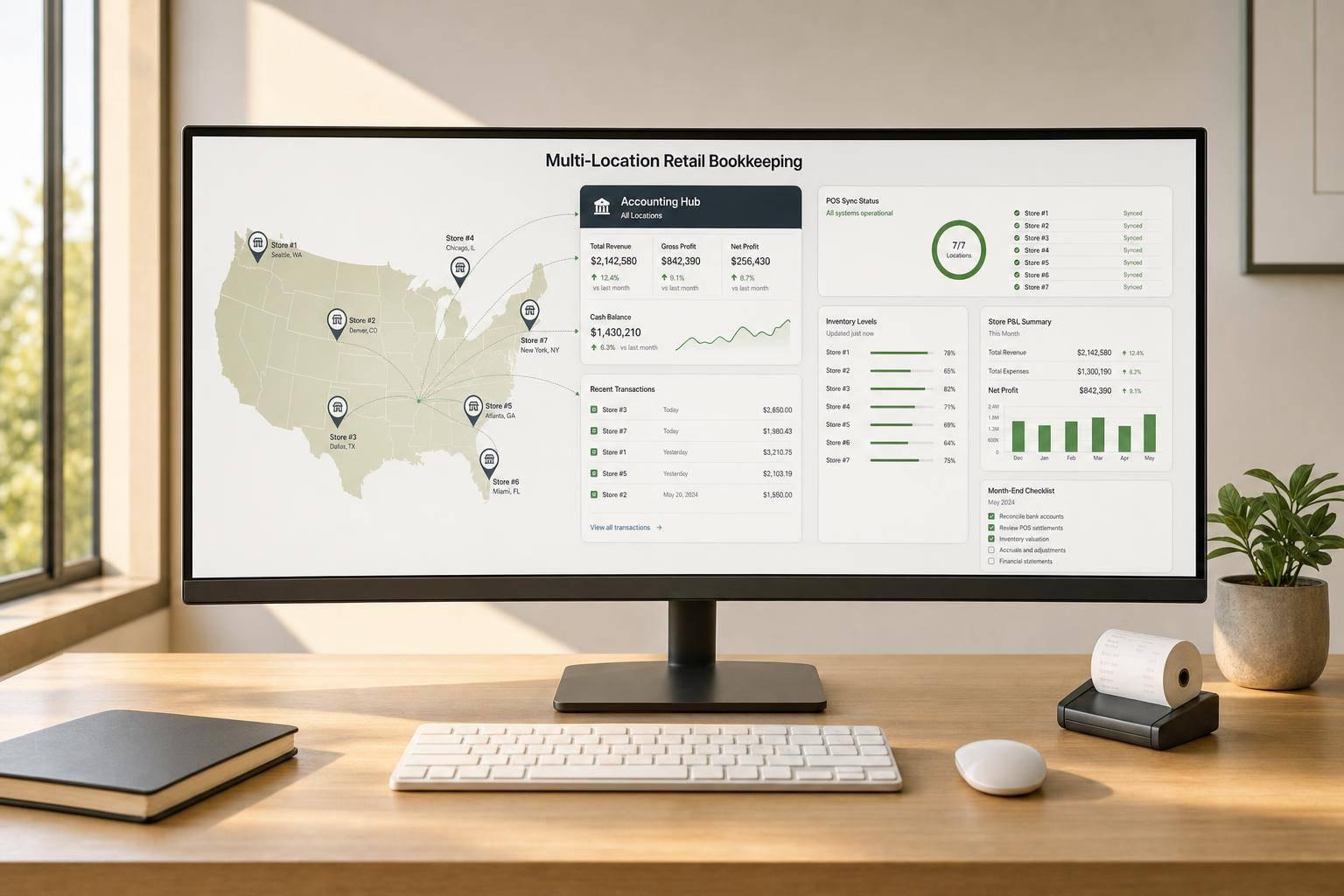
Multi-Location Retail Bookkeeping Tools
Compare bookkeeping tools for multi-store retailers and choose by POS sync, location inventory, store P&Ls, and month-end effort.

Finance
2026 Operating Expense Benchmarks for Growth Firms
OpEx benchmarks for growth firms: spending by revenue band, S&M, G&A, payroll intensity, and revenue-per-employee.

Finance
Top 8 Audit Trail Metrics for Compliance
Metrics turn logs into audit-ready evidence—track eight measures to prove completeness, timeliness, integrity, and retention.
Finance
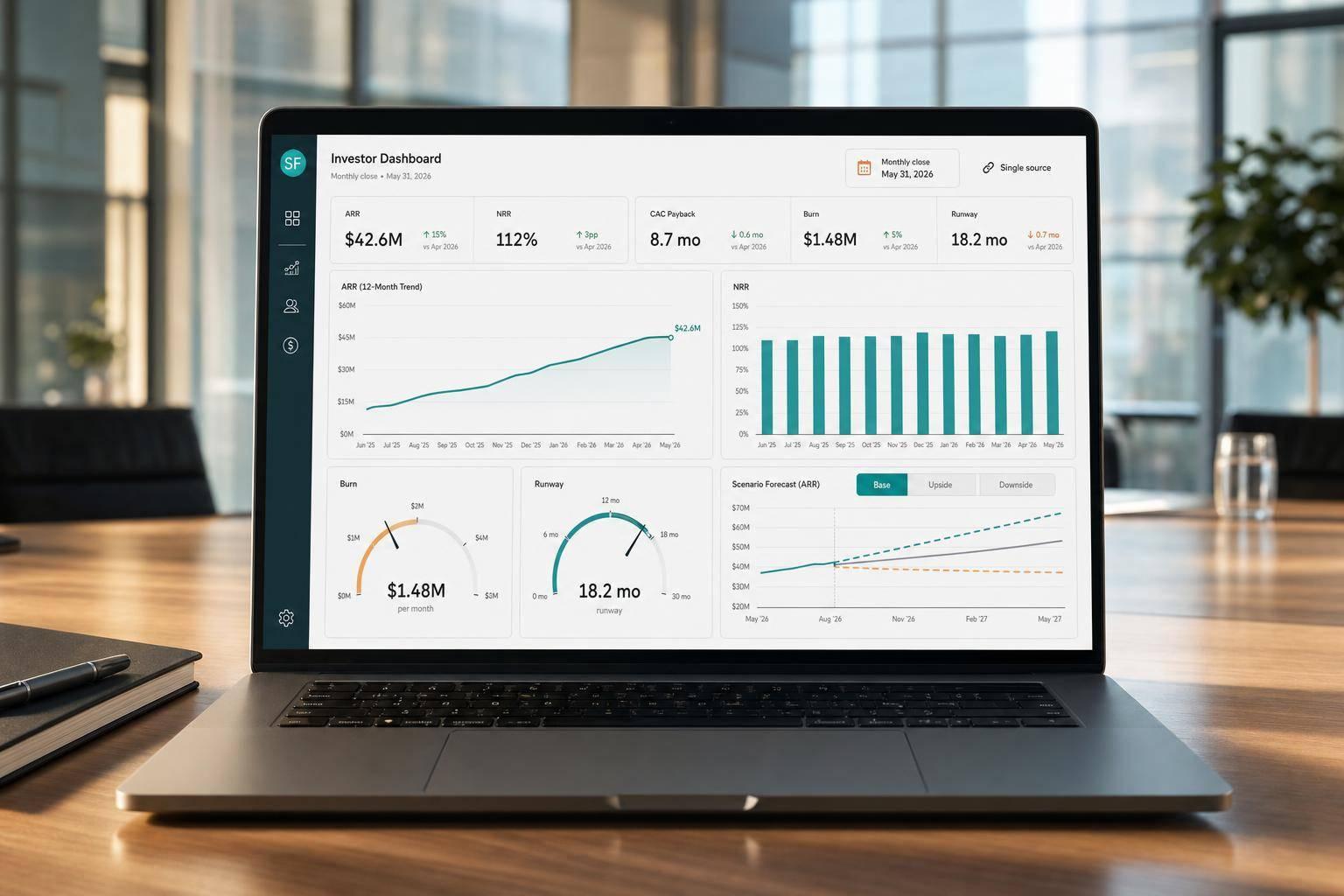
SaaS Investor Reporting Dashboard: Guide 2026
Board-ready SaaS dashboard showing ARR, NRR, CAC payback, burn and runway with one-source KPIs, monthly close, and scenario forecasts.

Finance
SEC Rules on Equity Crowdfunding: Founder Guide
Practical Reg CF checklist for founders: eligibility, Form C filings, intermediary rules, investor caps, and post-close reporting.

Finance
Tax Strategy Across States for Real Estate Deals
Screen deals by property tax, state income tax, transfer and recording fees to compare true after-tax cash returns across states.
Finance
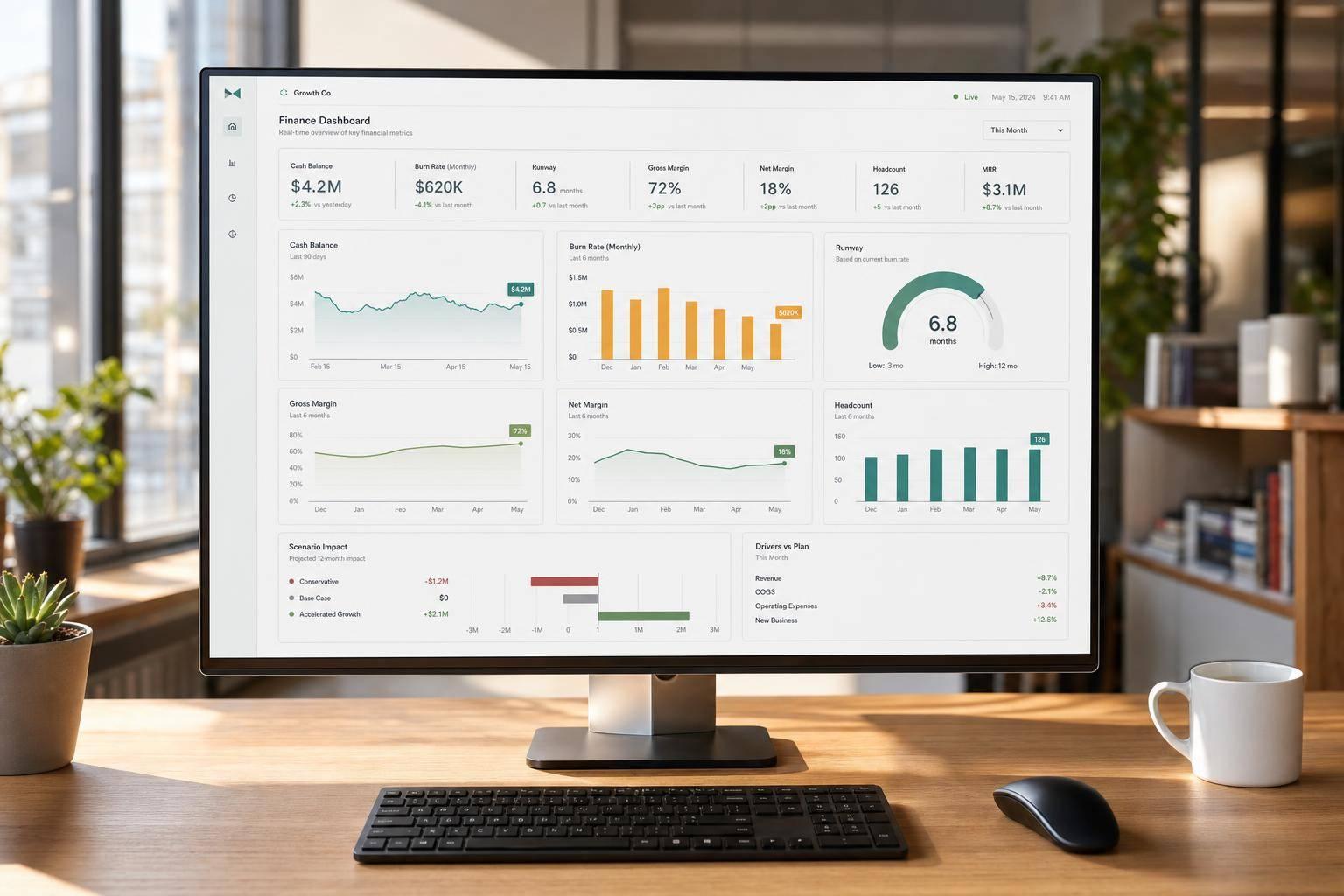
Real-Time Budget Dashboards for Growth Companies
One-page real-time finance dashboard to spot spend issues and track cash, burn, runway, margins, headcount, and scenario impacts.

Finance
Profit Margin Modeling for CPG Brands: Guide
Model profit monthly from gross sales to EBITDA by SKU and channel; track net price, trade spend, COGS, freight, and returns.
Finance
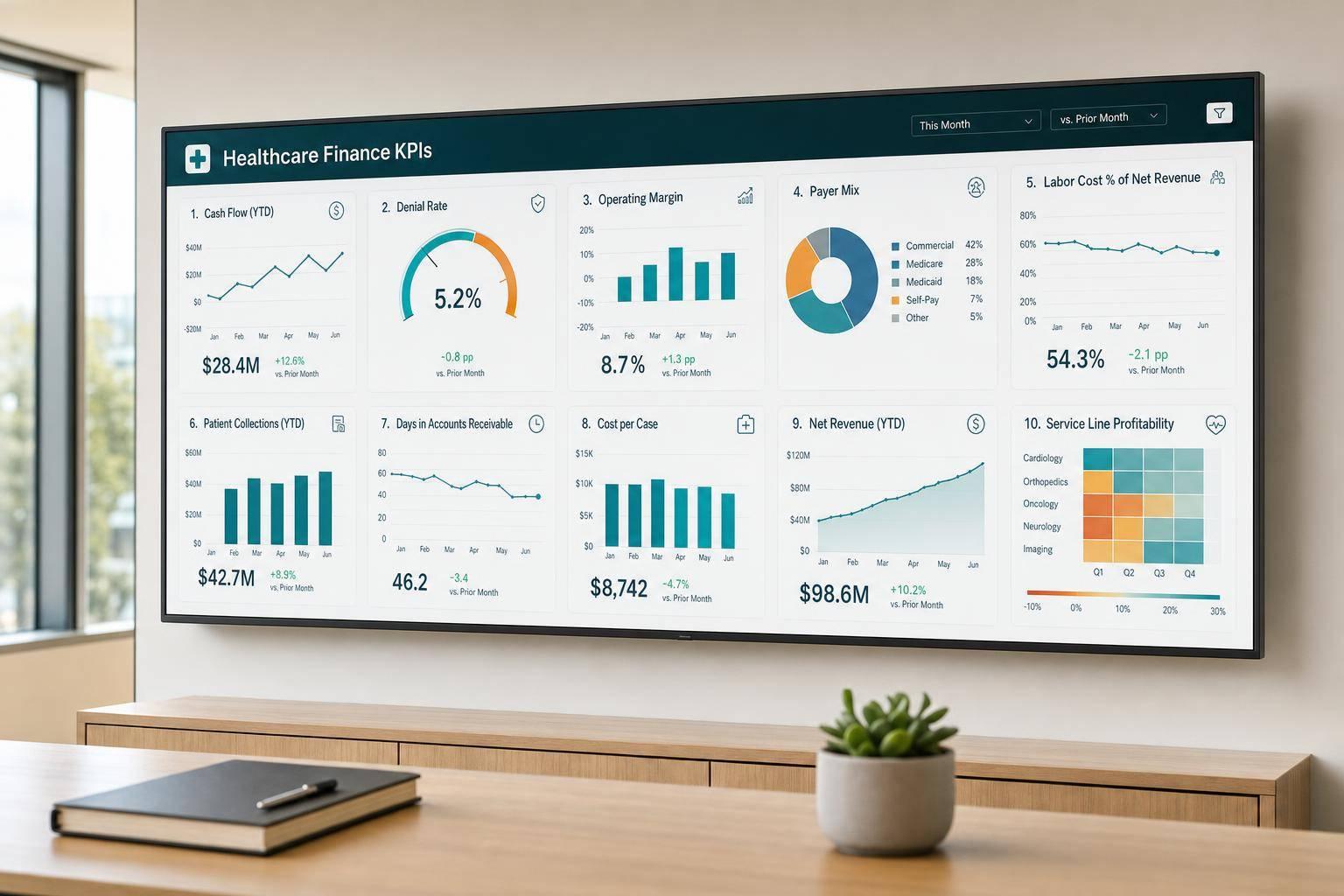
10 Healthcare Dashboard KPIs Finance Teams Track
Ten essential KPIs finance teams use to spot cash, denial, and margin issues across payer mix, labor, collections, and service lines.

Finance
Seller Indemnity Triggers in Private Company Sales
How stock vs. asset deals, caps, escrows, survival periods and special indemnities shift seller risk in private-company sales.

Finance
Deferred Tax Liabilities in M&A Deals: 7 Drivers
Timing gaps between GAAP and tax drive deferred tax liabilities that reshape M&A purchase price, goodwill, and future cash taxes.

Finance
Real-Time KPI Tracking for SaaS Finance
Monitor 8–12 core SaaS finance KPIs weekly—MRR, NRR, CAC payback, burn multiple, and runway with action alerts.

Finance
LTV Calculation Methods: 7 Models for Growth Firms
Seven LTV models and when to use each—revenue, gross-margin, cohort, subscription, repeat-purchase, predictive, and segment.

Finance
CPG Fundraising Checklist: Series A to B
Prepare your CPG for Series B: align GAAP financials, integrated 3-statement model, SKU/channel unit economics, cohorts, and governance.

Finance
Live KPI Reporting for SaaS and Healthcare
Use live KPI dashboards as control systems—daily MRR/payment alerts for SaaS and revenue-cycle signals for healthcare with strict governance.

Finance
10 Professional Services Dashboard Templates
Focus dashboards on decisions that matter: cash, pipeline, and delivery capacity—role-based and under 10 KPIs.
Finance
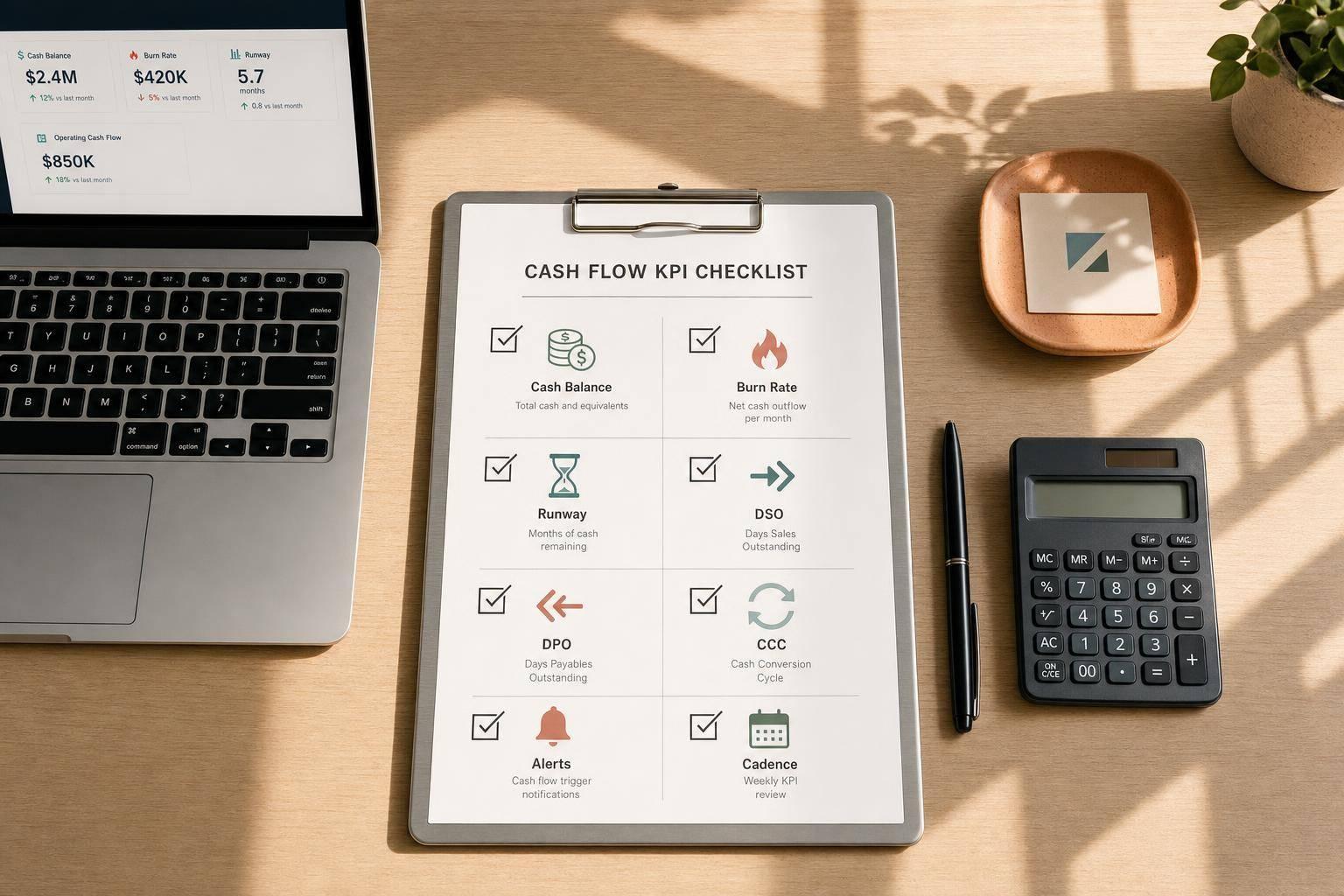
Cash Flow KPI Checklist for Growth-Stage Firms
Weekly and monthly checklist of 8 cash KPIs to catch timing-driven liquidity risks: cash, burn, runway, DSO/DPO, CCC, and alerts.
Finance
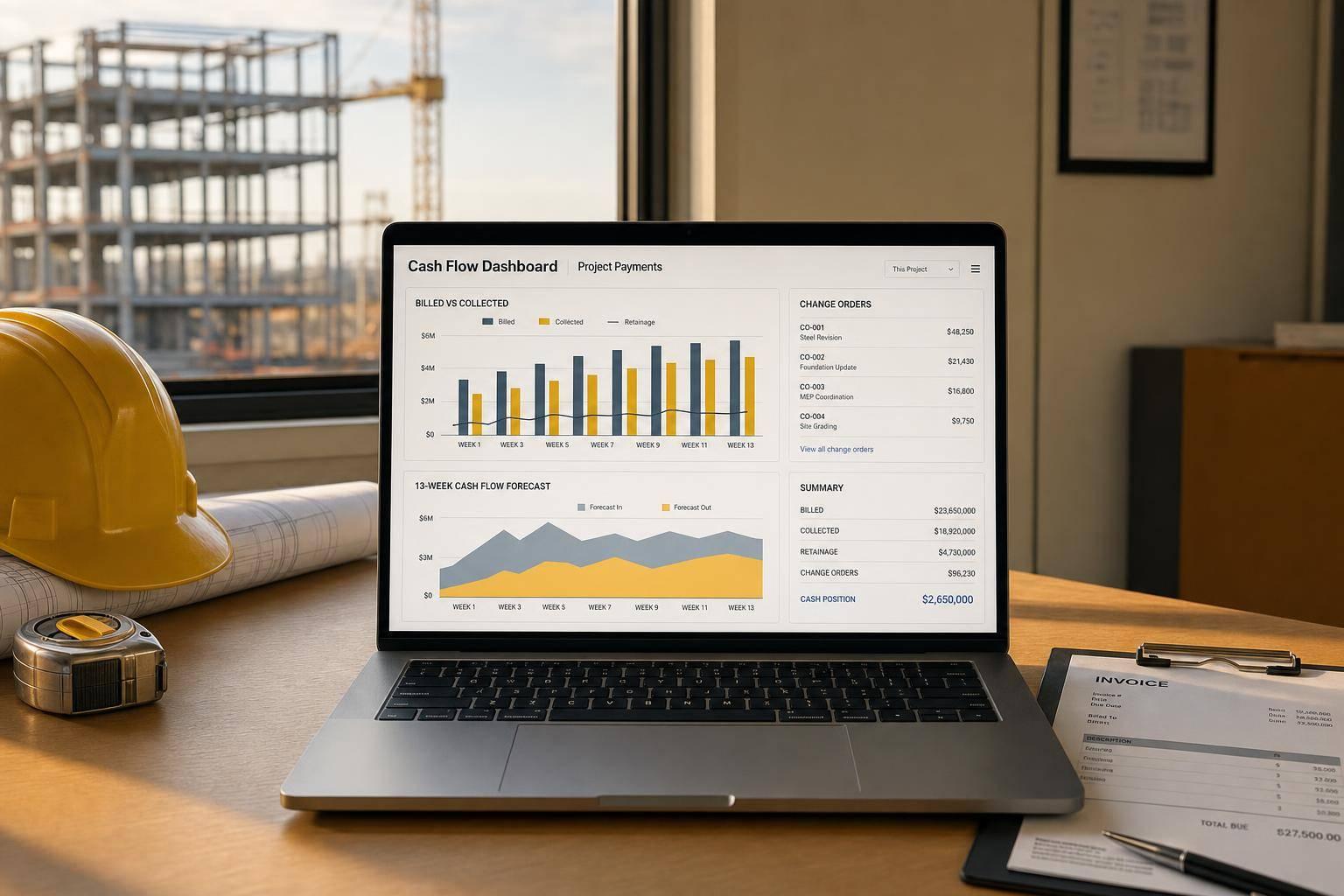
Construction Cash Flow Dashboard: Project Payments
Weekly project-level dashboard for contractors: track billed vs collected, retainage, change orders, and a 13-week cash forecast.

Finance
Partnership ROI Guide for Growth Firms
Measure partner ROI by counting all costs, tracking partner-sourced revenue, setting margin/payback guardrails, and reviewing regularly.

Finance
Real-Time FP&A in Volatile Markets: 7 Moves
Use rolling forecasts, a 13-week cash model, live scenarios, KPI alerts, and weekly decisions to protect cash and runway.

Finance
How to Reinvest Business Sale Proceeds Tax-Efficiently
Split sale proceeds by tax type and time horizon; prioritize liquidity, use munis and low-turnover ETFs, and apply QSBS/OZ for eligible gains.

Finance
Predictive KPIs for SaaS ERP Reporting
Six ERP-driven SaaS KPIs that forecast growth, retention, efficiency, and runway before the quarter ends.
Finance
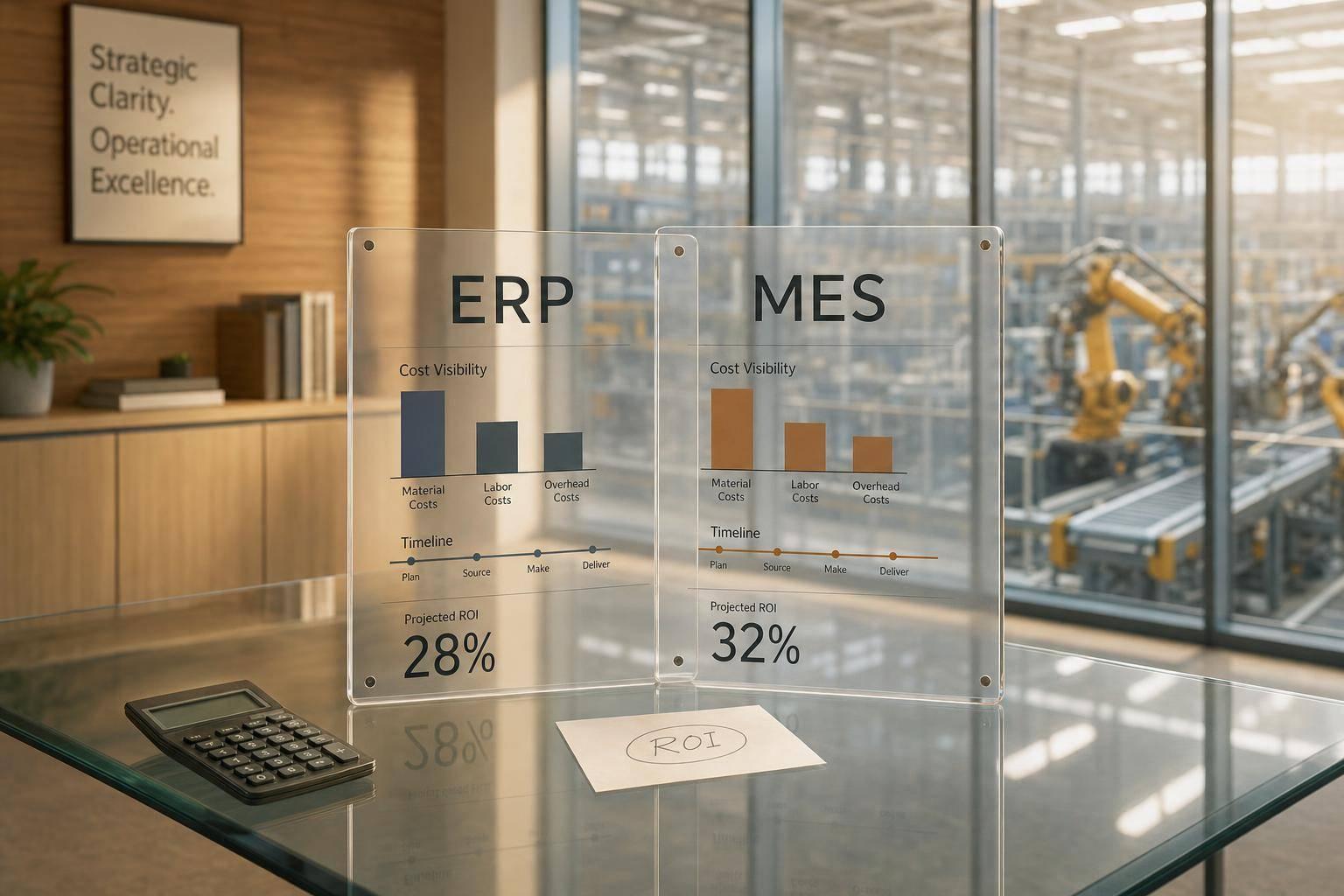
ERP vs MES: CFO Guide for Manufacturers
Practical CFO guide comparing ERP and MES costs, timelines, ROI, and when to prioritize each to stop major cash leaks.

Finance
ESG Data Collection Checklist for Growth Companies
Make ESG part of your monthly close: collect 10–20 KPIs, assign owners, tie each metric to a source file, and keep a verification log.

Finance
Retail Sales Reconciliation: POS Data Guide
Match POS sales, processor batches, and bank deposits daily to stop drift, log exceptions, and speed month-end closes.

Finance
Founding Team Checklist for Seed and Series A
Checklist for investor-ready founding teams: roles, cap table, hiring plan, 3–5 KPIs, reporting, and references for Seed & Series A.

Finance
Freemium vs Free Trial: Conversion Math
Compare freemium and free trials: conversion rates, payback, churn, and metrics to pick the model that optimizes LTV/CAC.

Finance
5 Inventory Cost Methods Under IFRS and GAAP
Compare FIFO, LIFO, weighted average, and specific ID under IFRS and US GAAP—impact on COGS, margins, and write-downs.

Finance
Startup Benchmarking Guide: KPIs, Cohorts, Cadence
Benchmarking should drive faster decisions: pick focused KPIs, compare like-for-like peers, set a fixed cadence.

Finance
338(h)(10) vs Asset Purchase: Tax Comparison
Compare 338(h)(10) elections and direct asset purchases: basis step-up, liability exposure, seller tax, state rules, and execution tradeoffs.

Finance
Cost-Benefit Analysis for Growth Decisions
A practical framework to evaluate hires, pricing, market entry, and product bets by modeling costs, returns, timing, and risk.

Finance
Pipeline Health Score: Formula, Benchmarks, Limits
A big pipeline doesn't equal a safe forecast—score conversion, aging, coverage and stage mix to spot real forecast risk.

Finance
How to Turn Financial Data into Growth Decisions
Learn how founders use financial data, cash flow, CAC, and LTV to guide growth decisions and avoid costly scaling mistakes.

Finance
How Founder-Led Acquisitions Retain Key Talent
Learn 5 ways founder-led acquisitions help retain key talent through leadership prep, clear communication, and culture planning in M&A.

Finance
How to Optimize Profit Before Scaling Your Business
Learn 5 steps home service owners use to fix pricing, labor, overhead, and cash flow before scaling revenue.

Finance
Venture Debt for Healthcare Startups: Key Tradeoffs
Venture debt can buy 6–12 months of runway for healthcare startups—or turn delays and strict covenants into a crippling cash trap.

Finance
M&A Diligence for PE Tax Exposure
Map nexus and PE exposure, test filings vs. actual operations, quantify back taxes, then decide price, escrow, or indemnity.


