Published on
March 10, 2026

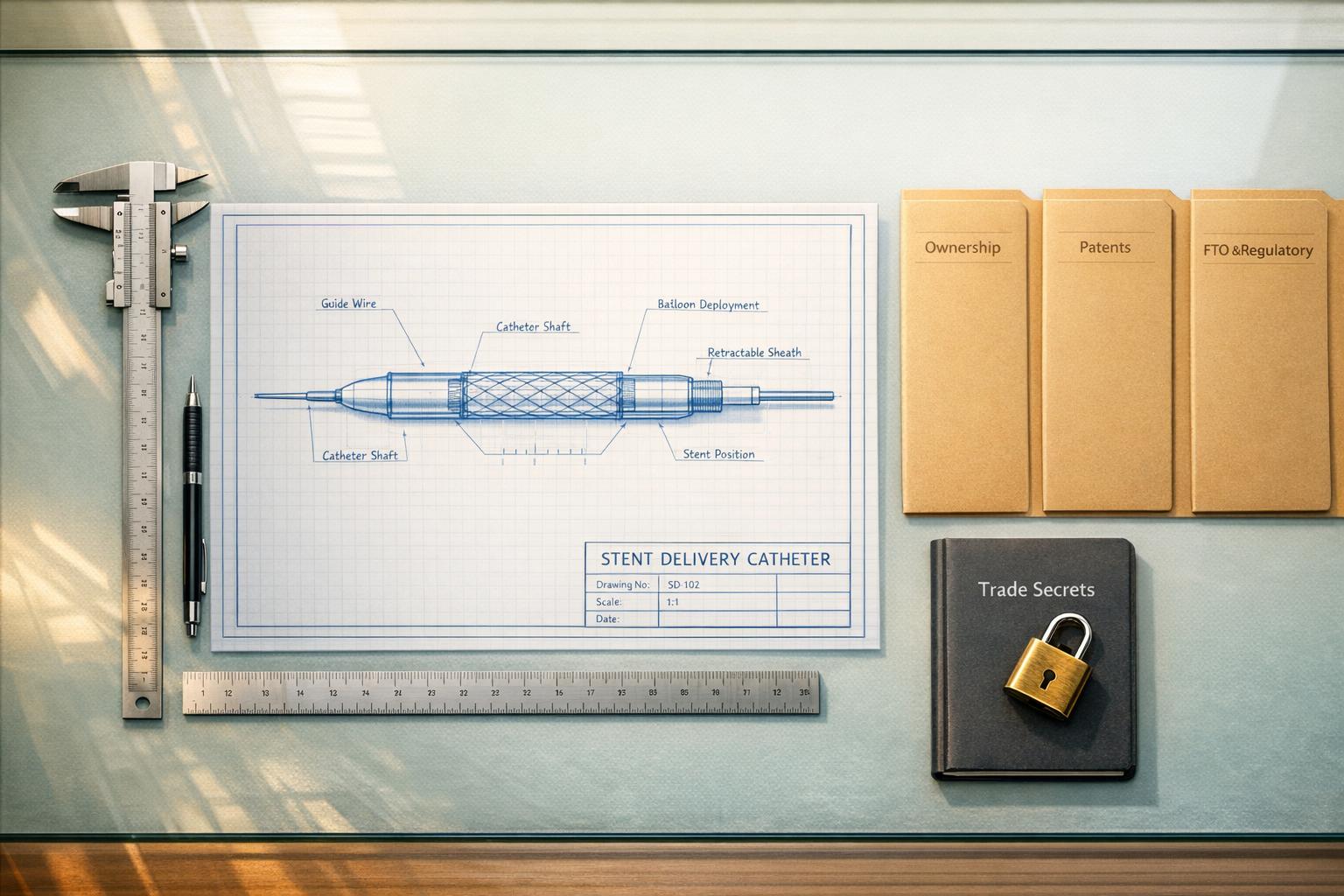
In MedTech, intellectual property (IP) isn't just paperwork - it's the backbone of your company's value, especially during mergers and acquisitions (M&A). For early-stage companies without FDA approval or significant revenue, patents often determine your worth. Buyers want more than products - they want technology that blocks competitors and fills gaps in their portfolios.
To maximize your exit value, focus on these six steps:
Buyers are increasingly thorough during IP due diligence, and unresolved IP issues can sink deals or reduce payouts. Start preparing early to secure strong valuations and smooth negotiations.

6 Steps to Build Exit-Ready IP in MedTech
Laying a solid IP foundation is critical to maximizing exit value in the MedTech space.
The first step in preparing your MedTech intellectual property (IP) for an exit is ensuring that your company has clear legal ownership of all IP assets. This means tracing the title of each asset from its creation to its current ownership. A surprising statistic: over half of lower middle market deals reveal IP ownership gaps during due diligence [7]. These gaps can be expensive. For instance, Exit Ready Advisors reported a case where a software company's valuation plummeted from $8.2 million to $5.1 million - a staggering $3.1 million drop - because critical features were developed by contractors who hadn’t signed IP assignment agreements.
Start by creating a detailed inventory of your IP assets, including patents, trademarks, software, and designs. For U.S. patents, the USPTO Assignment Recordation Branch is a key resource. Check the "Abstract of Title" to pinpoint any gaps or potential third-party claims [6]. Remember, transferring IP rights requires a signed agreement - payment alone isn’t enough [10]. Ensure that all founders, employees, contractors, and consultants have signed written agreements explicitly transferring their IP rights to your company [7].
Once ownership is verified, turn your attention to external contributions and dependencies to strengthen the chain of title.
Document any external contributions to your IP. Pay close attention to shared ownership arrangements and restrictive clauses in licenses, particularly those involving "change-of-control" or "non-transfer" provisions. Joint development agreements can complicate ownership, as they may grant multiple parties the right to use or license the IP without your company’s consent - potentially reducing its value [8]. Similarly, university licenses often include revenue-sharing clauses or clawback rights, allowing the institution to reclaim the IP under certain conditions [10].
Carefully review "change-of-control" and "non-transfer" clauses, as these can limit a buyer's ability to use the IP after acquisition [9]. Open-source software licenses also require scrutiny. Some licenses may obligate you to share proprietary code if it’s combined with open-source components [9]. If you identify any gaps - such as missing agreements with past contractors or partners - secure retroactive assignments to ensure all rights, past and future, are fully transferred to your company [8].
With third-party dependencies documented, move on to assessing your patents for exclusivity and legal standing.
Evaluate the legal status and terms of each patent in your portfolio. Make sure all maintenance fees are up to date to avoid accidental lapses. Confirm whether patents are active, pending, or expired [9]. Under 35 U.S.C. § 261, patent interests should be recorded with the USPTO within three months of conveyance to provide public notice and protect against claims from subsequent purchasers [6]. Additionally, check for any recorded security interests, such as liens or mortgages, that may have been placed on patents used as collateral.
Once you've confirmed ownership of your intellectual property (IP), the next step is to bolster your patent portfolio. This is key to increasing your company's exit value.
Take a close look at the enforceability and scope of your patent claims. Your patents should cover essential technologies, critical features, and potential design-around solutions. Be cautious - claims that are too broad can lead to validity challenges, while overly narrow claims might leave openings for competitors. To fully protect your innovations, include claims for hardware, methods-of-use, and bundled product components [2].
It's also important to ensure your portfolio covers core technologies on a global scale. Use analyses like LOE (loss of exclusivity), PTA (patent term adjustment), and PTE (patent term extension) to confirm the remaining term of your patents. Keep in mind that publicly disclosing an invention starts a one-year clock for filing in the U.S., and in many countries, it can immediately void your patent rights [2][15].
"Strong medical device patents can provide significant competitive advantages and valuation premiums, while overlooked patent risks can derail product launches, trigger expensive litigation, or sink transactions entirely." - Gallium Law [11]
Coordinate your patent filings with your R&D pipeline and regulatory timelines. This ensures that your most commercially valuable features are protected before public disclosure. Filing provisional applications early in the R&D phase - costing roughly $5,000 to $10,000 - can secure a priority date at a relatively low cost. This step is crucial before sharing details with potential investors or partners [2]. Additionally, maintain a concise IP executive summary that outlines key programs and their corresponding protections. This will streamline due diligence during exit negotiations.
This comprehensive review of your patent coverage lays the groundwork for addressing operational risks linked to using your technology.
Owning a patent gives you the right to exclude others, but it doesn’t necessarily mean you can freely use your technology - especially if it overlaps with earlier third-party patents [14]. To avoid surprises, conduct Freedom-to-Operate (FTO) searches at key R&D milestones. These searches help identify third-party patents that could block your product from entering the market. Expect targeted FTO searches to cost between $15,000 and $40,000 [2].
"Patents don't grant you the right to operate - they grant you the right to stop others. FTO is about making sure nobody else has a right to stop you." - PowerPatent [12]
Classify third-party patents based on risk - low, medium, or high - by analyzing their claim scope and enforceability [14]. Develop mitigation strategies, such as design-arounds, invalidity arguments, or licensing agreements [15]. For example, in 2026, a trauma device team identified a competitor's patent on variable-angle screws during an early FTO search. By addressing this risk early, they developed a novel cam lock system to sidestep infringement, ensuring a smooth product launch [2].
Since patents are territorial, FTO analysis must be conducted for each specific market where you plan to operate or expand [14]. Ignoring FTO risks until late in development or post-partnership can lead to costly redesigns or fixes, often exceeding $1,000,000 [2].
Once you’ve mapped out FTO risks and established mitigation strategies, you can shift your focus to ensuring your technology complies with regulatory requirements.
Once you've addressed freedom-to-operate risks, the next step is ensuring your intellectual property aligns seamlessly with regulatory documentation. Buyers will closely examine how your patents, FDA filings, and public claims connect to confirm your technology is both compliant and defensible. Any inconsistencies between clinical trial data and regulatory submissions can lead to challenges over validity and shake buyer confidence during due diligence [11].

Gather all FDA-related documentation, including premarket submissions, inspection reports, and official communications. For device software, organize materials like design inputs, validation protocols, and risk analyses. Buyers expect a total product lifecycle approach to managing cybersecurity and risks, covering everything from design to post-market monitoring [17].
"The FDA expects manufacturers to take a total product lifecycle approach to minimize cybersecurity vulnerabilities." - Goodwin Law [17]
If your product involves AI/ML-enabled devices, include a detailed Change Control Plan that outlines potential future modifications. This reassures buyers your device will remain compliant even after initial clearance [17]. For products using Real-World Evidence (RWE), document the relevance and reliability of Real-World Data (RWD) sources included in regulatory submissions [17]. Additionally, map patented features directly to regulatory filings, such as 510(k) or PMA applications, to create a clear narrative that reinforces the originality of your technology [3][5].
With these regulatory documents in order, ensure your clinical data consistently supports public and investor claims.
Building on well-organized FDA documentation, verify that your clinical data aligns perfectly with public disclosures. Clinical trial results, regulatory filings, and public statements must match precisely. MedTech patents often face intense scrutiny, especially regarding technical disclosures and experimental results - any mismatch here could lead to challenges over patent validity [11]. Since the FDA makes significant details about Class III device approvals publicly available, buyers can easily cross-check your claims against regulatory records [18].
Investors are particularly drawn to devices that combine FDA approval with strong patent protection. FDA approval demonstrates safety and effectiveness, while patents secure market exclusivity [13]. For AI/ML-based devices, ensure any public claims about "adaptive" capabilities are fully consistent with the Change Control Plans submitted to regulators [17]. Regularly audit your medical device files to confirm they are ready for buyer review and align with public-facing marketing materials [13]. Start building a diligence folder early, including signed assignments, patent records, and internal summaries linking key product features to clinical data and protected IP [3]. This proactive organization not only simplifies buyer verification but also strengthens your negotiating position.
With regulatory compliance fully documented and aligned, you’ll be well-prepared to address any lingering litigation or IP disputes that might complicate your exit.
Once regulatory compliance is in order, it’s time to tackle any legal conflicts that might jeopardize your exit strategy. Unresolved intellectual property (IP) disputes can create significant uncertainty for buyers, potentially derailing deals. Buyers will scrutinize every legal detail - past correspondence, pending claims, and potential infringement risks. The numbers speak for themselves: the average cost of patent litigation in the U.S. is around $2.8 million per case, and for high-stakes cases with damages exceeding $25 million, costs often climb above $4 million [20]. This level of financial exposure explains why unresolved IP issues can scare off buyers or lead to steep price reductions. To maintain buyer confidence, it’s essential to eliminate these legal hurdles.
Start by reviewing all past legal correspondence, including cease-and-desist letters that didn’t escalate into lawsuits. Even dormant issues like these can resurface during due diligence and raise red flags for buyers [19]. Next, audit your chain of title to ensure all inventors, founders, and contractors have formally assigned their rights. Any gaps in this documentation can lead to disputes over ownership, which could complicate asset transfers [20][4].
If your business involves software-enabled devices, check for open-source code governed by restrictive licenses, such as GPL or AGPL. These licenses might require you to disclose proprietary software, creating additional risks [19]. Also, keep in mind that in 2023, 68% of challenged patent claims were found invalid [20]. This highlights the importance of conducting a thorough review of your core patents. Assess their validity and enforceability against prior art, and examine the prosecution history for any limitations that could weaken your legal position. Address these vulnerabilities early by developing a proactive pre-sale settlement strategy.
Take steps to resolve risks before buyers begin their due diligence. For instance, secure retroactive assignments from any early contributors who lack formal agreements [19]. If you uncover an active dispute, hire specialized litigation counsel to help resolve it through payment, licensing, or settlement [19][16]. A well-known example is the Apple and Qualcomm settlement in April 2019. Their agreement included a six-year licensing deal and a multi-year chipset supply agreement. The resolution boosted Apple’s stock by 2% and Qualcomm’s by over 38% [21].
If resolving a dispute before closing isn’t possible, consider using contractual tools like indemnities, escrow holdbacks, and tailored IP representations to allocate risk [19]. Transparency is key - disclose known issues early to avoid surprises during negotiations. As PatentPC aptly put it:
"An unresolved IP dispute doesn't just create legal risk. It creates doubt. And doubt slows things down, reduces trust, and reshapes negotiation." [19]
The goal is simple: resolve what you can, be upfront about remaining issues, and put protections in place for anything that can’t be fully addressed before the deal closes.
Once you've addressed litigation risks, the next step is to safeguard your sensitive data. Trade secrets and clinical data often hold immense value - sometimes even surpassing the importance of patents. Unlike patents, which expire after 20 years, trade secrets can offer protection indefinitely if managed correctly. However, once leaked, this information is gone forever. During an exit, when sharing sensitive data with potential buyers becomes necessary, having strong confidentiality measures in place is critical. Here's how to keep your trade secrets secure.
Start by requiring NDAs for any external discussions, whether you're working with potential buyers, manufacturing partners, or investors. Limit access to sensitive information strictly to those who need it - for instance, engineers developing a proprietary coating for orthopedic implants. Clearly label all critical documents, CAD models, and trial data as "Confidential."
Review and update employment agreements to include clear invention assignment and trade secret clauses. These agreements should also require post-employment cooperation to ensure former employees remain bound by confidentiality obligations. During due diligence, adopt a staged disclosure strategy. For example, protect intellectual property that accounts for more than 5% of your enterprise value by using clean rooms or restricting access to core secrets [7]. Stanley M. Gibson, Partner at Jeffer Mangels & Mitchell LLP, explains:
"IP protection needs to start in the lab, not after contracts are signed and prototypes shared."
Once internal protocols are in place, focus on managing external disclosures through a formal review process.
Public disclosures, whether at conferences or during investor pitches, can jeopardize your patent rights. In the U.S., you have a one-year grace period after disclosure to file a patent application. However, many international jurisdictions require absolute novelty, meaning that any public disclosure before filing permanently forfeits your foreign patent rights. To avoid this, appoint a senior leader to oversee all external communications. This person should have a deep understanding of both your technology and business strategy, as well as the authority to enforce review protocols across your organization.
To protect your innovations, file a provisional patent application before sharing data, prototypes, or presentations publicly. These applications cost between $5,000 and $10,000 and give you a 12-month window to refine your concept before filing a full utility patent [2]. Establish a formal submission process for your R&D teams, requiring them to present new ideas to your IP leader before any external communication. For proprietary processes or techniques that aren't intended for patenting - like custom sintering methods for porous implants - maintain robust confidentiality protocols to preserve trade secret protection indefinitely. This disciplined approach minimizes the risk of accidental disclosures, ensuring your IP remains secure and your company's value stays intact during exit negotiations.
After securing your trade secrets, the next step is making sure all teams are on the same page for a smooth exit process. Misaligned cross-functional teams can lead to delays and complications. For instance, IP chain of title issues are a common problem, appearing in over 50% of deals in the lower middle market. These issues alone can push closing timelines back by 4 to 12 weeks [7]. Buyers tend to favor companies that have minimized risks in their commercial, regulatory, and IP strategies. Any inconsistencies in these areas can hurt valuation or even derail the deal entirely [1]. That’s why it’s critical to ensure legal, regulatory, and financial teams are working together to protect your company’s value.
To stay ahead of potential risks, integrate IP and regulatory due diligence at key points in your product’s lifecycle - such as during concept development, design, and pre-launch phases [11]. For early-stage MedTech companies, patents often serve as the main way financial teams justify valuations before FDA approval is in hand [1]. Legal teams need to confirm that all IP developed with third-party vendors or research institutions is properly owned by your company. Missing NDAs or assignment agreements can be a major red flag for auditors and buyers [1].
Start an IP chain of title audit 18–24 months before your planned exit. This process maps every asset to its creator and ensures all supporting documentation is in order [7]. For MedTech companies that rely on software, maintaining a Software Bill of Materials (SBOM) is essential to track open-source components and ensure compliance with licensing requirements [4]. Additionally, centralizing records like patent prosecution files, inventor declarations, and prior art searches will simplify due diligence for both financial and legal teams [11]. As Gallium Law highlights:
"Discovering patent problems after investing millions in FDA clearance or approval can be catastrophic. Comprehensive due diligence early in development helps avoid surprises" [11].
By integrating these efforts, your legal, regulatory, and financial teams can create a unified and thorough set of documents that will appeal to potential buyers.
When addressing gaps in IP or updating documentation with employees or contractors, frame these updates as routine housekeeping tasks. This approach helps maintain a collaborative environment and avoids creating unnecessary tension or leverage shifts [7]. Pair these updates with regular performance reviews to ensure invention assignments and confidentiality agreements are kept current [7].
Standardize contractor and employment agreements to include clear IP assignment clauses, rather than relying on third-party templates [7]. If you encounter challenges reaching a former contributor or they are unresponsive, work with insurance brokers to secure Representations and Warranties (R&W) insurance. This type of insurance can cover specific gaps in IP ownership [7]. While an IP audit and legal review typically costs between $10,000 and $25,000, and negotiating retroactive IP assignments can range from $5,000 to $50,000, these expenses are small compared to the potential losses from unresolved ownership issues.
For additional support, Phoenix Strategy Group (https://phoenixstrategy.group) offers advisory services to help align cross-functional teams and streamline the due diligence process.
The six steps outlined earlier offer a structured approach to preparing Intellectual Property (IP) for MedTech companies aiming for a successful exit. Building exit-ready IP isn’t just about filing patents - it’s about creating a solid framework that enhances valuation and reassures potential buyers. By strategically preparing your IP, you can potentially raise valuation multiples from 4× to 7× revenue [3]. Buyers are far more likely to proceed with confidence when they see organized documentation, clear ownership records, and a secure market position - reducing the likelihood of restrictive terms.
These steps - verifying ownership, fortifying your patent portfolio, maintaining regulatory compliance, resolving disputes, safeguarding trade secrets, and aligning cross-functional teams - are essential to securing future rights and ensuring defensibility. As David Dykeman of Greenberg Traurig emphasizes:
"For early-stage companies, patents are often the only way to value the technology before FDA approval" [1].
When paired with FDA milestones, a strong patent portfolio solidifies exclusive market access and boosts buyer interest.
Looking ahead, analysts predict a surge in MedTech mergers and acquisitions (M&A) in 2025 and 2026, particularly in fields like robotic surgery, orthopedics, and interventional cardiology [1]. This makes thorough pre-sale IP preparation more critical than ever. Buyers are digging deeper during due diligence, focusing on the strength of market positioning rather than simply counting patents [1][3]. Alarmingly, around 90% of transactions fail before closing, often due to inadequate pre-sale preparation [22].
To avoid this pitfall, start assembling a comprehensive diligence folder now. Map your IP to revenue streams, highlight how your patents block competitors, and ensure all assignment agreements are in order. The cost of conducting targeted freedom-to-operate searches (ranging from $15,000 to $40,000) [2] is a small investment compared to the potential losses from unresolved IP issues. A clear and unified IP strategy not only secures your market position but also simplifies negotiations during your exit.
For tailored guidance in aligning your IP strategy with your exit objectives, consider reaching out to Phoenix Strategy Group (https://phoenixstrategy.group). Their advisory services are designed to help MedTech companies optimize due diligence and maximize transaction value.
Start addressing your intellectual property (IP) needs early - preferably while you're still in the development and funding phases. This approach helps establish clear ownership, defines a focused strategy, and strengthens your competitive position, all of which are key factors for a successful exit.
When conducting due diligence, some of the biggest intellectual property (IP) concerns include unclear ownership, missing or incomplete assignments, and lack of proper documentation showing the transfer of rights from founders, employees, or contractors. These gaps can lead to reduced valuations and delays in finalizing deals. Properly documenting and assigning all IP rights is essential to prevent setbacks during the exit process.
To tackle any gaps in intellectual property (IP) created by contractors, start by reviewing and documenting the ownership of all contractor-generated IP. Make sure all rights are correctly assigned to your company and properly recorded. Conducting an IP audit can help pinpoint any missing pieces and organize the necessary documentation. Bringing in legal counsel with expertise in IP ownership can speed up this process and establish a clear chain of title, minimizing risks during due diligence or when preparing for an exit.