Published on
March 28, 2026

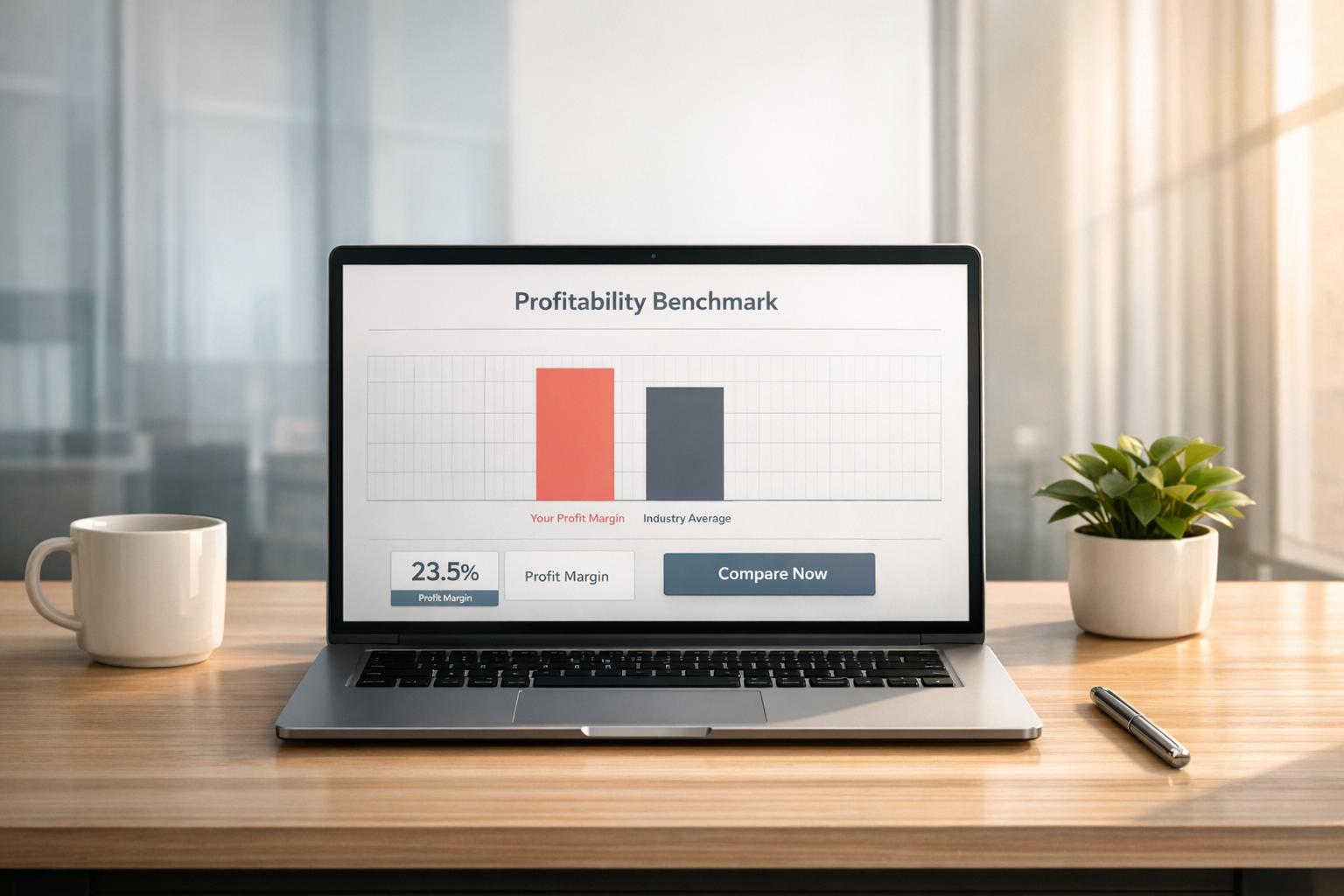
Running a small business or managing a growing enterprise comes with endless questions about financial health. Are you earning enough compared to others in your industry? A profitability benchmark tool can offer quick insights by comparing your profit margins to standard metrics across sectors like retail, tech, or manufacturing. It’s a straightforward way to see where you stand.
Understanding your financial performance isn’t just about crunching numbers—it’s about context. When you measure your net profit margin against industry averages, you gain perspective on whether your business model is sustainable or needs adjustment. For instance, if you’re in retail and your margin is far below the typical 5%, it might be time to rethink costs or pricing. On the flip side, surpassing the norm could mean you’re ready to scale. Tools that analyze business earnings provide a reality check, helping owners make informed decisions without guesswork.
The beauty of digital resources like these is their simplicity. Plug in a few key figures, and you’ve got actionable data to guide your next steps. Whether you’re tweaking operations or planning growth, benchmarking your profits is a smart first move.
Profit margin is just your net profit divided by your revenue, shown as a percentage. It tells you how much of every dollar you earn is actual profit after expenses. It’s a big deal because it shows how efficiently your business operates compared to others in your field. A low margin might mean you’re spending too much or not charging enough, while a high one could signal you’ve got a strong grip on costs.
The benchmarks we use are based on widely accepted industry averages pulled from financial reports, market research, and business studies over recent years. For example, retail often hovers around 5%, while tech can hit 15% or more due to higher scalability. While these figures aren’t tailored to every niche or region, they give a solid baseline to measure against. If you’re in a very specific sector, consider digging into more detailed data too.
Don’t panic—being below the benchmark doesn’t mean your business is failing; it just highlights room to grow. Start by looking at your expenses—are there costs you can trim without hurting quality? Also, think about pricing: could you charge more for your products or services? Sometimes small tweaks, like negotiating with suppliers or focusing on higher-margin offerings, can make a big difference. If you’re stuck, a chat with a financial advisor might help uncover specific strategies.