Published on
December 3, 2025

Subscription models have reshaped how businesses earn revenue, focusing on recurring income rather than one-time sales. But this approach introduces challenges, especially around unit economics - the balance between what a customer costs to acquire and serve versus the revenue they generate. Key takeaways include:
Subscription businesses must manage delayed payback periods, optimize pricing models (e.g., tiered or usage-based), and reduce churn to ensure profitability. For instance, improving pricing by just 1% can boost operating profit by 11.1%. By focusing on retention, pricing strategies, and cost management, companies can strengthen their financial performance.
Subscription businesses operate under a unique financial framework that sets them apart from traditional transactional models. Unlike a retail store that can immediately calculate profit after a sale, subscription companies face a delayed path to profitability. This delay creates several challenges that can significantly impact their success.
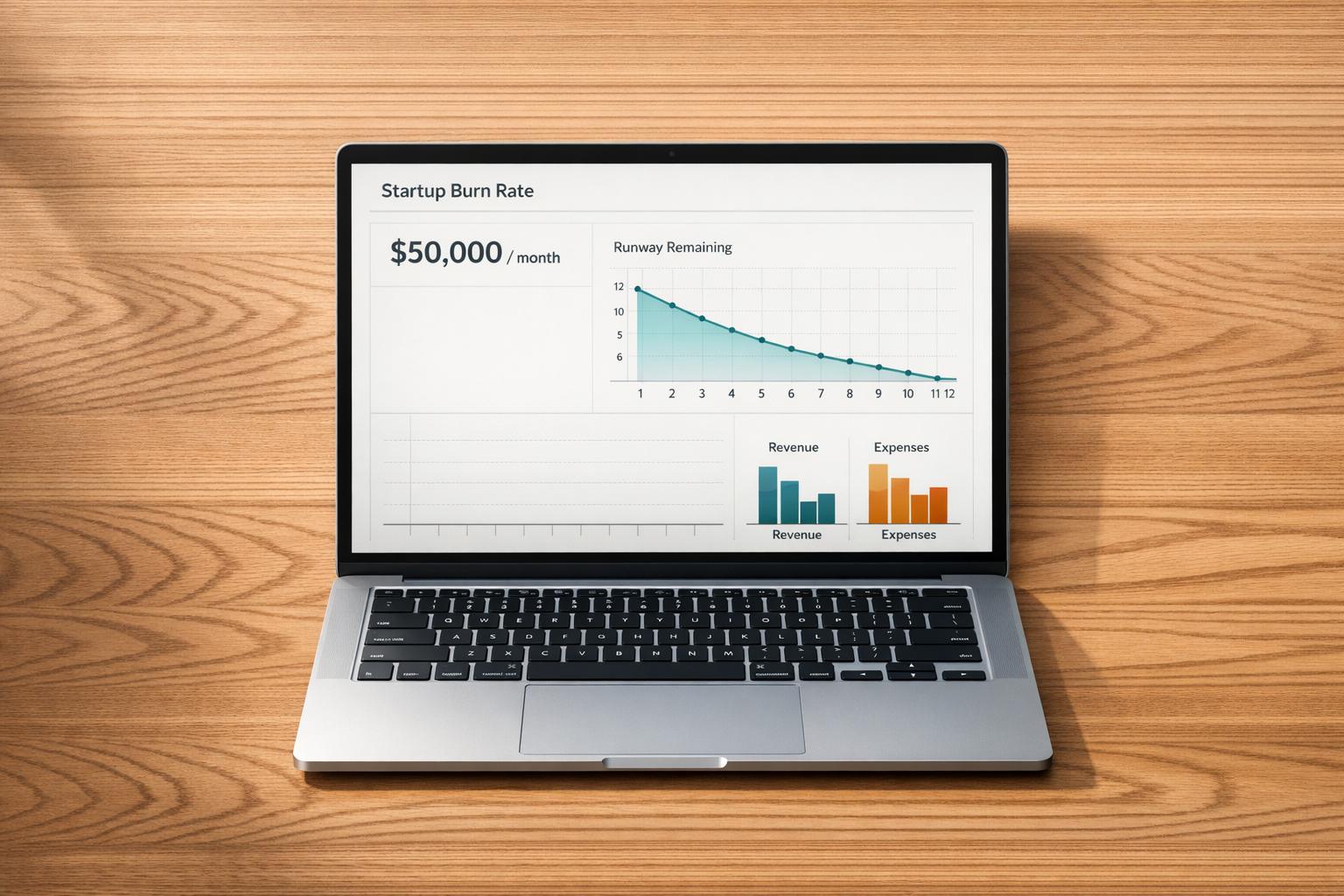
In a traditional business, the math is straightforward: a $100 sale with $60 in costs leaves a clear $40 profit. Subscription businesses, however, play a longer game. Imagine a scenario where acquiring a customer costs $600, and the monthly subscription revenue is $50. It would take 12 months just to break even. The initial loss only turns into profit if the customer stays subscribed long enough.
This gradual revenue accumulation forces subscription companies to focus on metrics like Monthly Recurring Revenue (MRR) and Annual Recurring Revenue (ARR) to gauge financial health. These metrics provide a snapshot of future revenue potential based on the current subscriber base. But there’s a catch: companies must balance the upfront costs of acquiring customers with the long-term revenue they expect to earn. A customer acquired at a loss today can become profitable - if retention holds steady. This delayed revenue stream introduces additional hurdles, such as the impact of churn and the challenge of extended payback periods.
Churn, or the rate at which customers cancel their subscriptions, is a major pain point for subscription-based businesses. Unlike transactional models where the relationship ends with a purchase, subscriptions depend on keeping customers engaged over time. When churn occurs, all the projected revenue tied to that customer’s lifetime value vanishes. For example, if a business spends $500 to acquire a customer expecting $100 per month in revenue, but the customer cancels after three months, the company ends up losing $200 on that acquisition.
High churn rates create a vicious cycle. Companies have to spend more on acquiring new customers just to replace those who leave, which can quickly drain resources. Flat-rate pricing models often exacerbate this problem. Power users might feel they’re not getting enough value, while light users may feel they’re overpaying. As a result, businesses using one-size-fits-all pricing often grow 30% slower than those with more tailored strategies [4]. Adjusting pricing to better match the value delivered can help reduce churn and improve overall profitability.
But churn isn’t the only challenge. The time it takes to recover customer acquisition costs - known as the CAC payback period - also plays a critical role in a subscription company’s growth trajectory.
The Customer Acquisition Cost (CAC) payback period measures how long it takes for a customer to generate enough revenue to cover the cost of acquiring them. For instance, if a company spends $1,000 to acquire a customer who brings in $200 per month, the payback period is five months. Unlike traditional businesses that get paid in full upfront, subscription companies collect revenue gradually, stretching out the timeline for profitability.
A long payback period creates financial strain. Companies must rely on cash reserves or external funding to sustain operations while waiting for new subscribers to become profitable. This delay can slow down growth. A business with a 12-month payback period can only expand as quickly as it can finance new customer acquisition. On the other hand, a company with a three-month payback period can reinvest revenue much faster, gaining a competitive edge.
"As a home service business owner, understanding complex financials and Unit Economics always seemed overwhelming - until we started working with Phoenix Strategy Group." - Rob Mulvin, Founder / CEO, All Pro Shade
Different pricing models can also impact the payback period. For example, usage-based pricing often lowers customer acquisition costs by about 25%, as it reduces the initial barrier to entry [4]. Customers can start small and increase their spending as they see more value, making it easier to attract new subscribers. However, during growth phases, businesses must carefully manage acquisition spending relative to their payback periods. Overspending can create cash flow problems, even if the business is profitable on a per-customer basis. Optimizing the CAC payback period is critical for ensuring sustainable growth in subscription models.
Subscription-based businesses rely on specific metrics to evaluate their financial health and shape their strategies. Unlike traditional models that focus on short-term profits, these businesses prioritize metrics that reflect long-term performance. These metrics not only provide insights into current operations but also help refine pricing strategies for sustainable growth.
Lifetime Value (LTV) measures the total revenue a customer generates during their relationship with a subscription business[2]. It's influenced by factors like retention rate, Average Revenue Per User (ARPU), and subscription duration. For example, increasing ARPU from $50 to $75 per month over a 24-month period raises LTV from $1,200 to $1,800 - a 50% improvement. Similarly, even a slight reduction in churn can extend customer lifespans, significantly boosting LTV.
ARPU plays a pivotal role in driving LTV. Businesses often increase ARPU by adopting tiered pricing models, promoting upgrades to higher-tier plans, or offering premium add-ons. These strategies can enhance LTV by up to 50% and increase growth rates by as much as 25%[4][5]. A great example is Slack's per-active-user pricing model. As organizations expand their use of Slack, the platform’s value grows with the number of users, leading to natural revenue growth without requiring additional sales efforts[3].
Customer Acquisition Cost (CAC) is the total cost of sales and marketing divided by the number of new paying customers acquired[2]. For instance, if a company spends $50,000 on marketing and gains 500 new customers, the CAC is $100 per customer.
A healthy LTV:CAC ratio typically falls between 3:1 and 5:1, meaning each customer should generate three to five times the cost of acquiring them. If LTV drops below CAC, the business incurs a loss on every acquisition. For example, with an LTV of $1,200 and a CAC of $300, the ratio is 4:1, indicating strong unit economics. A 1:1 ratio, however, signals unsustainable practices[2].
Pricing models also impact CAC efficiency. Companies using value-based pricing often see 8–10% lower CAC compared to flat-rate models[3]. Usage-based pricing reduces CAC by about 25% due to lower entry barriers, while freemium models can slash CAC by up to 60%, though they require a larger user base to achieve profitability[4].
Monthly Recurring Revenue (MRR) represents the predictable income generated from active subscriptions in a single month, while Annual Recurring Revenue (ARR) is calculated by multiplying MRR by 12[6][7]. For example, a SaaS business with 1,000 customers paying $100 per month earns an MRR of $100,000, which translates to an ARR of $1.2 million.
These metrics highlight revenue stability and predictability. By incorporating MRR and ARR into their unit economics models, businesses can make better decisions about scaling operations, adjusting pricing strategies, and allocating resources based on projected revenue trends[2].
The way you structure pricing directly shapes your revenue streams and influences key metrics like Customer Acquisition Cost (CAC), Customer Lifetime Value (LTV), and Average Revenue Per User (ARPU).
Flat-rate pricing charges a fixed amount, which makes revenue predictable and ARPU consistent. But there’s a catch. Research from Price Intelligently reveals that companies relying on a one-size-fits-all pricing approach grow 30% slower than those using more tailored pricing strategies[4]. Why? A flat-rate model often fails to align with the diverse needs of different customer segments. Power users may feel they’re not getting enough value, while light users may feel they’re overpaying. This mismatch can lead to higher churn rates across both groups[4].
Another drawback is the extended payback period. Flat-rate pricing doesn't provide the flexibility to adapt to customer growth or changing needs, which limits opportunities for upselling. A tiered model, however, offers a way to address these challenges.
Tiered pricing solves many of the issues with flat-rate models by segmenting customers based on their needs and willingness to pay. Instead of a single price, you offer multiple tiers - often labeled as Basic, Business, and Enterprise - each with increasing features and capacity. This approach not only caters to different customer segments but also creates clear pathways for growth.
According to OpenView Partners' 2022 SaaS Benchmarks, companies using tiered pricing grow 25% faster than those with a single-tier model[4]. Even more striking, B2B SaaS companies offering three or more pricing tiers see growth rates 44% higher than those sticking to a single price point[3].
The economics of tier upgrades are particularly appealing. When customers move to a higher tier, the cost of acquiring that additional revenue is typically 20–30% lower than acquiring a brand-new customer[4]. For instance, Phoenix Strategy Group uses a tiered structure with plans priced at $96, $192, and $384 per year. This setup not only encourages upgrades but also boosts the LTV:CAC ratio without requiring additional acquisition costs. On the other hand, usage-based pricing takes a different approach by tying revenue directly to the value delivered.
Usage-based pricing charges customers based on how much they consume - whether that’s API calls, data storage, active users, or transactions. This model aligns revenue growth with customer success. According to data from Paddle, usage-based pricing reduces friction at the entry point, leading to 25% lower acquisition costs compared to traditional models[4]. In fact, in 2021, SaaS companies using usage-based pricing grew at a 38% higher rate than those relying solely on subscription models[4].
Choosing the right value metric is crucial. ProfitWell research shows that companies using value-metric pricing experience 8–10% lower CAC than those with flat-rate models[3]. While ARPU and payback periods may initially be lower than with subscription models, they improve as customers derive more value and naturally increase their usage over time.
McKinsey research highlights just how impactful pricing decisions can be: a 1% improvement in pricing can lead to an 11.1% increase in operating profit[3]. Ultimately, the choice between flat-rate, tiered, and usage-based pricing isn’t just about how you bill customers - it’s a strategic decision that influences every aspect of your unit economics.
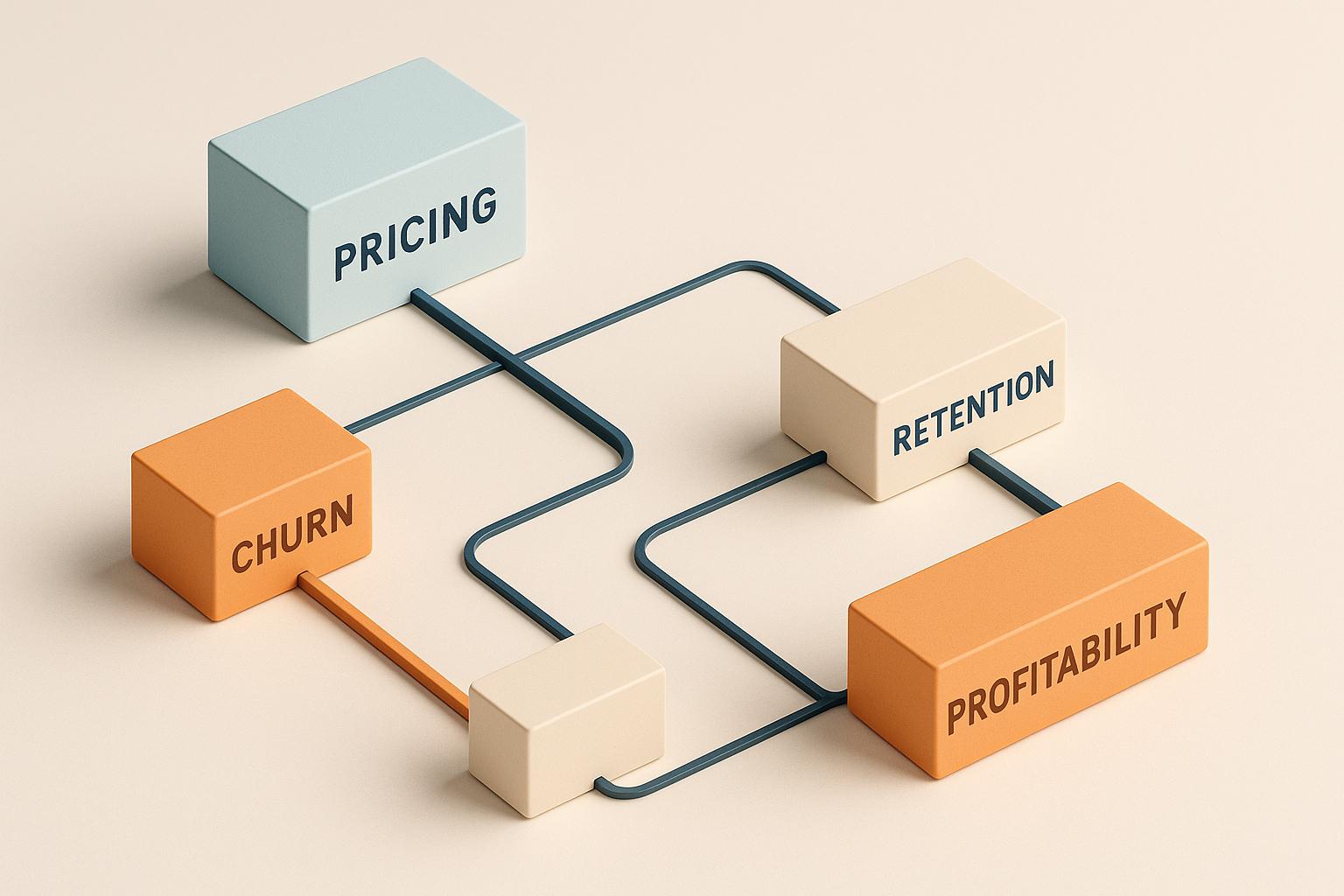
Tackling the challenges and metrics of subscription models requires a hands-on approach to improving unit economics. By focusing on pricing, retention, and operational efficiency, businesses can create a ripple effect that strengthens profitability. These three areas work together, influencing key metrics and driving sustainable growth.
Adjusting pricing strategies is one of the most effective ways to boost unit economics. A strong pricing foundation starts with aligning charges to the value customers receive - this is called value-metric pricing. Essentially, customers pay based on their usage, which naturally scales with the value they derive. For instance, Slack's per-active-user pricing model allows revenue to grow as more users adopt the platform, all without requiring additional sales efforts. Companies using this approach often see an 8–10% reduction in Customer Acquisition Cost (CAC) compared to those sticking to flat pricing models[3].
Combining value-metric pricing with tiered pricing structures creates clear paths for revenue growth. Research from Simon-Kucher & Partners highlights that B2B SaaS companies offering three or more pricing tiers grow 44% faster than those with a single price point[3]. Additionally, encouraging customers to upgrade to higher tiers is 20–30% cheaper than acquiring entirely new customers[4].
Effective pricing strategies rely on systematic experimentation. Mixpanel, for example, ran an 18-month pricing optimization effort that increased their average contract value by 30% while keeping conversion rates steady. They used a mix of A/B testing for new customer segments, grandfathering existing customers during price changes, and cohort analysis to fine-tune their pricing adjustments[3].
Some companies, like Zendesk, have taken this a step further by forming cross-functional pricing committees. These teams meet regularly to evaluate pricing performance, ensuring that sales, product, and marketing teams are aligned. This alignment helps sales teams understand unit economics, encourages product teams to design features with tiering in mind, and ensures marketing communicates clear value.
Once pricing strategies are optimized, the next area to tackle is retention, as it secures the revenue gains achieved through improved pricing.
Retention is key to increasing Customer Lifetime Value (CLV). Tiered pricing helps reduce churn by offering plans that better match customer needs. Flat-rate models, on the other hand, often risk losing customers by overcharging light users or underdelivering for heavy users[4].
Segmenting customers can reveal which groups have the highest retention rates and profitability. For example, unit economics analysis might show that certain segments require more support or have lower retention rates. This insight allows businesses to adjust pricing or create targeted retention strategies[2].
Customer Success teams play a pivotal role here. By proactively engaging with customers based on their usage patterns, these teams can demonstrate value, encourage renewals, and even drive account expansion[3]. Personalized, timely interactions often make the difference between retaining a customer and losing them.
While pricing and retention are critical, operational efficiency is the third lever that strengthens unit economics.
Operational efficiency directly influences unit economics by lowering the cost of serving each customer. A detailed analysis of unit economics can uncover cost drivers, guiding better resource allocation and identifying areas for reinvestment into growth[2].
Automation is a powerful tool for improving efficiency. For example, Phoenix Strategy Group’s Weekly Accounting System uses real-time financial data to eliminate delays in reporting. This approach not only reduces manual workload but also ensures accurate tracking of unit economics, freeing up resources for other growth initiatives.
Regularly reviewing vendor contracts and platform fees can also uncover savings. As businesses grow, they often qualify for volume discounts or better terms. Additionally, optimizing infrastructure costs - whether for cloud hosting, payment processing, or third-party tools - can prevent inefficiencies, especially as customer bases scale from hundreds to thousands.
Different customer segments often have varying impacts on profitability. For instance, some segments may demand more support or generate less expansion revenue. By analyzing these patterns, companies can adjust their pricing, improve efficiency for high-cost segments, or even exit unprofitable markets[2]. Regular monitoring of unit economics ensures that these adjustments are timely and effective.
Improving unit economics isn’t a one-time task - it’s an ongoing process. Companies that treat it as such can achieve stronger financial performance and build a lasting competitive edge.
Subscription models are reshaping how businesses approach financial planning, making even small changes to metrics like LTV (Lifetime Value), CAC (Customer Acquisition Cost), and churn rates critical for success. These metrics can be the difference between sustainable growth and spiraling costs [8].
For instance, maintaining a 3:1 LTV:CAC ratio is a strong indicator that every customer generates sufficient value compared to what it costs to acquire them [3]. However, even small increases in churn can significantly reduce LTV, delay CAC payback periods, and weaken metrics like Net Revenue Retention (NRR), which impacts access to capital [8].
Your pricing structure - whether flat-rate, tiered, or usage-based - plays a pivotal role in driving growth. Data shows that tiered pricing can accelerate growth by 25%, while usage-based models deliver 38% higher growth rates compared to traditional subscription models [4]. These strategies align pricing with customer-perceived value, lower barriers to entry, and encourage natural expansion.
To optimize unit economics, businesses must focus on strategic pricing, retention efforts, and operational efficiency. For example, improving pricing by just 1% can lead to an 11.1% increase in operating profit. Similarly, reducing churn by 1–2% can significantly extend customer lifetimes [3].
"As a home service business owner, understanding complex financials and Unit Economics always seemed overwhelming - until we started working with Phoenix Strategy Group."
- Rob Mulvin, Founder / CEO, All Pro Shade [1]
Strong unit economics provide a clear picture of financial health at the customer level [8]. Regularly recalculating these metrics - whether quarterly or during major business updates - helps ensure accuracy and reveals opportunities for improvement [2]. By staying on top of these numbers, businesses can position themselves for steady financial performance and maintain a competitive edge.
For growth-stage companies tackling these challenges, expert financial guidance can make all the difference. Phoenix Strategy Group specializes in helping businesses scale efficiently through financial modeling, real-time data systems, and strategic advice on pricing and unit economics. Their expertise transforms founder-led operations into scalable businesses with dependable metrics and predictable growth paths.
Reducing churn is crucial for subscription businesses aiming to maintain steady growth and boost profitability. The first step is understanding why customers leave. Common culprits include poor onboarding experiences, low engagement, or unmet expectations. Tackle these issues by enhancing customer support, creating personalized interactions, and ensuring your product consistently meets or exceeds customer needs.
To stay ahead, monitor key metrics like customer satisfaction scores (CSAT), Net Promoter Scores (NPS), and usage patterns. These indicators can help pinpoint customers who might be at risk of leaving. Once identified, engage with them proactively - whether through personalized outreach, special incentives, or tailored solutions - to rebuild trust and demonstrate value.
By keeping churn in check, you not only stabilize recurring revenue but also ease the burden of constantly acquiring new customers, which can significantly improve your overall business economics.
To improve the Customer Acquisition Cost (CAC) payback period, subscription-based businesses can focus on a few smart strategies. Start by targeting high-value customers - those more likely to stay with your service for the long haul. These customers not only reduce churn but also boost Customer Lifetime Value (CLV), making it easier to recover acquisition costs faster.
Next, look for ways to make your marketing and sales efforts more efficient. This might involve using budget-friendly digital marketing channels, optimizing your website to improve conversion rates, or introducing referral programs that encourage organic growth without hefty spending.
Finally, work on keeping your existing customers happy and engaged. Deliver consistent value through personalized experiences to build loyalty and reduce churn. A steady stream of recurring revenue can significantly cut down the time it takes to recoup your acquisition costs.
Tiered and usage-based pricing models play a crucial role in shaping the unit economics of a subscription business, directly impacting metrics like recurring revenue, churn, and customer acquisition costs (CAC).
With tiered pricing, businesses can appeal to a wider audience by offering multiple pricing options. This approach can lead to higher average revenue per user (ARPU) and make revenue streams more predictable. On the flip side, managing several tiers can add operational challenges, as businesses must carefully track and manage customers moving between pricing levels.
Usage-based pricing, on the other hand, aligns revenue with customer activity. This model can drive growth during periods of high usage, offering flexibility that many customers value. However, it comes with the challenge of potential revenue swings and requires a delicate balance to maintain profitability while keeping churn rates in check.
To maximize profitability and support sustainable growth, it’s essential to understand how these pricing strategies influence metrics like CAC, customer lifetime value (CLV), and churn.