Published on
March 7, 2026

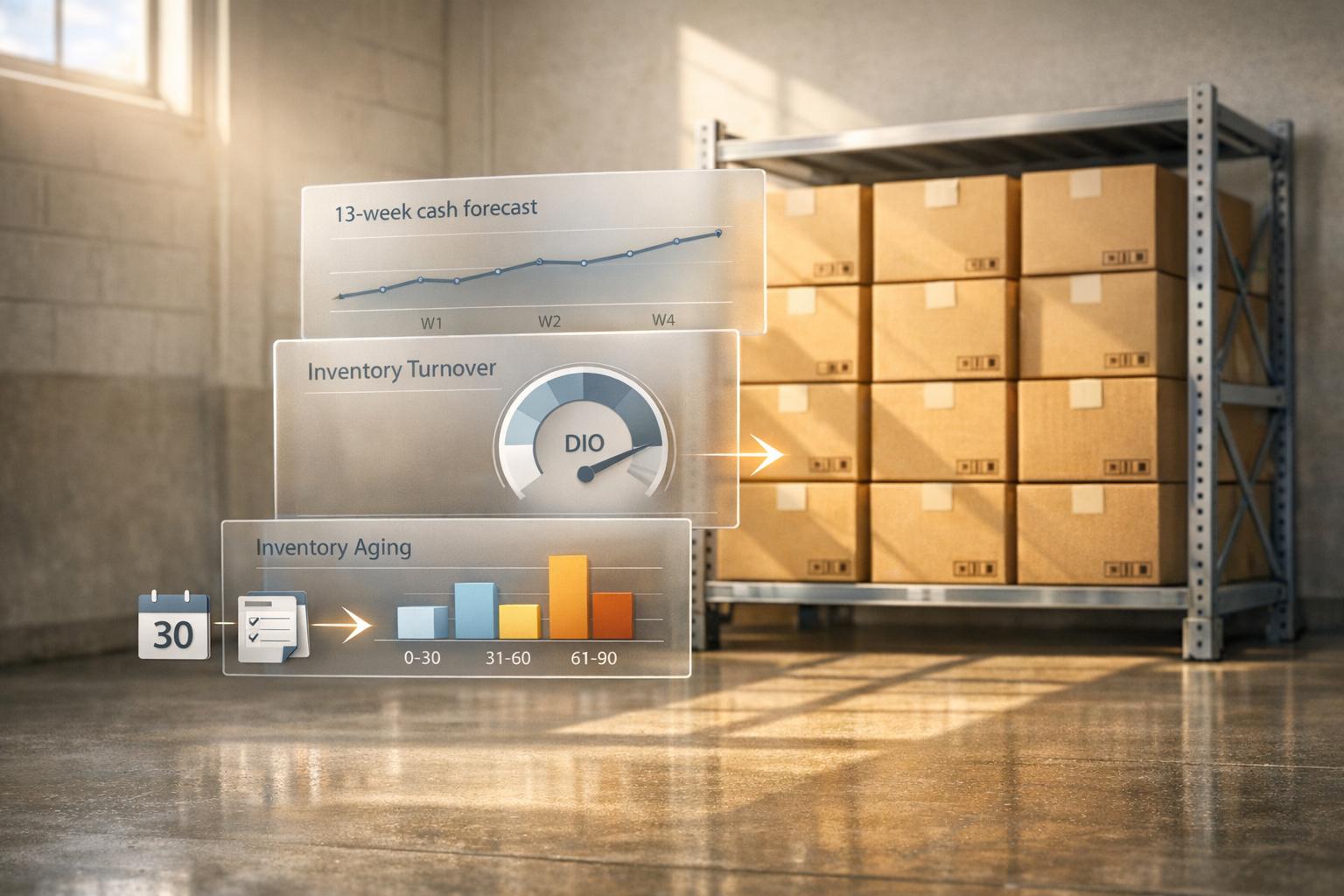
Managing inventory effectively is essential for U.S. growth-stage companies to maintain healthy cash flow. Inventory often represents a significant cash investment, and mismanagement - whether through overstocking or understocking - can lead to financial strain, even for profitable businesses. Here’s the key takeaway: inventory should be treated as a financial asset, not just an operational necessity.
By focusing on these strategies, businesses can balance inventory levels with cash flow needs, ensuring sustainable growth without financial bottlenecks.

The True Cost of Inventory Mismanagement: Key Statistics for Growth-Stage Companies
Inventory mismanagement is a silent cash flow killer. The combined effects of overstock and understock - referred to as inventory distortion - cost businesses around the globe a staggering $1.77 trillion annually. [9] For U.S.-based growth-stage companies, the stakes are even higher. These issues tend to surface during critical periods when cash is needed to fuel expansion, hire talent, or ramp up marketing efforts.
When it comes to inventory, both extremes - overstocking and understocking - can wreak havoc on cash flow.
Overstocking ties up working capital in unsold goods. On top of that, inventory carrying costs - covering storage, insurance, and the opportunity cost of immobilized funds - can eat up 20-30% of the inventory's value annually. For businesses in seasonal industries, the pain doesn’t stop there. Unsold products often face markdowns or become obsolete, leading to additional losses of 5-10% of total inventory value. [11] Companies dealing with perishable goods, like health and beauty brands, are hit even harder, as excess stock often has to be donated or destroyed. [8]
On the flip side, understocking creates its own set of costly problems. Stockouts can cost 20-40% of a product's selling price, factoring in lost sales, strained customer relationships, and the expense of expedited shipping to fulfill backorders. [11] When companies scramble to cover shortages, they enter a reactive cycle of rush orders, overtime production, and premium freight costs - raising per-unit expenses by 50-200%. [11] In both cases, cash flow suffers: overstocking drains funds through carrying costs, while understocking leads to lost revenue and inflated operational expenses.
At the heart of most inventory issues lies poor demand forecasting. Traditional forecasting methods often miss the mark, with planning errors ranging from 30-50%. These inaccuracies cost companies 10-15% of their annual revenue. [11] Such errors create a ripple effect, amplifying demand fluctuations up the supply chain and resulting in either severe shortages or excessive overstock. [12]
The situation worsens when different teams - finance, operations, and sales - operate on disconnected systems. This misalignment leads to purchasing decisions based on conflicting assumptions. [10] When data is fragmented, the time spent manually consolidating information often renders forecasts outdated before they’re even applied. [9] Without real-time insights into what’s selling and what’s gathering dust, businesses resort to gut instincts or overly cautious planning. Both approaches introduce bias and destabilize cash flow. [11][12]
Beyond forecasting errors, inefficient purchasing practices further strain cash flow. Bulk buying to secure discounts can backfire when it locks up cash in inventory that doesn’t sell quickly. For growth-stage companies, poorly timed purchases can divert capital away from strategic initiatives. [13]
Relying on a small pool of suppliers also limits flexibility. With fewer options, businesses often have to accept higher costs or shorter payment terms, putting additional pressure on cash reserves. [13] Variability in supplier lead times adds another layer of complexity. Companies that assume fixed delivery schedules often find themselves scrambling to cover delays with costly emergency purchases. [13]
Manual purchase order management only compounds these issues. Approval delays and errors force teams to spend valuable time addressing urgent problems instead of focusing on cash flow strategy. [13] As businesses grow - handling more SKUs and operating across multiple locations - these inefficiencies snowball, cutting into margins and stretching the cash conversion cycle even further. [13]
Metrics are the backbone of turning inventory management into a precise, data-driven process. Without clear insight into how inventory impacts cash flow, many growing companies face challenges like locked-up capital in slow-moving products or stockouts that hurt revenue. Tracking the right financial metrics can help avoid these pitfalls.
Inventory Turnover measures how often you sell and replace inventory within a given period. To calculate it, divide your Cost of Goods Sold (COGS) by your Average Inventory. For instance, if your annual COGS is $3,000,000 and your average inventory is $500,000, your turnover is 6×. A higher turnover means inventory converts to cash more quickly, cutting down on carrying costs [1][16].
Days Inventory Outstanding (DIO), on the other hand, gives a time-based perspective, showing how many days cash is tied up in inventory before it turns into sales. Using the same example, DIO would be about 61 days (($500,000 ÷ $3,000,000) × 365) [6][16]. If you reduce DIO to 50 days while keeping COGS constant, your average inventory drops to around $410,959. That change could free up nearly $89,000 in cash - money that could go toward hiring, marketing, or paying down debt. Lowering DIO shortens the cash conversion cycle, improving liquidity [6].
Profitability at the product level matters. Gross Margin by SKU helps identify which products generate the most profit and which ones drain working capital. For example, a product with a 15% margin might move inventory dollars but contributes far less to cash flow than one with a 40% margin at similar volumes. Tracking margins at the SKU level allows you to pinpoint underperforming products that tie up cash unnecessarily. You can then decide whether to discontinue, discount, or negotiate returns for these items [3][15][16].
Aging Inventory highlights how long stock has been sitting in your system, broken into categories like 0–30 days, 31–60 days, 61–90 days, and over 90 days [1][2]. Inventory that lingers beyond 60 days becomes a red flag, as it ties up cash and incurs additional costs like storage and insurance. Items that sit for over 90 days often require steep discounts or liquidation to recover working capital. Regular aging reports help you act before these products turn into a permanent financial burden [1][2][14][15].
Relying on monthly reports is too slow. Real-Time Cash Flow Dashboards provide an integrated view of inventory levels, turnover rates, DIO, aging categories, and supplier payment schedules [14][17]. This setup allows you to quickly identify issues, such as $275,000 worth of inventory sitting idle for over 90 days or excess stock at specific locations. With this information, you can make timely decisions about replenishment, promotions, or purchasing [14].
The most effective dashboards combine inventory metrics with cash flow data, showing both quantities and dollar values. This makes it easier to see how purchasing decisions directly affect liquidity [14][17]. Automating data collection further reduces delays and errors, enabling quicker responses to inventory imbalances before they strain your cash reserves [14].
Start by analyzing at least two years of clean, SKU-specific sales data. This data should be adjusted for anomalies like one-time bulk orders or promotional spikes and should account for seasonality. External factors such as macroeconomic trends, industry-wide signals, or customer sell-through rates can further refine your demand forecasts [14][15].
Make forecasting a dynamic process. Use weekly or monthly forecasting models integrated with ERP systems to automate reorder adjustments. To ensure accuracy, regularly evaluate models using metrics like mean absolute percentage error (MAPE) and bias. This approach helps you stay flexible and avoids relying on outdated, static annual plans [14].
For organization-wide alignment, hold monthly Sales & Operations Planning (S&OP) meetings. These sessions bring together sales, operations, and finance to create a unified forecast. Sales contributes customer insights and pipeline data, operations verifies capacity and lead times, and finance integrates cash flow and margin considerations. The resulting forecast, shared via dashboards with detailed breakdowns by region, customer, and product, becomes the foundation for production plans, purchase orders, and cash flow projections [19].
Once your demand forecasts are sharper, use them to fine-tune your inventory management strategy.
Use ABC segmentation to prioritize inventory management. This method categorizes items based on their contribution to total dollar usage:
Reassess these categories every quarter using the latest 12 months of data [18].
For A-items, maintain high service levels by keeping safety stock tight and replenishing frequently, while closely monitoring lead times and supplier reliability. B-items can follow standard reorder points with periodic reviews, while C-items may benefit from longer reorder intervals or strategies like make-to-order or discontinuation to reduce cash tied up in inventory.
To tackle slow-moving or obsolete stock, create an aging inventory report that flags items exceeding defined thresholds (e.g., 90 or 180 days). Focus on those with the highest on-hand value. Strategies to clear this inventory include targeted discounts, bundling, or channel-specific promotions. For items unlikely to recover their cost, consider a controlled write-down or liquidation to free up cash and cut carrying costs [18].
With inventory segmented, you can shift focus to purchasing practices that reduce cash strain.
Refining supplier terms is a practical way to ease cash flow pressures. Negotiating longer payment terms - like moving from Net 30 to Net 45 or Net 60 - can extend Days Payable Outstanding, giving you more breathing room between paying suppliers and collecting from customers [20][7]. Vendor-managed inventory (VMI) or consignment arrangements can further reduce cash burdens by keeping inventory ownership with suppliers until products are sold or used [14][20].
Use historical purchasing data and demand forecasts to negotiate better terms with suppliers. This could mean extended payment windows, reduced minimum orders, or shorter lead times. For key suppliers, sharing demand forecasts and inventory data can lead to more flexible ordering schedules. Additionally, standardize purchase approvals based on inventory metrics like turnover, Days Inventory Outstanding, and aging reports to avoid over-ordering when inventory levels are already high [19].
Develop a 13-week cash flow forecast that ties inventory purchase commitments directly to demand plans and purchase orders through integrated systems [18][19][7].
Run scenario analyses to understand how different inventory strategies might impact cash reserves and borrowing capacity. Set clear financial limits, such as minimum cash balances or borrowing caps, to ensure inventory levels stay financially sustainable. Review this integrated view weekly with teams from operations, finance, and sales to adjust orders or payment schedules proactively and avoid cash crunches.
Key metrics to monitor include inventory turnover, Days Inventory Outstanding, gross margin by SKU, and aging buckets (e.g., 0–30 days, 31–90 days, etc.). Set goals like improving turnover by 10–20% within 6–12 months or capping DIO for high-value items at 30–45 days. Weekly reviews should focus on exceptions, such as SKUs exceeding on-hand limits or large upcoming payments, while monthly meetings with leadership can address bigger strategic shifts like renegotiating supplier terms or adjusting order quantities [18][15].
These steps, when implemented together, create a framework for balancing inventory and cash flow while minimizing financial risks. Expert oversight can ensure these strategies are executed effectively.
Maintaining the progress made in inventory management requires consistent collaboration across departments. This isn't a one-and-done task - it’s an ongoing process that ties together finance, operations, and sales efforts [1][3]. Regular cross-functional meetings can help teams stay aligned by reviewing a shared dashboard of critical metrics like inventory turnover, DIO (days inventory outstanding), purchase orders, sales forecasts, and a 13-week cash flow projection. During these meetings, each department brings its expertise to the table: operations shares supplier performance and lead time updates, sales provides insights into pipeline visibility and promotional schedules, and finance translates all this into cash flow and working capital requirements [3][4].
Strong systems and clear policies are key to preventing inventory from becoming a cash drain. Implementing an integrated ERP system can give real-time insights into stock levels, COGS (cost of goods sold), and purchase commitments [1][6]. Establishing cash coverage policies ensures liquidity, such as maintaining enough cash to cover two to three months of fixed operating expenses before approving large inventory purchases [4][5]. You can also set escalation triggers, like requiring approval for any purchase orders over $50,000 if projected cash reserves fall below 1.5 times monthly payroll within the next eight weeks [1][4]. These safeguards help align inventory decisions with your company’s cash position.

Phoenix Strategy Group specializes in fractional CFO and FP&A services, offering tailored solutions like SKU-level demand modeling, aligning purchasing calendars with seasonal trends, and integrating these insights into both short-term and long-term cash flow forecasts [3][4][7]. They also streamline operations by connecting accounting, inventory, and business intelligence systems, enabling leaders to track real-time metrics such as inventory turns, DIO, aging reports, and cash runway. Automated alerts ensure that any breaches in thresholds are flagged promptly [1][6][7].
Beyond internal systems, Phoenix Strategy Group assists with supplier negotiations to secure better payment terms, structures lender agreements to reflect realistic inventory needs, and builds financial models that support equity raises or exits [3][4][7]. Drawing on their experience with similar businesses, they can pinpoint weaknesses in inventory policies and cash cycles, benchmark against industry standards, and create scenario models. These models demonstrate how changes - like adjusting supplier terms or safety stock levels - could impact cash flow over the next six to 24 months [3][4]. By providing these insights, they empower businesses to make informed, strategic decisions.
The challenges and solutions discussed highlight the critical financial impact of inventory management. Missteps in this area can drain cash quickly: overstocking ties up capital unnecessarily, while understocking leads to missed sales and costly rush orders. Poor demand forecasting introduces unpredictability in purchasing and cash flow, and inefficient supplier terms can stretch the cash conversion cycle. For many U.S. growth-stage companies, these issues often appear as swelling inventory levels, heavier reliance on credit lines, and cash shortages, even when revenues are climbing.
The fix? Treat inventory as a financial asset rather than just an operational necessity. Regularly track metrics like inventory turnover, Days Inventory Outstanding (DIO), and gross margins by SKU. Use historical data and account for seasonality to improve demand forecasting and avoid guesswork. Segment inventory using methods like ABC analysis to prioritize spending on high-impact products. Beyond that, negotiate better supplier terms and align large purchase orders with a 13-week cash flow forecast to avoid surprises.
Companies that thrive in this area adopt a disciplined approach to inventory and cash management. Sustainable growth depends on cash-conscious decisions rather than aggressive, unchecked expansion. Every day inventory sits idle extends the gap between paying suppliers and receiving payments from customers. Successful companies create a structured routine - weekly meetings to review inventory and cash with teams from finance, operations, and sales; monthly KPI evaluations; and quarterly strategic reviews of product assortments and supplier relationships.
Whether you build these capabilities internally or collaborate with Phoenix Strategy Group, the objective is clear: establish a data-driven inventory strategy that supports growth while preserving cash reserves.
Start with a 30-day review of inventory turnover, DIO, and aging reports alongside your cash position and upcoming orders. Identify one or two actionable steps - like negotiating extended terms on a large order or clearing out slow-moving products - that could free up cash within the next quarter.
A healthy inventory turnover varies by industry, but as a rule of thumb, higher turnover often indicates better efficiency. A lower Days Inventory Outstanding (DIO) suggests that inventory is being sold more quickly, which is a good sign for your business. Strive for a DIO and turnover rate that match your industry's benchmarks to keep cash flow steady and operations running smoothly.
Creating a 13-week cash flow forecast that includes inventory purchases starts with analyzing historical financial data and sales patterns. This helps you estimate revenue, costs, and inventory expenses effectively. Divide the forecast into weekly segments, detailing cash inflows (like sales and receivables) and cash outflows (such as payroll, operating costs, and inventory purchases).
To improve accuracy, use key metrics like inventory turnover and days inventory outstanding. These provide insights into how quickly inventory is sold and how long it stays in stock. It's also crucial to update your forecast regularly, incorporating real-time figures and adjusting for seasonal fluctuations. This keeps your projections aligned with actual business performance.
If you're looking to align your cash flow strategy with your business goals, consider negotiating Net 45/60 payment terms or exploring vendor-managed inventory (VMI) options. Extending payment terms can help improve liquidity by giving you more time to manage outgoing payments - especially useful during periods of growth when cash flow might be tighter.
VMI, on the other hand, shifts the responsibility of inventory management to your suppliers. This can cut your costs and free up resources, as suppliers take on the task of stocking and replenishing inventory. These approaches are particularly effective when your forecasts indicate a need for longer payment periods or better inventory management to support ongoing growth.