Published on
April 21, 2026


Engaging employees effectively is the backbone of successful cross-industry partnerships. Whether it's a tech company collaborating with healthcare or manufacturing, the key lies in aligning goals, fostering trust, and ensuring clear communication across teams. Here’s what you need to know:
Key Takeaways:
In tech companies, functional silos often create obstacles, especially when forming cross-industry partnerships. For example, finance teams may work independently from revenue-generating teams, which can derail efforts to align on growth initiatives. This disconnection becomes even more challenging in partnerships with industries like healthcare or manufacturing, where unified action across all departments is essential.
To overcome these barriers, tech companies need to turn forecasts into shared, actionable targets. When entering a partnership, everyone - from engineers to financial analysts - must work toward the same objectives. Weekly reviews of these targets help foster a culture of ongoing improvement and adaptability. This alignment not only strengthens internal collaboration but also helps bridge organizational differences with partners.
Cultural differences between organizations often stem from conflicting systems and metrics. For example, when companies bring their own reporting standards and tools into a partnership, it can lead to confusion and disagreements over basic facts. The solution? Centralized data engineering. By implementing ETL pipelines and shared data warehouses, all parties can access a single, consistent source of truth.
Another critical step is redefining the role of finance teams. Instead of sticking to traditional reporting duties, finance professionals can leverage fractional CFO services to take on more strategic roles, actively contributing to partnership goals. This shift ensures that every function becomes a proactive participant in the collaboration.
Once a unified data strategy is in place, the next step is integrating effective collaboration tools. Platforms like Slack, Microsoft Teams, and Zoom enable real-time communication, while specialized tools like Scayul take things further. Scayul helps tech startups identify potential partners, map out relationship networks, and turn informal connections into structured partnership pipelines [1][4][5].
Real-time dashboards also play a key role by visualizing critical metrics across all partner organizations. By integrating over 100 apps, these dashboards ensure teams stay aligned and have access to actionable insights, regardless of their technical expertise. Tools like these don’t just connect systems - they connect teams, fostering transparency and collaboration. This level of integration keeps employees focused on shared goals, ensuring that cross-industry partnerships remain productive and cohesive.
With a staggering 90% of healthcare CEOs identifying nurse shortages as a major challenge [6], the industry is thinking outside the box to address staffing issues. Healthcare organizations are now setting up internal staffing agencies, collaborating with local schools (like CoxHealth's partnership with Ozark Public Schools to establish Health Sciences Academies in Springfield, Missouri), and introducing specialized HR roles, such as "retentionists", to improve internal mobility [6]. These approaches are reshaping how clinical and administrative practices come together, paving the way for more integrated solutions.
Bringing clinical and administrative teams together requires a strong focus on shared goals and values. The American College of Healthcare Executives (ACHE) advocates for what they call a "culture of 'and'", emphasizing collaborative decision-making and inclusive leadership. Deborah J. Bowen, ACHE's President/CEO, captures the essence of this mindset:
Building the culture of 'and' will reap greater benefits for all [7].
To make this concept actionable, many healthcare organizations are adopting dyad or triad leadership models. These structures pair administrators, physicians, and nurses to co-lead units or projects, ensuring a balance of perspectives. Psychological safety also plays a key role in fostering collaboration. Senior leaders are increasingly opening up about their own mental health experiences to reduce stigma and encourage open conversations [6]. Just as seamless data sharing is critical in the tech world, creating a safe and supportive environment is vital in healthcare partnerships. Organizations that succeed in cross-industry collaborations often co-design governance frameworks and conflict management processes with all stakeholders involved. This approach, which encourages "healthy conflict", strengthens relationships and ensures smoother teamwork [8]. A unified culture also enhances the effectiveness of tools designed to improve communication and reduce administrative burdens.
Tailored collaboration tools are transforming how healthcare teams address their unique challenges. Atrium Health, for instance, uses a "Stoplight Method" during leader rounding to turn feedback into clear, actionable steps [6]. Another example is the "GROSS" program (short for Get Rid of Stupid Stuff), which focuses on cutting down unnecessary documentation - a task that currently consumes up to 35% of nurses' time. By reducing this burden, nurses can dedicate more time to patient care [6]. Additionally, crowdsourcing platforms are empowering frontline staff by giving them a voice in identifying and prioritizing workplace improvements. These tools not only address stressors but also create a sense of ownership among employees, fostering a more engaged and collaborative work environment [6].
In the manufacturing sector, much like in tech and healthcare, aligning the workforce is crucial for successful cross-industry partnerships. However, engagement remains a significant hurdle. Only 48% of manufacturing leaders believe their frontline workers feel genuinely engaged in their roles, while 62% of organizations report rising turnover rates year-over-year [10]. To address this, some manufacturers are moving away from focusing solely on individual performance metrics. Instead, they are adopting team-based incentives that reward group achievements, like improved production output and quality rates. This approach reduces unhealthy competition between shifts and fosters collaboration, which is essential for meeting partnership objectives.
Another effective strategy is job rotation and cross-training, which help create a more adaptable workforce capable of meeting the demands of new partnerships. Pairing seasoned employees with newer workers through structured mentorship programs also ensures valuable institutional knowledge is passed down. Additionally, transparent leadership plays a pivotal role. When senior management clearly communicates the strategic reasons behind decisions, 70% of employees are more likely to invest effort into their work [10].
Trust is the foundation of successful cross-industry partnerships, and in manufacturing, this trust is built through consistent, two-way communication. Tools like skip-level meetings and "stand-up" feedback sessions provide frontline workers with direct opportunities to share insights that can enhance partnership workflows. However, the real key lies in closing the feedback loop. When employees offer suggestions through surveys or meetings, leaders need to follow up by explaining what changes will be made - or why some ideas can’t be implemented. This level of transparency strengthens credibility and fosters trust.
Recognition also plays a critical role in boosting engagement. Workers are 7 times more likely to feel fully engaged when they believe their contributions are acknowledged. Even peer-to-peer recognition can improve workplace performance by 14% [10]. A new trend called "phygital recognition" combines physical and digital elements to bridge the gap for deskless workers. For example, physical cards with QR codes can sync to digital platforms, ensuring recognition is visible across the organization. Safety recognition programs are another effective tool, rewarding proactive behaviors like identifying hazards rather than just celebrating accident-free periods. This shift reinforces a culture of shared responsibility, which naturally extends to the tools that facilitate daily collaboration.
Collaboration tools are indispensable for keeping manufacturing teams connected and informed. Mobile-first apps like Staffbase provide deskless workers with real-time updates, safety protocols, and multilingual content [11]. Digital signage solutions, such as ScreenCloud, display critical information like production dashboards, emergency alerts, and peer recognition directly on the factory floor. These tools are especially valuable for workers without access to corporate email [12]. Additionally, visual management boards placed in common areas help teams stay aligned by showcasing key metrics such as production goals and quality scores.
These tools do more than just streamline communication - they help create a sense of inclusion. The results speak for themselves: engaged employees lead to 32% fewer quality defects and 63% fewer safety incidents [10]. By combining technology with a focus on engagement and recognition, manufacturing organizations can build stronger, more collaborative teams that are well-equipped to thrive in cross-industry partnerships.
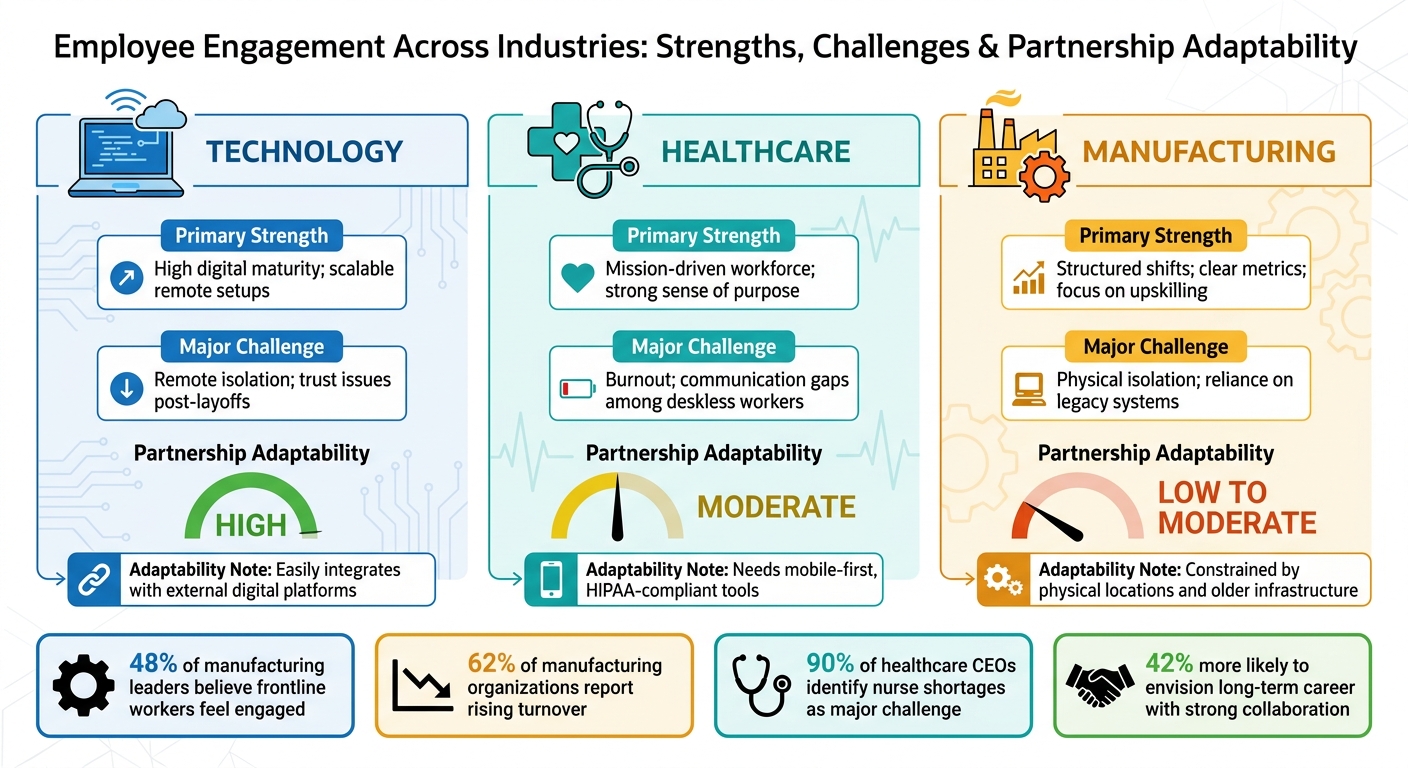
Cross-Industry Employee Engagement Comparison: Tech vs Healthcare vs Manufacturing
Different industries bring their own strengths and challenges to employee engagement, shaping how they approach collaboration and teamwork. These dynamics influence how effective strategies can be when applied across various sectors.
Technology companies benefit from cutting-edge digital tools and robust remote work setups, making them well-equipped to support dispersed teams. However, they often struggle with issues like remote worker isolation, diminishing returns on extravagant perks, and trust concerns following layoffs [5][13].
Healthcare organizations thrive on their mission-driven teams, which are deeply committed to their purpose. Yet, they face significant hurdles like burnout, communication barriers among deskless staff, and staffing shortages. These challenges necessitate the use of mobile-first, HIPAA-compliant tools, which can limit flexibility [13][15].
Manufacturing is characterized by structured work schedules and measurable performance metrics, alongside efforts to invest in skill development and employee well-being [13][16]. On the downside, workers often experience physical isolation - especially during night shifts or in remote locations - and outdated systems can slow the adoption of new collaboration technologies [15].
These differences highlight the importance of tailoring engagement strategies to suit each industry's specific needs. The table below provides a comparative snapshot of each industry's key strengths, biggest challenges, and how adaptable they are when working in partnerships.
| Industry | Primary Strength | Major Challenge | Partnership Adaptability |
|---|---|---|---|
| Technology | High digital maturity; scalable remote setups [14] | Remote isolation; trust issues post-layoffs [5][13] | High: Easily integrates with external digital platforms |
| Healthcare | Mission-driven workforce; strong sense of purpose [16] | Burnout; communication gaps among deskless workers [15] | Moderate: Needs mobile-first, HIPAA-compliant tools |
| Manufacturing | Structured shifts; clear metrics; focus on upskilling [13][16] | Physical isolation; reliance on legacy systems [15] | Low to Moderate: Constrained by physical locations and older infrastructure |
To build strong employee engagement in cross-industry partnerships, it’s essential to address the unique challenges different sectors face. Whether it’s a tech company collaborating with a healthcare provider or a manufacturer, success lies in combining transparency, employee involvement, and structured support systems. These foundational strategies pave the way for initiatives like cross-industry mentorship and inclusive decision-making.
One powerful tool is cross-industry mentorship programs, which can deliver immediate benefits. Formal mentorship initiatives have been shown to increase engagement and retention by 57% [9]. For example, tech professionals can guide manufacturing staff on digital tools, while experienced manufacturers share their operational expertise. This exchange fosters trust, breaks down silos, and encourages collaboration.
Another key strategy is involving employees in decision-making. Studies show that employee participation boosts performance by 22%, and those actively engaged in decisions perform five times better [9]. Instead of dictating goals from the top, successful organizations gather employee input through methods like stay interviews, especially during transitional periods. This kind of open communication strengthens alignment and reinforces the shared mission that’s critical for partnership success.
Transparency also plays a major role, particularly in uncertain times. Companies with high levels of transparency report that 96% of their engaged employees trust management [9]. For organizations navigating complex partnerships, clear communication about financial health and strategic direction is vital. Services like those offered by Phoenix Strategy Group - such as M&A readiness assessments, culture alignment strategies, and fractional CFO support - help leaders maintain clarity about financial goals while identifying and addressing cultural differences early on [2].
Lastly, customized incentive programs can further enhance engagement. Tailored incentives have been shown to improve performance by 44% [9]. These programs should reflect the diverse needs of partnership teams: tech employees might value stock options and flexible schedules, manufacturing teams often prioritize workplace safety and equipment upgrades, and healthcare organizations may focus on mission-aligned rewards. Additionally, offering internal promotions can extend employee tenure by 41% [9], underscoring the importance of development opportunities in fostering long-term engagement.
Cross-industry partnerships demand employee engagement strategies that are customized to fit the specific needs of each sector. For instance, manufacturing teams often require investments in upskilling and proper equipment, while technology workers benefit from stability and clear communication to navigate industry shifts. Meanwhile, healthcare professionals, who face persistent staffing shortages, gain the most from programs that address resilience and burnout management [13]. A universal approach simply doesn’t work - especially when the tech sector prioritizes AI advancements, healthcare emphasizes emotional well-being, and manufacturing focuses on operational efficiency.
The numbers back this up. Employees are nearly five times more motivated when they feel heard [9], and 85% report higher engagement when leaders communicate openly [1]. Transparency, clear communication, and a sense of belonging are essential across industries, but the way these elements are implemented must align with each sector's unique challenges. As Lucy Adams, CEO of Disruptive HR, puts it:
We can improve the experience by removing the hassle. [1]
In practice, this means identifying and addressing the specific pain points that frustrate employees. These insights pave the way for targeted, actionable strategies.
Organizations must rethink key processes like onboarding and performance reviews to include all partners [1]. Instead of relying on exit interviews, stay interviews can help uncover what drives engagement early on [9]. Establishing governance structures - complete with clear roles, streamlined decision-making, and stakeholder mapping - can also reduce uncertainty and curb the talent losses that often disrupt partnerships [3].
Consider the financial and productivity benefits: every $1 spent on mental health programs yields a $4 return [14]. Employees who receive regular feedback are 3.6 times more likely to stay engaged [14], and those who feel recognized are 56% less likely to leave their jobs [9]. With only one-third of employees currently engaged at work and a 2.1-to-1 ratio of engaged to actively disengaged workers [1], the potential for improvement is enormous.
To succeed, organizations must view engagement as more than just a checklist - it’s an emotional connection that stems from within the employee [9]. By blending industry-specific strategies with universal practices like mentoring, transparent communication, tailored incentives, and active involvement, businesses can build the trust and alignment needed to thrive in cross-industry collaborations.
Creating shared goals between partner companies starts with building trust and finding common objectives. To achieve this, it's crucial to involve key stakeholders early on. This helps clarify expectations, align priorities, and shape a shared vision that everyone can rally behind.
Maintaining open communication is equally important. Take time to understand each organization's values and priorities. This understanding can be strengthened through cross-company training sessions and regular check-ins, which help ensure everyone stays on the same page.
By focusing on these strategies, companies can establish a strong foundation for collaboration, paving the way for mutual success.
The fastest way to establish trust across different cultures is by showing reliability, practicing openness, and treating others with respect. Start by building credibility early on, communicate in a clear and honest way, and focus on shared values. Engaging in active listening and participating in cross-cultural training can also go a long way in bridging gaps and speeding up trust-building. These efforts lay the groundwork for effective collaboration in diverse partnerships.
Tracking the right metrics can reveal how well a partnership is performing. Two important ones to focus on are Partner Activity Levels and Partner Retention Rates. These measure how actively partners are participating and whether they’re sticking around for the long haul.
Other key indicators include Client Satisfaction Scores, which gauge how happy clients are with the partnership's output, and Training Completion Rates, which show how committed partners are to learning and improving.
By analyzing these metrics together, you get a well-rounded view of the partnership's health and can pinpoint areas that might need attention.