Published on
July 1, 2026

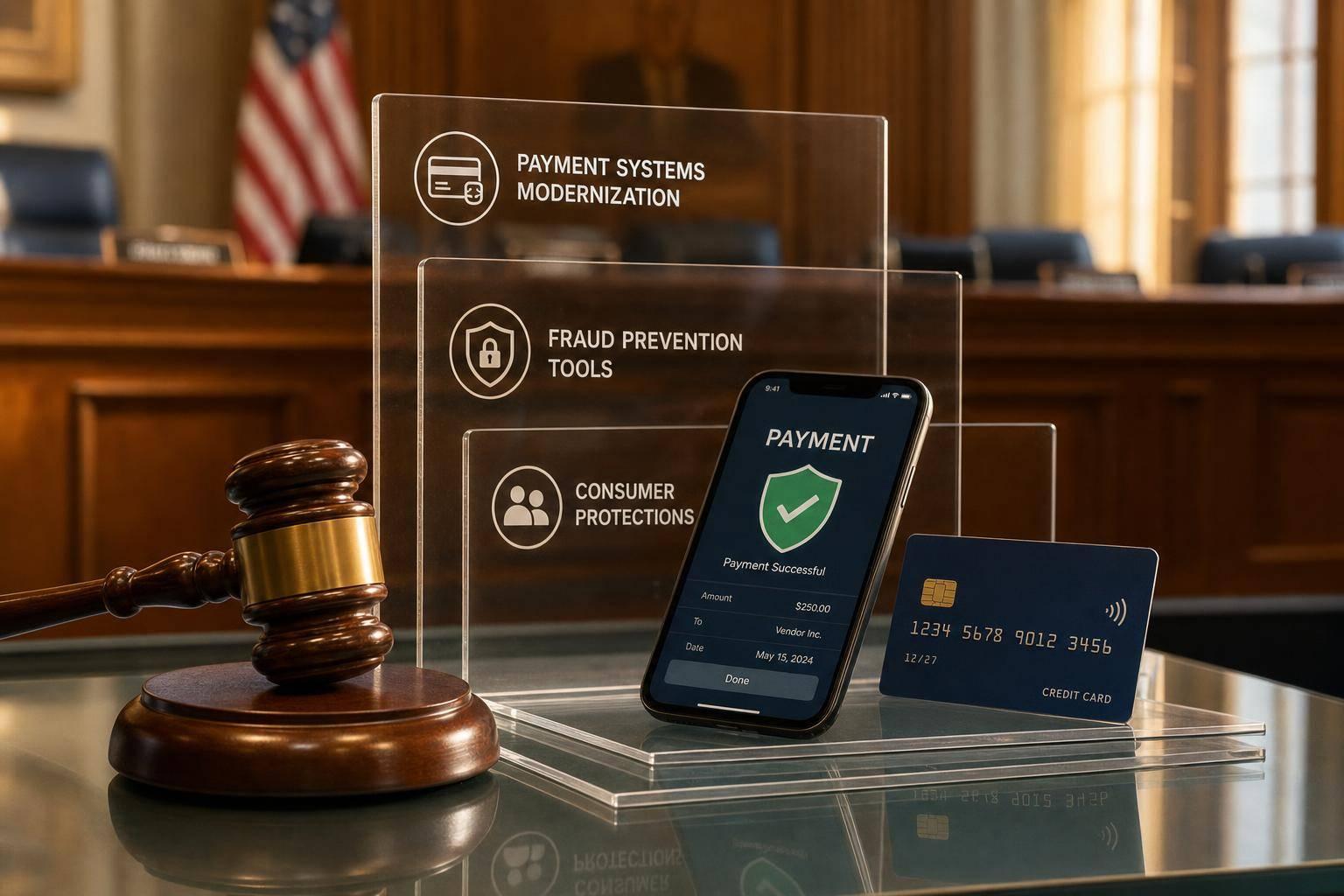
The House Financial Services Committee on Tuesday (June 30) advanced a slate of payments-related bills that would give banks more flexibility to delay funds when fraud is suspected, widen the payment histories that can count toward consumer credit files, and create a federal framework for earned wage access.
The markup, which stretched across most of the day, highlighted a broader policy split over how Washington should oversee a financial system that lawmakers said is becoming more digital. Several measures were ordered reported favorably to the House after the committee approved amendments in the nature of substitutes, making the bills eligible for consideration by the full House though not automatically scheduling floor action.
Opening the session, House Financial Services Committee Chairman Rep. French Hill, R-Ark., said current rules have not kept pace with change in financial services.
"Americans expect their personal information to be protected from bad actors, financial institutions to have the tools necessary to combat fraud, and regulators to operate with transparency and accountability", Hill said. He added that "our regulatory framework must keep pace with that innovation."
Among the measures considered were the Earned Wage Access Consumer Protection Act (H.R. 9330), the Strengthening Transaction Oversight and Preventing (STOP) Payments Fraud Act of 2026 (H.R. 9331), the Credit Access and Inclusion Act (H.R. 5402), and legislation restricting the collection of personally identifiable information within the Securities and Exchange Commission’s Consolidated Audit Trail, the SEC Reform and Restructuring Act.
The STOP Payments Fraud Act would amend the Expedited Funds Availability Act to let banks delay access to funds when they have reasonable suspicion that a deposited check or incoming wire transfer involves fraud. The bill would direct regulators to set standards for what qualifies as reasonable suspicion and would also allow longer holds for certain accounts facing elevated fraud risk.
Supporters said existing funds availability rules were written before the rise in counterfeit checks, synthetic identity fraud and more sophisticated payment scams.
The Credit Access and Inclusion Act would amend the Fair Credit Reporting Act to expressly permit landlords, public housing authorities, utility companies and telecommunications providers to furnish payment histories to consumer reporting agencies.
Backers of the bill said many consumers regularly pay rent, electric, wireless and other recurring bills but do not see those payments reflected in traditional credit files. The legislation would let those obligations help build or strengthen credit histories, while preserving consumer opt-out rights and barring energy utilities from reporting customers as delinquent if they remain current under approved payment plans.
Rep. Janelle Bynum, D-Ore., argued during debate on her amendment that alternative payment data could help people whose financial records are better reflected by recurring household bills than by traditional revolving credit accounts. Her amendment was not adopted, and the bill advanced unchanged.
The committee’s most contentious debate centered on H.R. 9330, the Earned Wage Access Consumer Protection Act, sponsored by Rep. Bryan Steil, R-Wis. The bill would establish what the article described as the first comprehensive federal framework for earned wage access providers.
Under the proposal, providers that charge fees would have to offer a free option, make extensive disclosures, refrain from charging interest and debt collection, and treat compliant earned wage access products as not being loans or extensions of credit under federal law.
Steil said the bill reflects changes in payroll technology and consumer expectations.
"Consumers should be able to access their wages as they earn them, while also receiving strong, consistent consumer protections", Steil said. "The question before us is not whether earned wage access should have consumer protections. The bill answers this with a resounding yes. The question is whether we establish a uniform national framework with strong safeguards or continue to leave consumers subject to an inconsistent patchwork of state laws."
He also stressed the bill’s no-cost requirement for providers that charge for faster access.
"Nobody will have to pay to be paid", he said.
Steil also said faster access to wages is not a new concept.
"Not that long ago, 100 years ago or more, individuals who would work over the course of a day were paid at the end of the day", he said. "It was only in the modern era… pay began to get delayed."
Democrats on the committee raised concerns that the bill would override tougher state protections. Ranking Member Rep. Maxine Waters, D-Calif., said lawmakers should be reinforcing consumer safeguards rather than narrowing regulatory authority.
"Payment fraud is rising. Identity theft is becoming more sophisticated. Consumers continue to struggle with inaccurate credit reports that prevent them from getting a mortgage, buying a car, renting an apartment and even getting a job", Waters said during the markup. "This should be the moment to strengthen consumer protections."
Rep. Ayanna Pressley, D-Mass., also objected to the proposal’s treatment of earned wage access products.
"This bill prevents state regulators from calling earned wage access products what they actually are, payday loans", Pressley said.
Rep. Sam Liccardo, D-Calif., agreed that earned wage access is different from traditional payday lending because providers generally cannot pursue consumers through litigation or collections, but he voiced concern that fees could still become excessive if left to market forces.
Waters offered an amendment to cap combined fees and tips at $10 per month, saying financially vulnerable workers could otherwise face multiple transaction charges. Republicans opposed that amendment, saying the bill already guarantees a free option and extensive disclosures, and it was rejected.
One bipartisan amendment was adopted. It requires consumers seeking earned wage advances based on their own representations, rather than employer-provided payroll information, to attest that the wages requested have actually been earned.
In a statement emailed to PYMNTS on Tuesday evening, the Financial Technology Association’s CEO Penny Lee stated that "Earned Wage Access puts workers back in control of their own paychecks."
The debate across the package repeatedly returned to whether financial regulation should move toward national standards or continue to leave more room for state-by-state approaches to consumer protection, a divide that shaped the committee’s action on fraud, credit reporting and earned wage access alike.