Published on
March 13, 2026

Starting a new business is an exciting journey, but it comes with plenty of financial questions. How long until you stop losing money? How many sales do you need to keep the lights on? That’s where a tool to calculate your break-even threshold becomes a game-changer. It’s not just about crunching numbers—it’s about gaining clarity on your path to profitability.
For entrepreneurs, knowing the point at which revenue matches expenses is like having a roadmap. This critical milestone helps you set realistic sales targets and make informed decisions about pricing or cost-cutting. Without this insight, you might be flying blind, unsure if your efforts are moving the needle. A simple calculation can reveal whether you need to sell 100 units or 1,000 to stay afloat, empowering you to plan with confidence.
Financial tools tailored for startups strip away the complexity of business math. By inputting a few key figures—like fixed expenses and per-unit costs—you get a clear picture of your goals. So, why wait? Dive into understanding your venture’s financial health today and take a big step toward success.
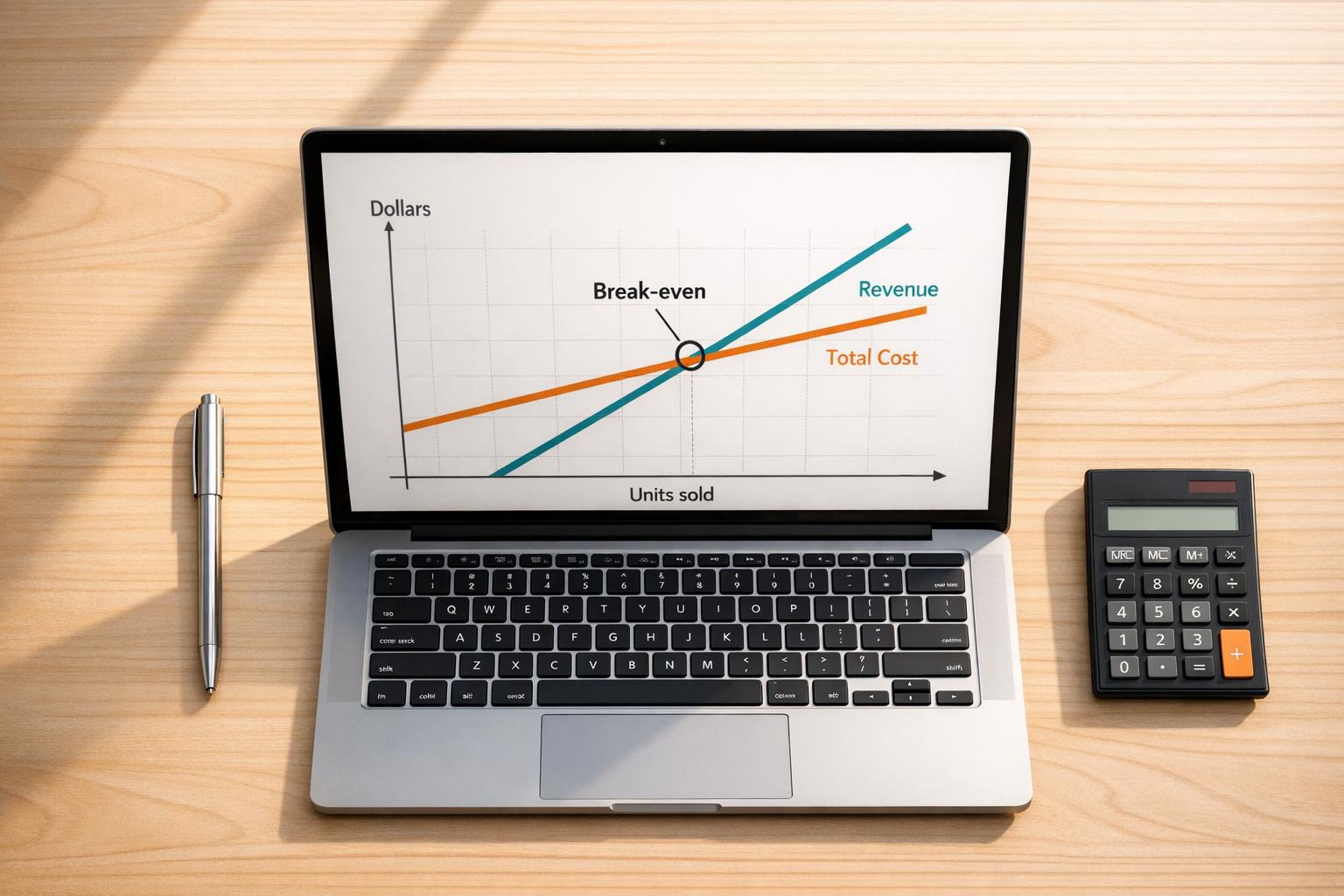
Your break-even point is the moment when your revenue covers all your costs—basically, when you stop losing money and start having the potential to profit. It’s a crucial number for any startup because it gives you a concrete goal. Without knowing this, you’re just guessing about when your business might become sustainable. This tool does the math for you, so you can focus on strategy instead of spreadsheets.
If your price per unit is less than your variable cost, you’re losing money on every sale, which means you’ll never break even. Our tool will flag this with an error message to let you know something’s off. It’s a good nudge to revisit your pricing strategy—maybe raise your price or find ways to lower production costs. You’ve got this!
Absolutely! Whether you’re selling physical products or services, the logic still applies. Just think of your ‘unit’ as one service package or hour of work. Enter your fixed costs (like office rent or software subscriptions), the cost to deliver that service (like materials or labor per job), and your price per service. The calculator will show you how many clients or projects you need to cover your expenses.