Published on
February 10, 2026


As companies grow, financial clarity often lags behind operational complexity.
Data lives in too many places. Reports arrive too late. Metrics don’t agree. And leadership teams end up debating the numbers instead of using them to decide where to invest, hire, or pull back.
An Integrated Financial Model fixes that — not by adding more spreadsheets, but by creating a single source of truth that connects how your business actually operates to how it actually performs financially.
At Phoenix Strategy Group, this model is the foundation of how we help founders operate sharper, build value, and stay exit-ready.
Traditional financial models usually fall into one of three buckets:
The problem is that none of these tie financial outcomes back to operating drivers — the real levers that determine whether growth is profitable or fragile.
An integrated model does.
An Integrated Financial Model connects your:
…into one living system. It serves as a single source of truth, powered by API-based data integration rather than manual entry, reducing the risk of human error.
Instead of asking, “What happened last month?” you can ask:
And you get answers backed by data, not gut feel.
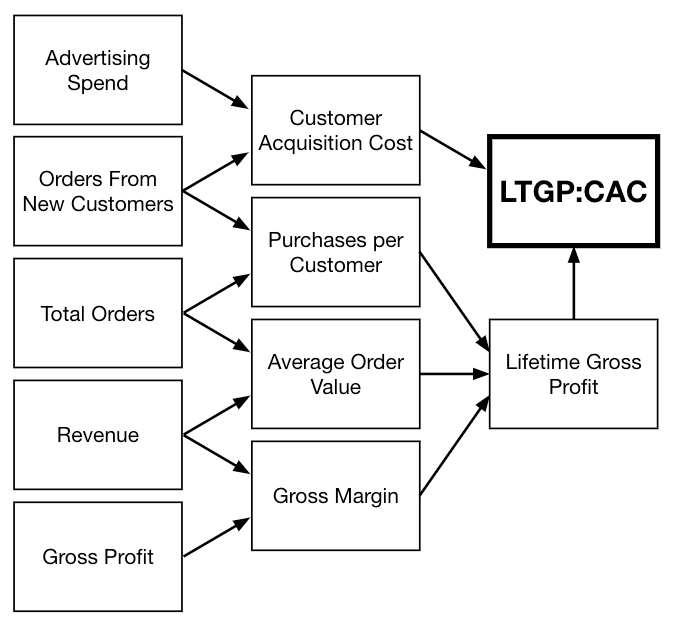
At the center of every integrated model is unit economics — understanding profitability at the most granular level.
This includes metrics like:
Customer Acquisition Cost (CAC)
The total cost of bringing in a new customer. CAC helps teams see whether growth is being earned efficiently or paid for in ways that strain cash later.
Lifetime Gross Profit (LTGP)
The total gross profit a customer generates over their lifetime. LTGP shifts the conversation from short-term revenue to long-term value, helping teams understand what a customer is actually worth after costs.
LTGP to CAC Ratio
The single most important profitability signal in the business. This ratio shows whether growth creates value or destroys it. When LTGP meaningfully exceeds CAC, growth compounds. When it doesn’t, scale amplifies risk.
Average Order Value (AOV)
The average revenue per transaction. AOV shows how well your pricing and offerings are working, and even small improvements can significantly increase profitability without spending more to acquire customers.
Gross Margin
The percentage of revenue left after direct costs. Gross margin defines how much fuel the business has to cover overhead, invest in growth, and withstand volatility.
Purchases per Customer
How often customers buy over time. This metric reveals retention strength and customer loyalty, and it’s often the fastest path to improving unit economics without increasing spend.
Cash Runway
How long the business can operate before requiring additional capital. Runway connects operating decisions directly to survival, showing how growth choices affect how quickly cash is used.
When leadership teams align around unit economics, something powerful happens:
Every department starts pulling in the same direction.
Marketing, sales, finance, and operations stop optimizing for isolated metrics and start making decisions based on shared economic reality — the same numbers, the same incentives, and the same definition of success.
Most businesses already have the data; it’s just fragmented.
An integrated model brings together:
That data is normalized, structured, and tied into a shared metrics dictionary so everyone is speaking the same language.
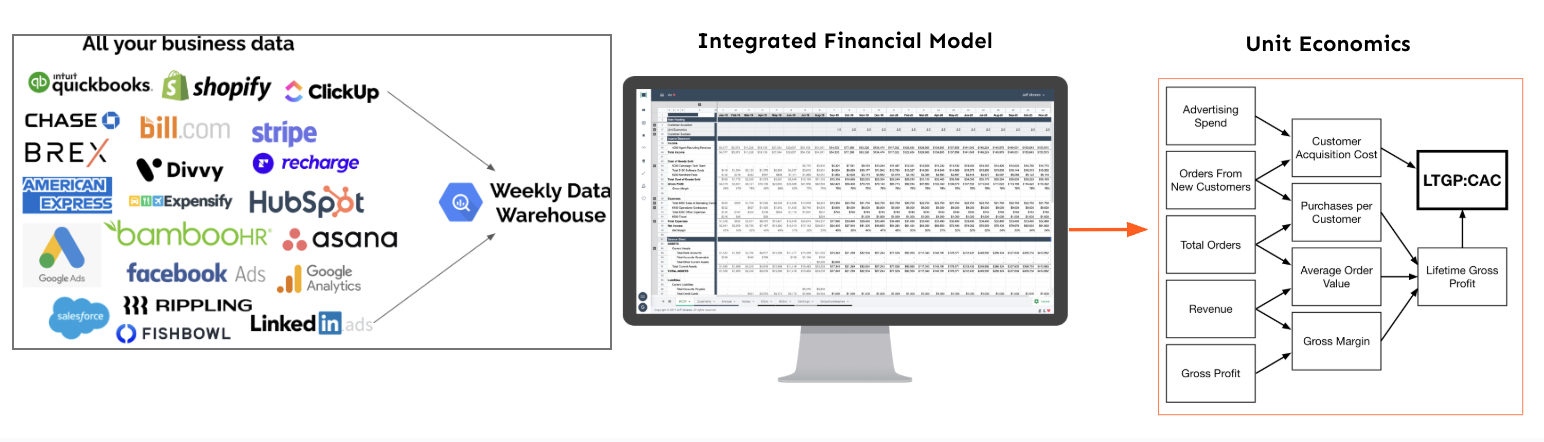
In many cases, that single source of truth is operationalized inside a CRM, where sales, marketing, and customer activity already live. As a Certified HubSpot Partner, PSG integrates financial and operating data into HubSpot so leadership teams can see performance in context — connecting pipeline, demand, and customer behavior directly to unit economics, cash impact, and forecasts. This allows teams to move faster, align around the same numbers, and make decisions from one system instead of toggling between disconnected reports.
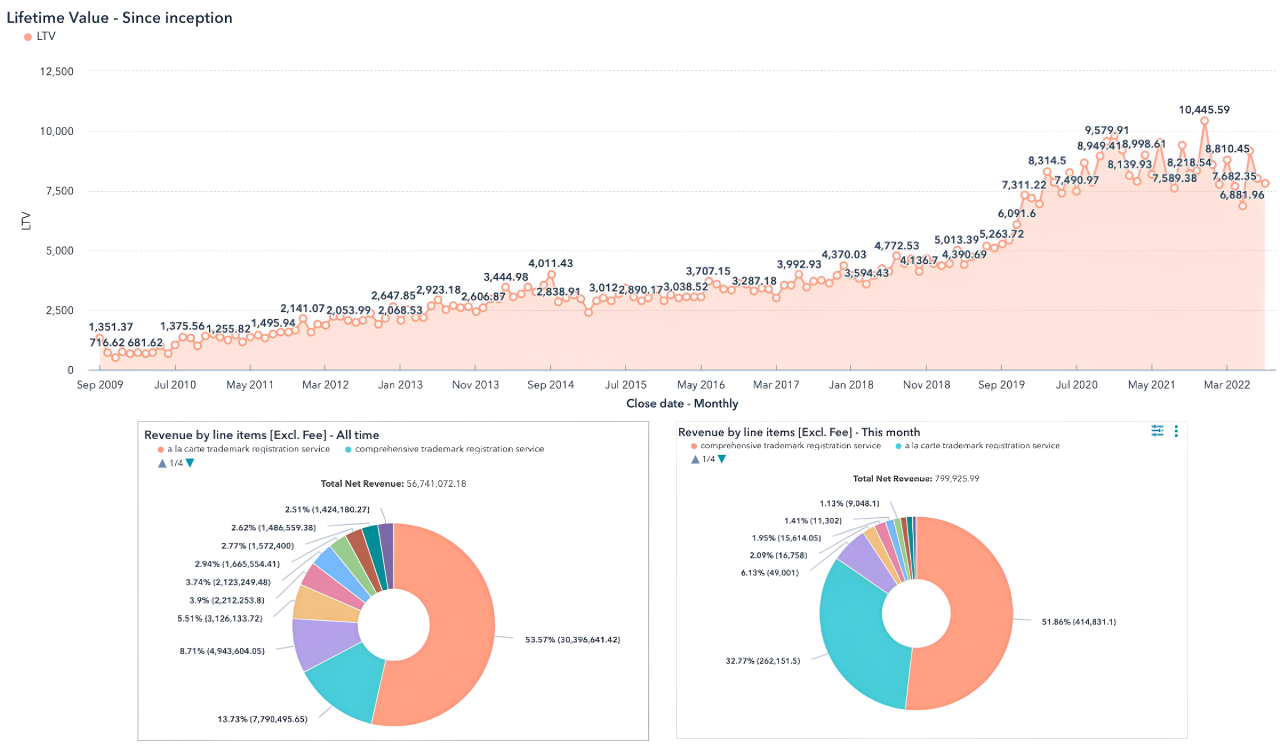
It’s not hard to see how the model supports:
And turns finance from a rear-view mirror into a decision engine.
When founders think about a future sale, the focus is usually on the obvious numbers — revenue growth, EBITDA, and valuation multiples. Those matter, but they’re rarely what determine whether a deal moves quickly, drags on, or falls apart.
What buyers really look for is
An integrated financial model creates buyer-grade financials long before a transaction is on the table. Even if you never sell, it improves how the business is run day to day; enabling better decisions, reducing surprises, strengthening margins, and making the tradeoffs between growth and cash clear.
And if you do decide to sell, you’re prepared — not scrambling.
At Phoenix Strategy Group, the integrated financial model isn’t a one-time deliverable. It’s an operating system. We use it to help founders align leadership around the right metrics, understand what’s actually driving profit, model decisions before they’re made, scale without losing control, and build durable, valuable businesses.
And because insight is only useful if it leads to action, we don’t stop at the model itself. PSG provides wrap-around fractional CFO support to help leadership teams interpret the data, pressure-test decisions, and turn insight into execution.
That ongoing partnership is how clarity replaces chaos, and how founders regain confidence in their numbers.
Phoenix Strategy Group helps founders realize their dreams by installing a proven finance + RevOps system that turns founder-led companies into scalable businesses and maximizes exit value.
Follow us on LinkedIn.