Published on
February 15, 2026

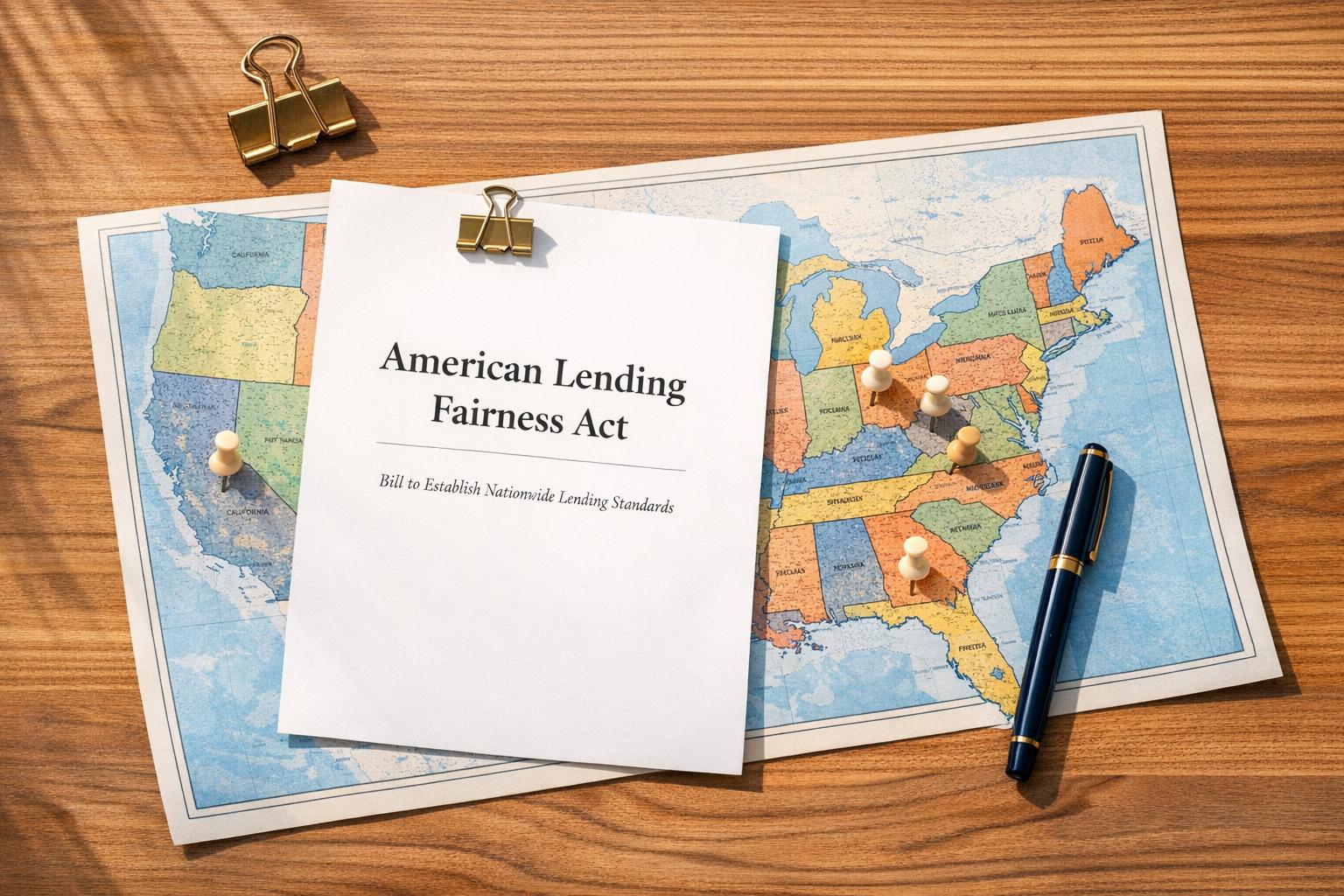
WASHINGTON – Senator Bernie Moreno (R-Ohio) and Representative Warren Davidson (R-Ohio) have introduced the American Lending Fairness Act of 2026, a bill aimed at curbing state-level interest rate regulations that impact loans from out-of-state chartered banks and credit unions. The legislation seeks to restore consistency in interstate lending practices by limiting states’ ability to impose their own interest rate caps on out-of-state lenders.
"When states use opt-outs to slap their own interest rate caps on out-of-state lenders, it is hardworking Americans who feel the pain", said Senator Moreno. "I am committed to restoring clear national standards and protecting access to credit for all Americans, regardless of where they live."
"Federal law should not pick winners and losers based on a bank’s charter", said Representative Davidson. "The American Lending Fairness Act restores decades-long precedent, protects consumers’ right to shop for interest rates across state lines, and ensures they benefit from real competition."
The legislation comes in response to the Tenth Circuit’s 2025 decision in National Association of Industrial Bankers v. Weiser, which allowed states, such as Colorado, to apply their own interest rate caps to loans originated by out-of-state lenders. This decision has raised concerns among lawmakers and financial institutions about the potential fragmentation of the U.S. credit market. The bill aims to preserve the federal interest rate preemption for state-chartered banks and credit unions engaged in interstate lending.
The proposed act also ensures that states retain authority to regulate in-state chartered institutions while protecting interest rate exportation. By doing so, it promotes a level playing field between state-chartered and nationally chartered banks.
The American Lending Fairness Act of 2026 has garnered widespread support from financial institutions and advocacy groups across the country. Rob Nichols, President and CEO of the American Bankers Association (ABA), praised the bill, stating, "We appreciate their efforts to ensure state-chartered banks can compete on a level playing field with national banks, and we urge the House and Senate to move this bill forward."
Representatives from the Ohio Bankers League (OBL) and the Ohio Credit Union League (OCUL) echoed similar sentiments. Michael Adelman, President and CEO of OBL, noted, "Modernizing DIDMCA is essential to protecting the dual banking system and ensuring Ohio’s state-chartered banks can compete fairly in a digital-first economy." Paul Mercer, President of OCUL, added, "At a time when many hardworking people and families are struggling to make ends meet, this bill will help credit unions do what they do best: serve the financial needs of members in a way that works best for them."
Frank Pignanelli, Executive Director of the National Association of Industrial Bankers (NAIB), emphasized the bill’s importance for consumers and small businesses, saying, "The bill preserves the essential foundation of interstate banking and restores much-needed clarity and common sense. We simply can’t turn back the clock on a national credit market that has benefited consumers in every state."
Other industry leaders, including Celia Winslow of the American Financial Services Association (AFSA) and Penny Lee of the Financial Technology Association (FTA), highlighted the bill’s potential to increase consumer access to credit, enhance competition, and provide consistent rules for nationwide lending. Andrew Duke, CEO of the Online Lenders Alliance (OLA), also warned against the misuse of state opt-out provisions, describing the legislation as a necessary measure to prevent "misrepresentation and abuse of DIDMCA."
The bill has been lauded for its consumer-focused approach. Jason Stverak, Chief Advocacy Officer of the Defense Credit Union Council (DCUC), pointed out that interest rate exportation has long provided stability for credit unions serving members across state lines, including military families. "The American Lending Fairness Act is about restoring legal certainty and competitive parity", he said.
Scott Simpson, President and CEO of America’s Credit Unions (ACU), added, "When policymakers streamline the framework, it allows credit unions to devote more time, resources, and capital to helping families buy homes, finance small businesses, and manage everyday expenses."
Phil Goldfeder, CEO of the American Fintech Council (AFC), also emphasized how the bill would strengthen the dual banking system and protect families from the negative consequences of fragmented state regulations. "We applaud Senator Moreno and Congressman Davidson for introducing the American Lending Fairness Act to restore Congress’s original intent", he said.
In addition to the backing of major national organizations such as the Consumer Bankers Association (CBA) and the American Bankers Association, the bill has received endorsements from the Delaware Bankers Association, Nevada Bankers Association, Utah Bankers Association, and numerous other institutions. Parris Sanz, Executive Vice President and General Counsel for WebBank, summarized the broad consensus by saying, "A clear, uniform national standard prevents states from selectively walling off state-chartered banks, preserves responsible access to credit, and avoids a costly patchwork of rules that stifles innovation, competition, and efficiency."
As the American Lending Fairness Act of 2026 heads to Congress, its proponents hope it will deliver the legal clarity and regulatory consistency necessary to sustain a competitive and accessible national credit market. With bipartisan support and industry backing, the bill’s progress will be closely watched by stakeholders nationwide.