Published on
March 26, 2026


Delaware has announced a major modernization of its banking regulations, introducing a forward-looking legal framework that integrates stablecoins and digital assets. This sweeping update, spearheaded by state legislators, underscores Delaware’s commitment to maintaining its status as a financial hub while adapting to the demands of the evolving financial landscape.
The new measures, introduced as three interconnected bills, aim to update outdated financial laws, enhance consumer protections, and foster innovation. Senator Spiros Mantzavinos and Representative Bill Bush, who unveiled the legislative package, emphasized the importance of aligning Delaware's banking system with contemporary practices.
"Modernizing Delaware’s banking code is long overdue. With this package of legislation, we’re not vastly changing our identity in the financial sector, but we’re continuing the tradition that made us successful in the first place", said Sen. Mantzavinos.
Rep. Bush highlighted the need for these updates, explaining, "It’s been more than four decades since we’ve made any meaningful updates to our state’s banking laws, and in that time, the way people bank and conduct transactions has changed significantly. We need to make sure our laws are keeping up with those changes."
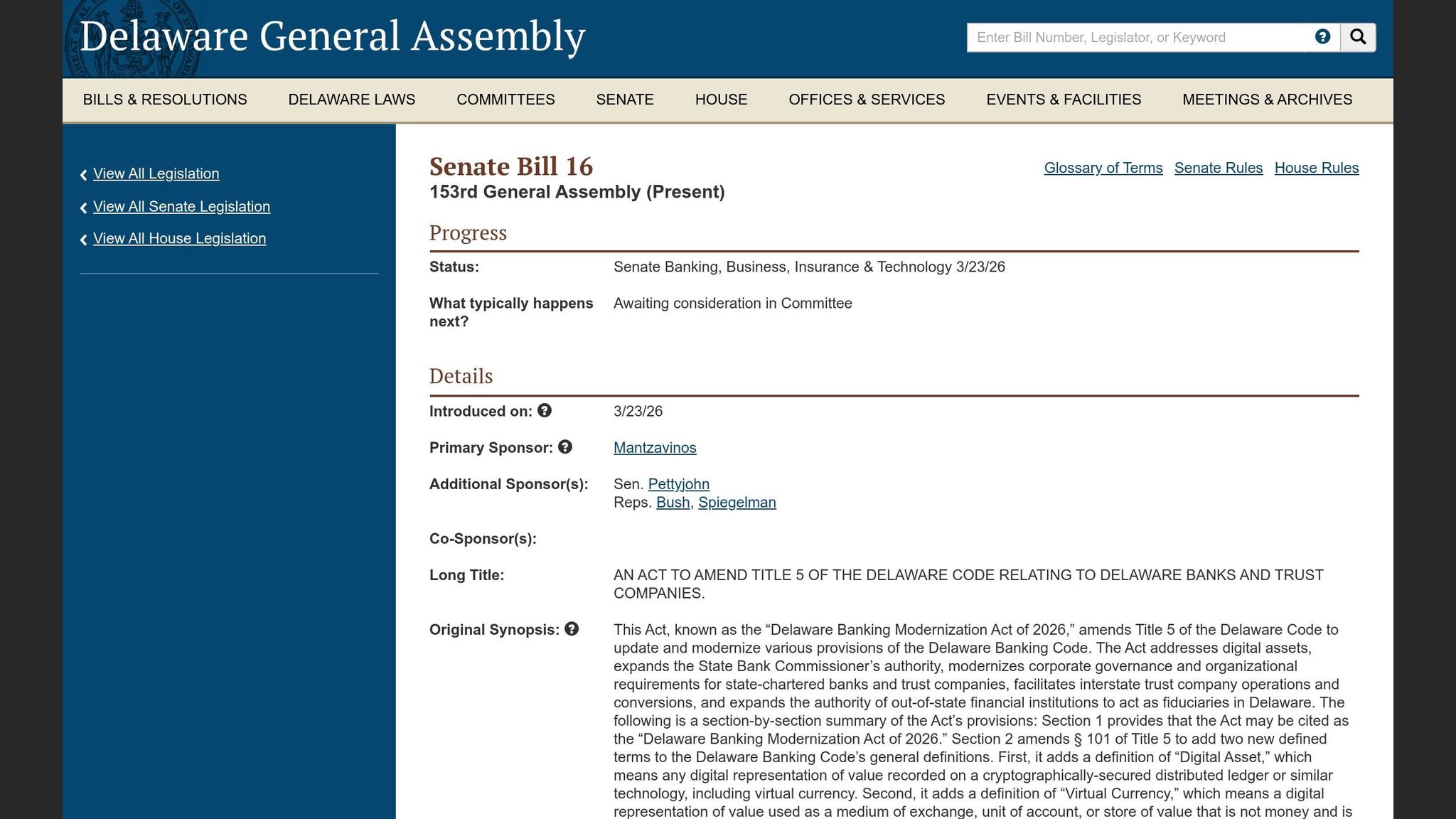
Senate Bill 16, known as the Delaware Banking Modernization Act of 2026, introduces critical updates to the state’s banking code. The legislation incorporates new definitions for digital assets and virtual currency, expands the authority of the State Bank Commissioner, and modernizes governance rules for banks and trust companies. Additionally, it facilitates interstate banking operations and provides banks with the ability to manage digital assets for their clients.
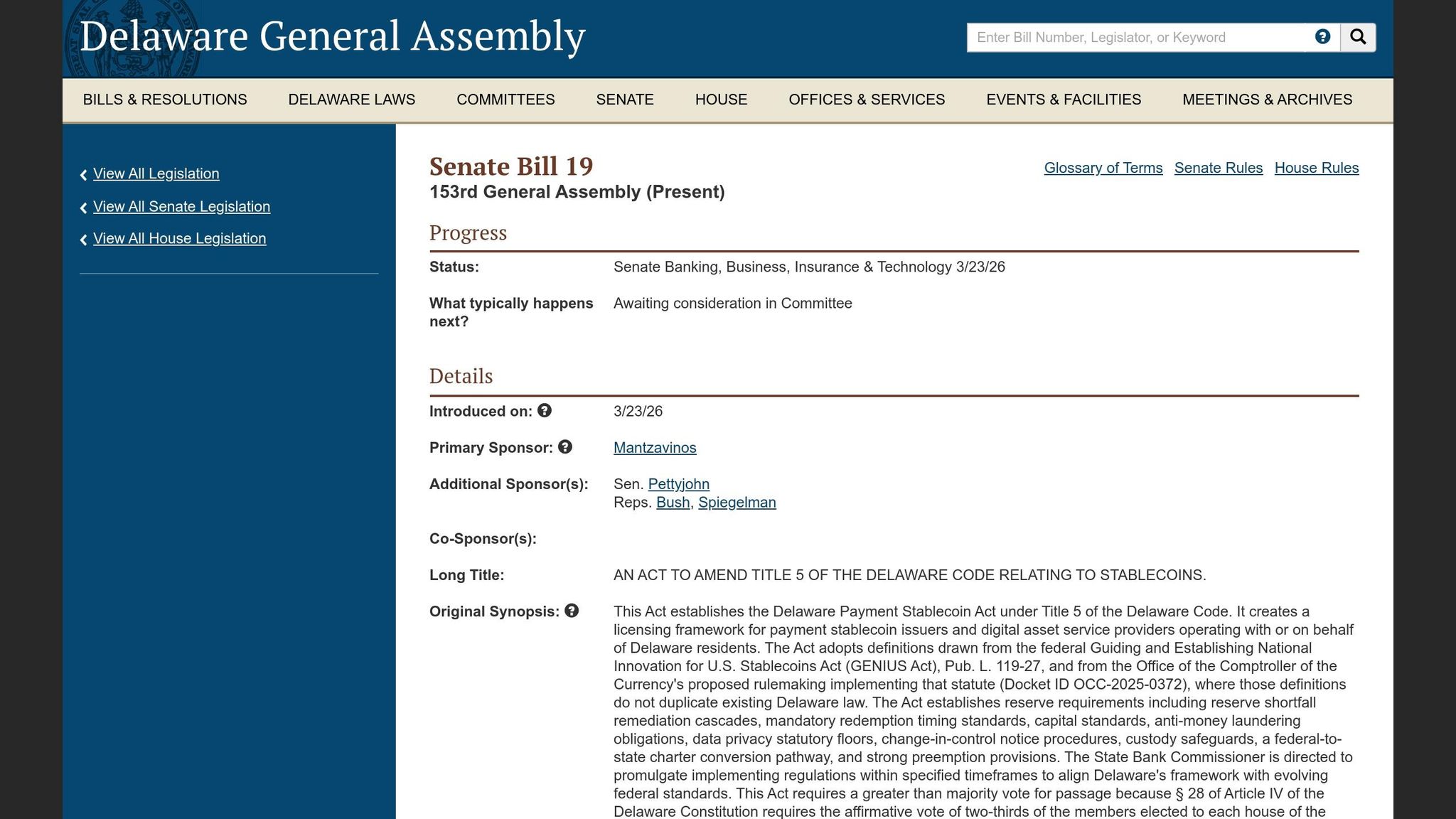
A companion piece of legislation, Senate Bill 19, establishes a state-level regulatory framework for stablecoins. This bill mandates licensing and supervision for stablecoin issuers and managers while implementing strict reserve requirements and redemption protocols. The framework also aligns with federal legislation, drawing core definitions from the Guiding and Establishing National Innovation for US Stablecoins Act (GENIUS Act), which was signed into law in July 2025.
The legislative package will soon be complete with the addition of a third bill, the Delaware Money Transmission & Virtual Currency Modernization Act. This forthcoming legislation aims to simplify multi-state operations, reduce redundant licensing, and improve regulatory coordination by replacing existing state money transmission laws with a standardized regulatory regime.
These legislative efforts arrive as the global stablecoin market continues to expand. According to CoinGecko, the total stablecoin market capitalization has surpassed $310 billion, with Tether’s USDT dominating approximately 58% of the market, valued at about $184 billion. Other significant players include USDC, USDS, USDe, DAI, and PayPal’s PYUSD.
Stablecoins have proven to be especially impactful in emerging markets, where they serve as tools for remittances, savings, and cross-border commerce. About two-thirds of stablecoin holdings are concentrated in these regions.
Governor Matt Meyer connected the new legislation to the state’s broader economic development goals. He emphasized its potential to increase financial accessibility, stating that the bills would "democratize" financial services and reduce barriers for residents, who would only need internet access to participate in the financial system.
Meanwhile, the University of Delaware has embraced the evolving fintech landscape, with President Laura Carlson announcing that the university is exploring a pilot program to use stablecoins on campus. She credited the state’s burgeoning fintech ecosystem for making such initiatives possible.
By modernizing its banking laws and embracing digital innovation, Delaware is setting a precedent for how states can adapt to a rapidly changing financial world while maintaining their economic and regulatory strengths.