Published on
February 16, 2026

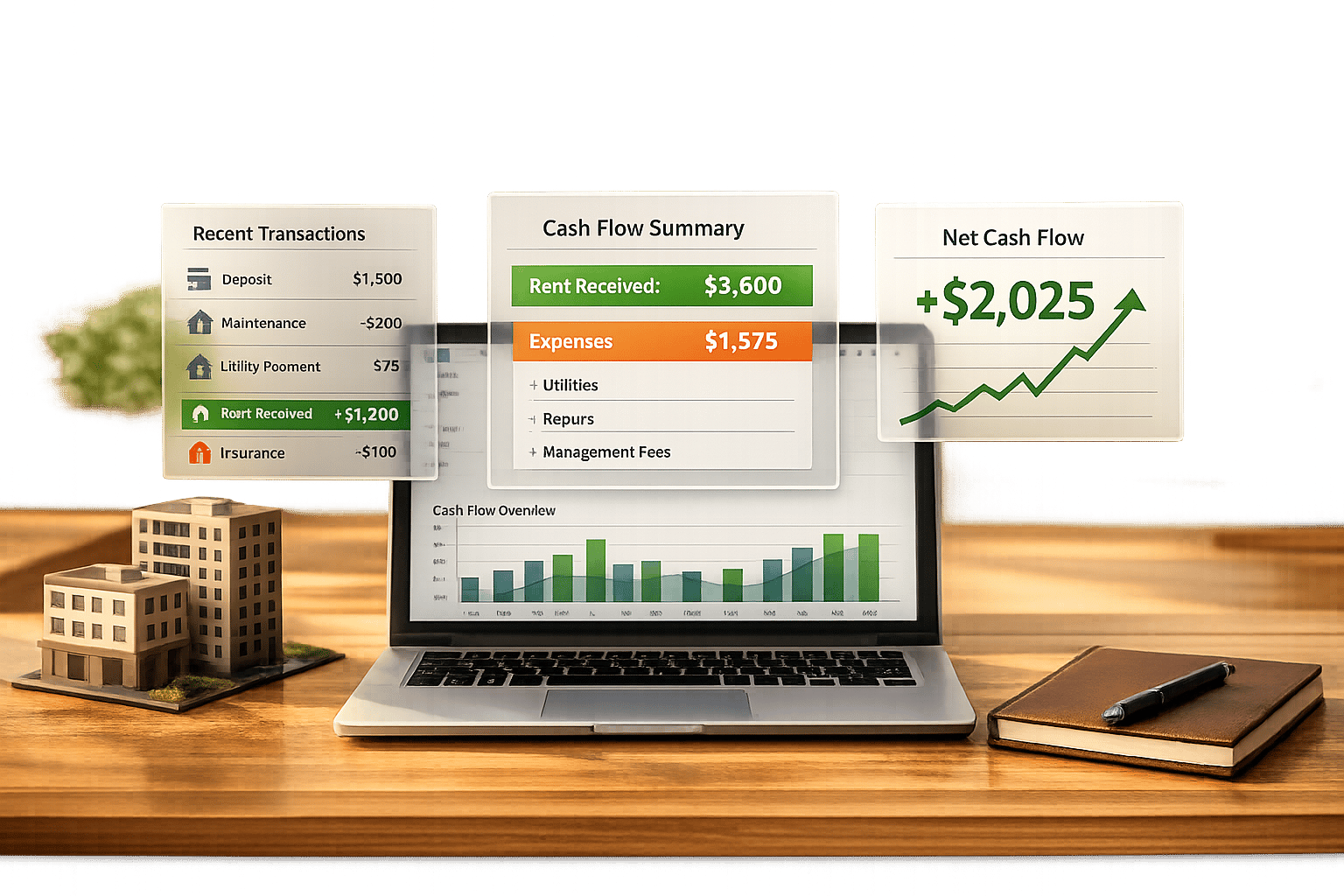
Real-time cash flow tracking gives rental property managers instant visibility into their finances. By automating data entry and syncing with bank accounts, it eliminates manual errors and provides live updates on income, expenses, and net cash flow. This approach helps landlords manage late payments, unexpected costs, and profitability for each unit. Key benefits include:
Switching from spreadsheets to automated systems ensures accurate, current data and simplifies tax preparation. Platforms like Baselane or Stessa integrate with bank accounts, enabling landlords to focus on growing their portfolios instead of reconciling outdated reports.
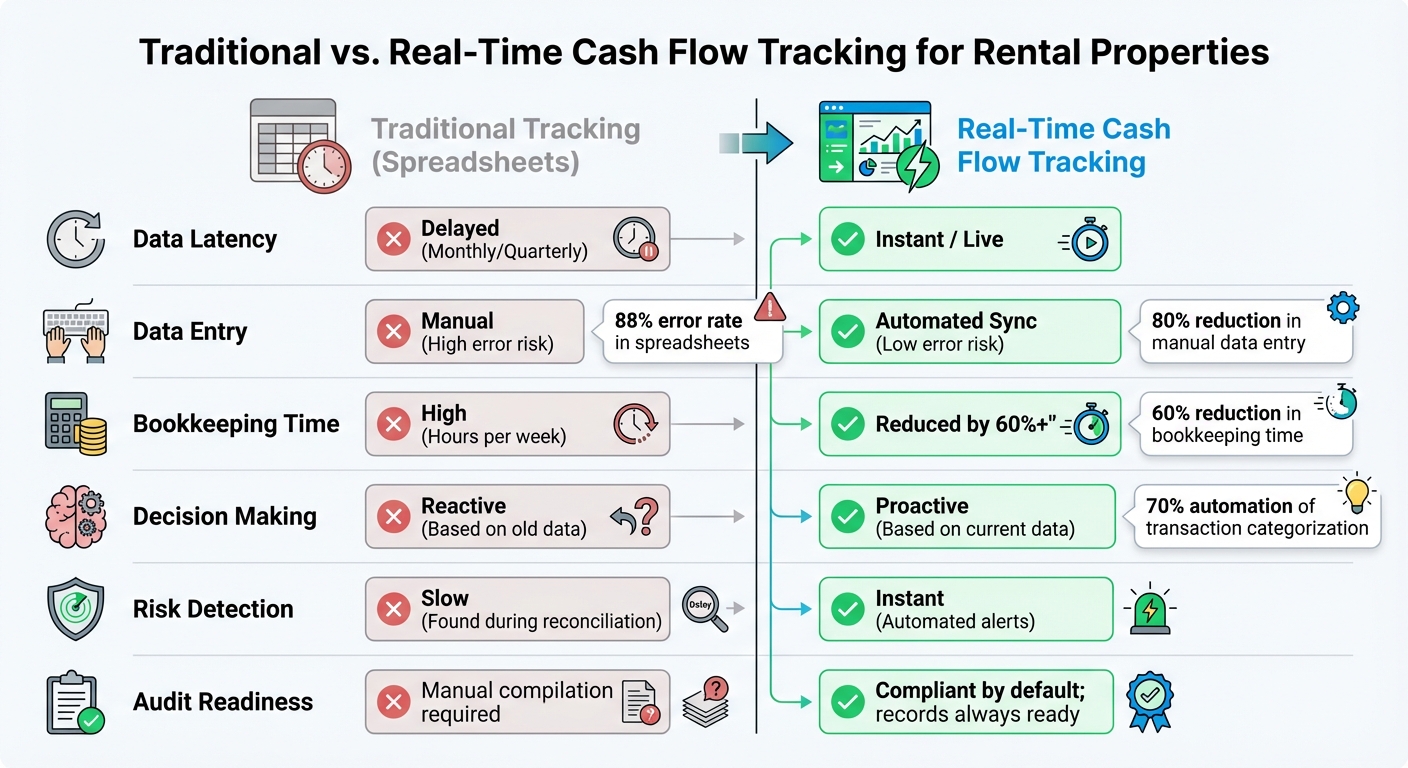
Real-Time vs Traditional Cash Flow Tracking for Rental Properties
Having instant access to up-to-date financial data empowers you to make smarter decisions. Real-time tracking provides immediate insights into key performance metrics like rent collection rates, maintenance costs, and net operating income (NOI). There's no need to wait until the end of the month to understand how your properties are performing [4].
This level of visibility allows you to act quickly on opportunities. For instance, if a particular unit is performing exceptionally well, you can analyze its success and apply similar strategies across your portfolio. On the other hand, if rent collection slows down, you can adjust your approach immediately instead of discovering the issue weeks later. With real-time data, you can confidently decide whether to increase rents, allocate funds for repairs, or invest in upgrades [4][3].
Automation further enhances efficiency, cutting bookkeeping time by over 60% and reducing manual data entry by up to 80% [1][2]. Instead of spending hours updating spreadsheets, you can focus on expanding your portfolio and building stronger relationships with tenants.
Beyond increasing profits, real-time insights also provide a powerful tool for managing financial risks.
Real-time tracking revolutionizes your approach to financial risks. Instead of uncovering problems during monthly reconciliations, you can identify and address them as they happen. For example, a sudden spike in utility costs or a drop in revenue triggers immediate alerts, allowing you to act promptly [4].
This proactive approach helps prevent small issues from becoming major problems. If a tenant's payment is late, automated notifications enable you to enforce lease terms and apply late fees consistently. Similarly, if maintenance costs exceed expectations, instant alerts let you investigate vendor charges or adjust budgets before those expenses impact your bottom line.
Another advantage is staying audit-ready at all times. Real-time systems automatically categorize expenses according to IRS standards, ensuring your records are always compliant and organized. No more scrambling to find receipts or reconcile expenses when tax season rolls around [4].
The shift from traditional methods to real-time tracking is transformative. Here's a comparison to illustrate how real-time tracking changes the game:
| Feature | Traditional Tracking (Spreadsheets) | Real-Time Cash Flow Tracking |
|---|---|---|
| Data Latency | Delayed (Monthly/Quarterly) | Instant / Live [4] |
| Data Entry | Manual (High error risk) | Automated Sync (Low error risk) [1][4] |
| Bookkeeping Time | High (Hours per week) | Reduced by 60% or more [1] |
| Decision Making | Reactive (Based on old data) | Proactive (Based on current data) [4] |
| Risk Detection | Slow (Found during reconciliation) | Instant (Automated alerts) [4][2] |
| Audit Readiness | Manual compilation required | Compliant by default; records always ready [4] |
Traditional methods, like spreadsheets, rely on outdated data and are prone to errors - studies estimate an error rate of 88% for spreadsheets [6]. Real-time tracking eliminates these issues with automated synchronization, giving you the accurate, current financial insights you need to manage your properties effectively.
Real-time cash flow tracking starts with secure integration with your bank accounts. By linking checking accounts, savings accounts, and credit cards using platforms like Plaid, transactions are automatically imported into your management software as soon as they’re posted [7][1]. This eliminates the need for manual CSV downloads, which can lead to errors and missing data [7][2].
Once the accounts are connected, rules-based categorization takes over. The software uses predefined rules to sort recurring expenses - like utilities, insurance, and mortgage payments - and assigns them to specific properties without requiring manual input [7][1]. For example, you can set a rule that categorizes all Home Depot purchases over $50 as "Maintenance", and the system will apply it automatically [7]. Advanced algorithms can even split shared expenses across multiple properties or allocate vendor-specific payments to the correct unit based on your preset logic [7]. This process can automate up to 70% of transaction categorization, significantly reducing the time spent on manual tasks [1][2].
This streamlined data import and categorization provide the foundation for instant financial insights.
With automated data feeding in, a centralized dashboard gives you a live snapshot of your portfolio. It displays income (like rent and fees), expenses (such as repairs and utilities), and net cash flow for your entire portfolio in one place [1][2]. The dashboard updates in real-time as transactions are posted, allowing you to spot late rent payments or unexpected budget variances immediately, rather than waiting until the end of the month [1].
You can customize the dashboard with drag-and-drop widgets to focus on key metrics, whether that’s weekly rent collections or monthly maintenance expenses [8]. Mobile access adds flexibility, enabling you to capture receipts on the go and link them directly to transactions [1][8]. The platform also allows you to share live dashboard views or export professionally formatted PDF reports for partners, investors, or accountants [1][8].
Custom reports and alerts help you stay ahead of potential issues. For example, you can set up alerts to notify you when specific expense categories, like repair costs, exceed a certain dollar amount. This lets you review vendor charges before they impact your bottom line [2]. These alerts work seamlessly with the automated data and dashboard visualization, creating a dynamic system that supports faster decision-making and better risk management.
Custom reports track essential performance metrics like Cash Flow Per Unit (CFPU), Net Operating Income (NOI), and Cap Rate, helping you pinpoint underperforming assets in your portfolio [2][5]. Side-by-side Profit and Loss (P&L) comparisons can reveal seasonal trends in utility costs or show how preventive maintenance reduces long-term expenses [2]. These tools are critical for maintaining tight cost control and protecting your cash reserves.
The first step in real-time cash flow tracking is picking software that securely connects to your bank accounts through services like Plaid. This connection ensures transactions are automatically imported as they happen, reducing the need for manual data entry and cutting down on accounting tasks significantly [1].
For landlords, property-specific platforms like Baselane, Stessa, or REI Hub are excellent options. These tools come with built-in Schedule E tax reporting and features like integrated rent collection via ACH or credit card payments. This setup allows funds to flow directly into your accounting system without the hassle of manual reconciliation [6][9][12]. On the other hand, general accounting tools like QuickBooks often lack property-level tracking capabilities and may require additional workarounds.
Before diving into automation, ensure your data is clean, organized, and ready for integration.
Once you've chosen the right tools, it's time to organize your property and tenant data to make the most of automation. Start by auditing tenant records, standardizing naming conventions, and verifying lease dates. This step helps avoid synchronization issues [11][9].
It's also important to establish a compliant banking structure by setting up three separate accounts:
This structure not only ensures legal compliance but also creates clear audit trails [9]. Next, build a detailed chart of accounts that aligns with Schedule E tax categories. Distinguish between residential and commercial income, and break down expenses into categories like repairs, utilities, management fees, and owner-paid costs [9][12]. Assign each property and unit to specific income and expense accounts within your ledger, ensuring transactions are accurately posted [9].
Implement a 30-60-90 day plan to roll out these changes:
With your data and tools in place, focus on tracking key performance indicators (KPIs) to guide your financial strategy. Metrics like Net Operating Income (NOI) help you assess overall performance, while Cash Flow Per Unit (CFPU) evaluates unit-specific profitability. The Debt Service Coverage Ratio (DSCR) is another critical metric, with an ideal range of 1.25 to 1.50 to meet lender requirements [13][8].
Set up automated alerts for important thresholds, such as:
Review operational KPIs like occupancy and rent collections weekly, and analyze financial metrics like NOI and cash flow on a monthly basis [13]. To prepare for unexpected expenses or vacancies, maintain a cash reserve equal to three to six months of operating costs - especially since nearly 25% of landlords report that surprise expenses have wiped out rental income [2][5].
Lastly, audit your automation rules, payment settings, and tenant profiles every quarter to ensure your system stays accurate and efficient [10].

For those looking for more than just basic tools, Phoenix Strategy Group offers a blend of specialized services to create a real-time cash flow tracking system tailored to your needs. Their approach combines bookkeeping, fractional CFO expertise, FP&A (financial planning and analysis), and data engineering to deliver a seamless solution.
Their bookkeeping service ensures real-time categorization and reconciliation of transactions, with expert oversight to maintain accuracy and compliance with tax requirements. This means your financial data stays clean and ready for reporting.
The fractional CFO services are where strategy meets data. They create custom dashboards to track critical financial metrics like Cash Flow Per Unit (CFPU), collection rates, and delinquency trends. Instead of generic reports, you receive actionable insights to make informed decisions - whether it’s adjusting rents to match market conditions, allocating funds for maintenance reserves, or identifying underperforming properties. On top of that, their data engineering team integrates multiple sources - bank feeds, rent collection systems, and property management tools - into one unified system. Real-time visualizations and automated alerts keep you ahead of potential cash shortfalls or budget overruns.
This integrated approach can improve cash flow visibility by 25–40% and cut manual data entry errors by up to 90%. It’s a system designed to help landlords scale their portfolios with precision and confidence.
Here’s an example of how these solutions deliver results. A mid-sized landlord managing 15 California properties struggled with inconsistent cash flow. Fragmented records and untracked expenses led to an average monthly net cash flow of - $500, meaning they were losing money each month without a clear sense of why.
Phoenix Strategy Group stepped in with a comprehensive solution. Their data engineering team built dashboards synced with the landlord’s bank accounts, pulling transaction data in real time. Meanwhile, fractional CFO analysts set up automated alerts to flag expense categories exceeding budget limits.
The results were transformative. Within six months, the landlord’s portfolio saw a net cash flow improvement to + $2,800 per month - a 35% turnaround. By cutting unnecessary expenses, fine-tuning rent pricing to align with market trends, and automating delinquency detection, the landlord gained control over their finances. Each property now shows clear profitability, with an average CFPU of $450 per unit annually. This newfound clarity has empowered them to make smarter decisions about future investments and capital improvements.
Real-time cash flow tracking takes rental property management to a whole new level, shifting it from guesswork to a strategy guided by data. Instead of relying on outdated monthly reports that often come too late to address issues, landlords gain immediate insights into their income, expenses, and overall cash flow. This instant visibility not only reduces the need for manual data entry but also turns reactive management into proactive decision-making.
This approach leads to smarter portfolio oversight. By syncing automatically with bank accounts and property management systems, these tools provide dashboards that highlight trends almost instantly. Custom alerts can flag late payments, unexpected expenses, or low account balances before they spiral into bigger problems. Metrics like Cash Flow Per Unit (CFPU) and Net Operating Income (NOI) become practical tools for spotting underperforming properties and improving returns across the board. With this level of clarity, landlords can make informed decisions quickly and effectively.
Getting started with real-time tracking doesn’t have to be overwhelming. You don’t need to overhaul your entire system. Start by choosing tools that sync financial data automatically and focus on tracking key performance indicators (KPIs). For landlords managing larger portfolios or looking for tailored solutions, Phoenix Strategy Group offers specialized services. Their expertise combines bookkeeping, fractional CFO support, and data engineering to unify scattered financial records. This integrated approach strengthens real-time cash flow management and ensures landlords can fully benefit from the strategies outlined in this guide.
"Real-time" cash flow tracking means you get updates and insights instantly or within seconds. This allows you to see your cash positions, transactions, and financial metrics as they happen. With this immediate visibility, you can make faster decisions and spot potential risks early on.
When setting up bank syncing for your rental properties, security should be your top priority. Use platforms that connect to your bank through APIs with encrypted, bank-level security to keep your data safe.
Experts at Phoenix Strategy Group suggest integrating your banking and accounting systems. This approach helps automate data sharing, reduces the risk of manual errors, and strengthens overall security.
Make sure the platform you choose uses secure authentication methods and complies with PCI or similar standards. These measures are essential for protecting your sensitive financial information.
To get a better handle on your cash flow, it's crucial to track a few key performance indicators (KPIs). Focus on operating cash flow, free cash flow, cash burn rate, and cash runway. These metrics help you understand your cash inflows, outflows, and how long your current reserves can keep your business running.