Published on
December 15, 2025

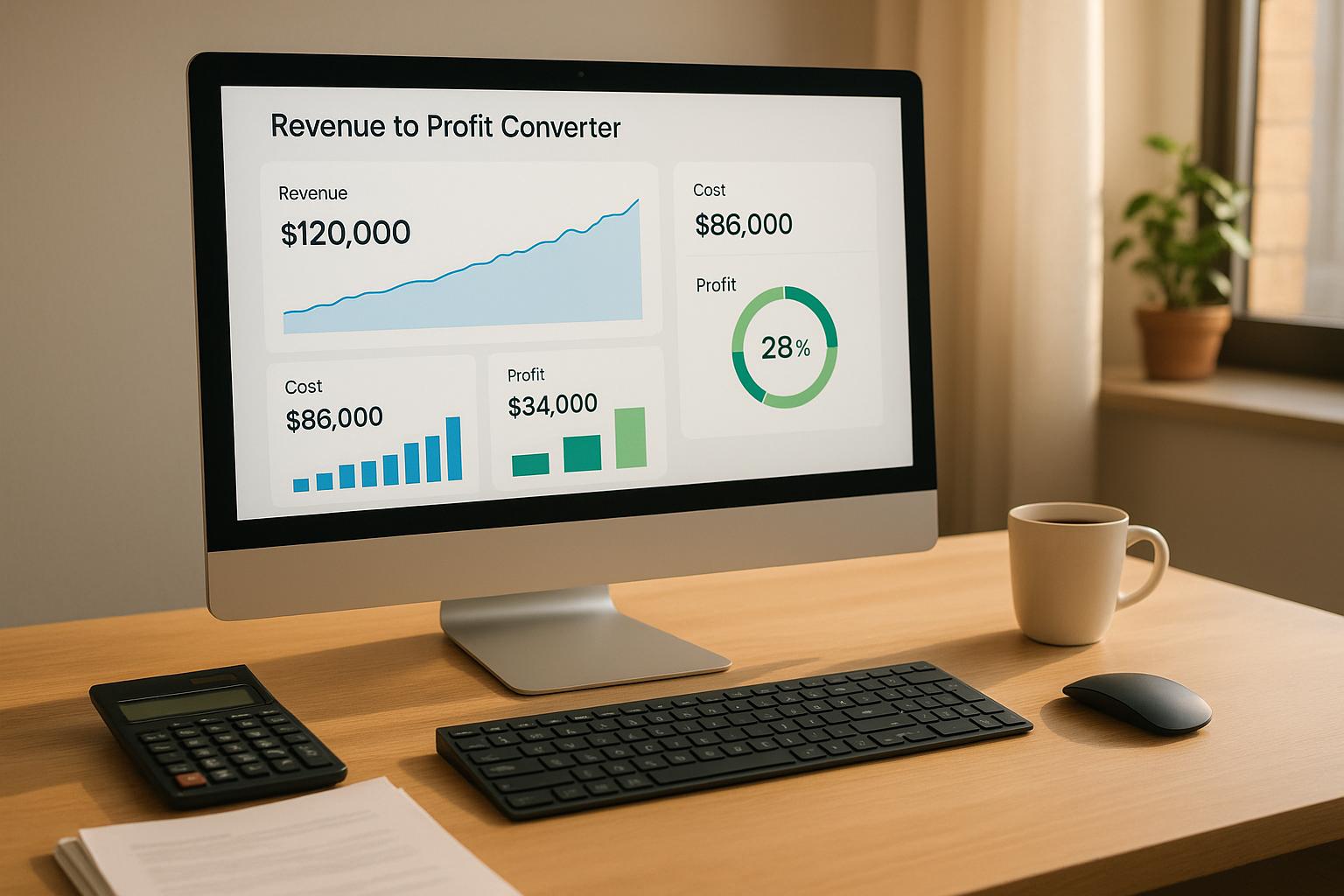
Running a business means keeping a close eye on your finances, but crunching numbers can feel overwhelming. That’s where a tool to convert revenue into profit insights becomes a game-changer. It helps you break down complex figures into digestible metrics, so you can focus on strategy instead of spreadsheets.
Profit margins reveal how efficiently your business turns sales into actual earnings. By analyzing different levels—starting with gross earnings after direct costs, then moving to operational results, and finally the bottom line after taxes—you get a clear view of where money is going. This kind of clarity is vital for small business owners or startups trying to scale smartly.
While a profitability calculator offers quick insights, remember that every business has unique factors. Maybe you’ve got irregular expenses or special tax considerations. Pairing this tool with professional advice ensures you’re not missing anything. Plus, tracking these metrics over time can spotlight trends, helping you make informed decisions about pricing, cost-cutting, or investments. Keep your financial pulse in check, and watch your business thrive with the right data at hand.
Great question! Gross profit is what’s left after subtracting the Cost of Goods Sold (COGS) from your revenue—it’s the money before other expenses. Operating profit comes next, after you deduct day-to-day costs like rent or salaries from gross profit. Finally, net profit is your true bottom line, after taxes are taken out. Think of them as layers of your financial health, each telling a different part of the story.
Our tool gives a solid starting point for understanding profitability, but it’s a simplified calculation. It doesn’t factor in things like debt, one-time expenses, or unique tax situations. Use it as a guide to get a quick snapshot, and consider consulting an accountant for a deeper dive into your specific numbers.
Percentages help you see the bigger picture. They show how much of your revenue turns into profit at each stage—gross, operating, and net. For example, a 40% gross margin means 40 cents of every dollar earned stays after COGS. It’s a handy way to compare your business’s efficiency over time or against industry benchmarks.