Published on
February 26, 2026

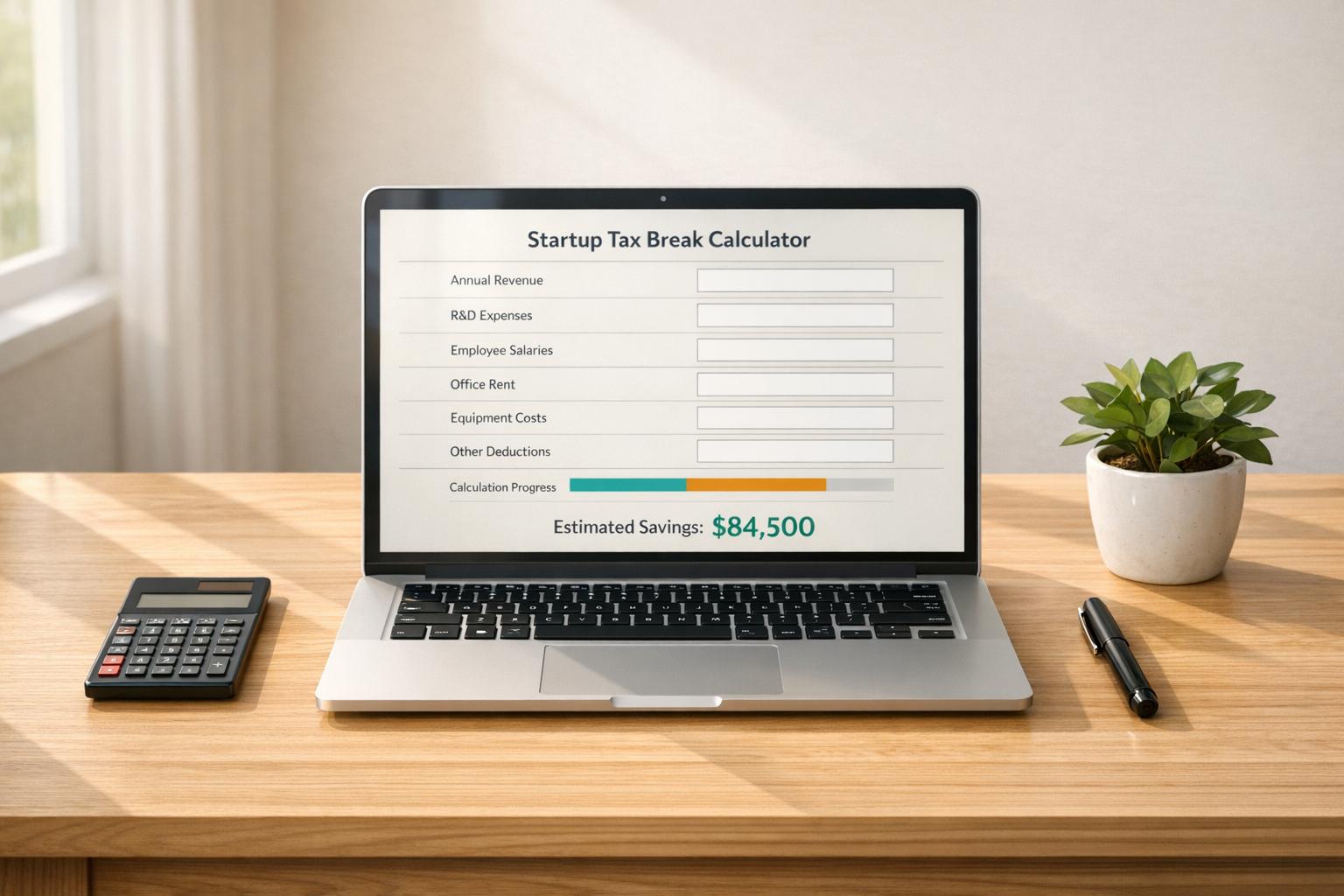
Running a startup is no small feat, and every dollar saved counts toward growth. That’s where understanding tax incentives can make a real difference. Many founders overlook credits and deductions that could lower their tax burden, simply because they’re unaware or bogged down by paperwork. A tool to estimate these savings can be a game-changer, offering a quick glimpse into what’s possible without needing a finance degree.
From research and development credits to small business deductions, there are numerous ways startups can reduce taxable income. Location often plays a role too—some states or regions offer special perks to encourage entrepreneurship. Even if you’re just starting out, getting familiar with these opportunities can help with budgeting and planning. Imagine redirecting those saved funds into hiring, marketing, or product development. While no online calculator replaces professional advice, using one to explore potential savings is a smart first step for any founder looking to optimize their finances. Curious about what you might qualify for? Plug in your details and see the possibilities!
Our calculator provides rough estimates based on mock data and general tax incentive rules. It’s a starting point to give you an idea of potential savings, but every startup’s situation is unique. Tax laws are complex and vary widely by location and industry, so we strongly recommend working with a qualified tax professional to get precise figures and ensure compliance.
Startups might be eligible for a range of incentives depending on their setup. Common ones include R&D tax credits for innovation-driven businesses, small business deductions for operational costs, and location-based incentives if you’re in a specific state or economic zone. Our tool highlights a few possibilities based on your inputs, along with brief explanations to help you understand each one.
Nope, not at all! We only ask for basic info like your industry, location, revenue range, employee count, and years in business. Nothing sensitive or identifiable is required. The tool uses this to estimate potential tax savings without storing or sharing your data, so you can explore with peace of mind.