Published on
May 18, 2026


For SaaS companies, compliance is essential for securing enterprise deals, protecting against data breaches, and avoiding hefty fines. Certifications like SOC 2 and ISO 27001 are often required by enterprise buyers, while frameworks like GDPR, HIPAA, and PCI DSS are mandatory for handling specific types of data. Here's what you need to know:
Compliance frameworks should align with your company's growth stage and customer needs. Early-stage startups often start with SOC 2 Type I, while scaling businesses expand into ISO 27001 and other global standards. Proactive planning can reduce risks, shorten sales cycles, and support faster growth.
Choosing the best compliance framework is a critical step for any business, especially when enterprise deals are on the line. Picking the wrong certification can set an early-stage startup back by $50,000 or more in fees and internal effort [4]. To make the right decision, you need to evaluate three key factors: your customers, the type of data you handle, and your company’s current stage.
If you’re selling to enterprise B2B buyers - typically companies with 500+ employees - having a SOC 2 Type II report is often non-negotiable. In fact, it’s usually the first certification U.S. buyers will expect [4]. On the other hand, if you’re expanding into Europe or working with international clients, ISO 27001 becomes a higher priority.
Your industry and location also play a big role in determining which certifications are necessary. For example:
To figure out what your business needs, review stalled enterprise deals from the past. What certifications did procurement teams ask for? Meeting these demands not only ensures compliance but also makes it easier to close deals and grow into new markets.
"Enterprise customers won't sign contracts without evidence of security maturity, typically demonstrated through SOC 2 reports or ISO 27001 certification." - Maureen Beckman, Josys [1]
The kind of data you manage often determines whether compliance is optional or legally required. Certain frameworks, like GDPR, HIPAA, and PCI DSS, come with strict penalties for non-compliance. For instance:
Here’s a quick breakdown of common data types and their corresponding frameworks:
| Data Type | Framework | Nature |
|---|---|---|
| EU Resident PII | GDPR | Regulatory (Mandatory) |
| US Healthcare (PHI) | HIPAA | Regulatory (Mandatory) |
| Credit Card Data | PCI DSS | Industry Mandate |
| California Consumer Data | CCPA / CPRA | Regulatory (Mandatory) |
| General B2B Customer Data | SOC 2, ISO 27001 | Voluntary (Market-driven) |
To avoid wasting resources, map out the exact data your systems handle. This will help you avoid over-scoping (covering frameworks you don’t need) or under-scoping (missing critical legal requirements). Once you’ve mapped your customer needs and data sensitivity, you’ll have a clear path for aligning your certification strategy with your business goals.
For early-stage companies, it’s smarter to focus on one or two key frameworks instead of trying to tackle everything at once [4]. SOC 2 Type I is often a good place to start. It provides a snapshot of your security practices and can be completed in just one to three months [2][4].
Here’s a suggested timeline for startups:
As your business grows, the overlap between frameworks becomes an advantage. For example, SOC 2 and ISO 27001 share about 70% of their security controls, so the work you do for one can often be applied to the other [2][3]. This approach helps you scale your compliance efforts efficiently without stretching your resources too thin.
Understanding the role of each compliance framework is key to making smart decisions about where to focus your time and resources. Here's a closer look at the frameworks that are most relevant for SaaS companies.
SOC 2 is built around five Trust Services Criteria: Security (mandatory), Availability, Processing Integrity, Confidentiality, and Privacy. Which criteria apply to you depends on your product and what your customers prioritize.
"SOC 2 is probably the framework you've heard about most if you're in SaaS. It's become the de facto standard for demonstrating security to US-based enterprise buyers." - Justin Leapline [6]
SOC 2 offers two types of reports. Type I focuses on whether your controls are designed correctly at a specific point in time, often used to quickly address customer concerns. Type II, on the other hand, evaluates whether those controls are effective over a 6–12 month period, which enterprise customers typically expect. Costs for a Type II audit range from $30,000 to $150,000, and the process can take 9–18 months [7].
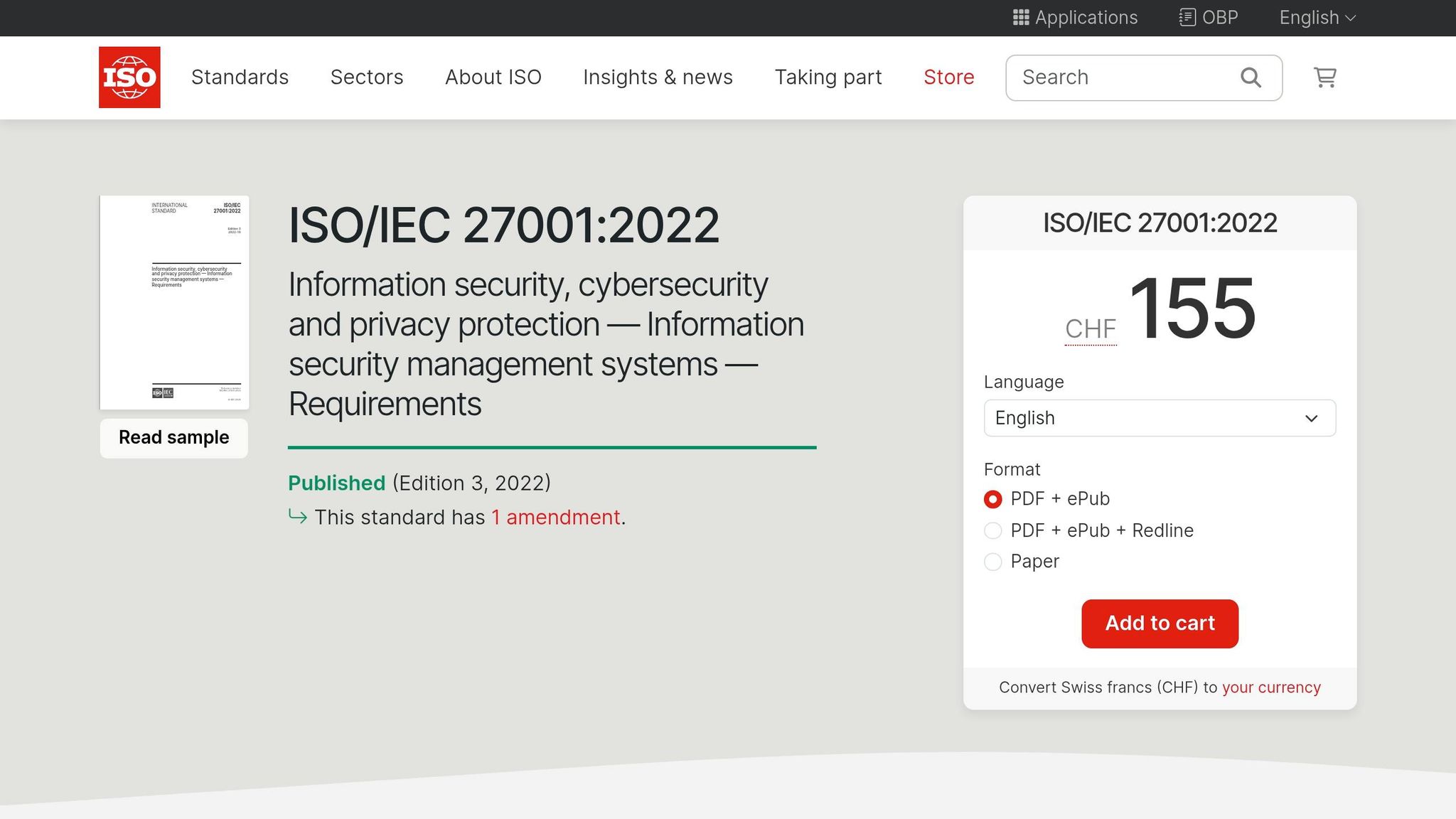
Unlike SOC 2, which provides an audit report, ISO 27001 results in a certification. It requires creating a formal Information Security Management System (ISMS) - a documented framework of policies, processes, and controls for managing security risks.
ISO 27001 is recognized in over 150 countries, with more than 70,000 certificates issued globally as of 2026 [8]. For SaaS companies expanding into Europe or APAC, ISO 27001 is often a procurement must-have. Implementation costs typically range from $20,000 to $100,000 and take 6–12 months [7]. One added benefit: achieving ISO 27001 first can reduce the effort needed for SOC 2 compliance by about 30–40% because of overlapping controls [7].

The NIST Cybersecurity Framework (CSF) doesn't provide a certification but instead offers a structured approach to building a security program. The updated Version 2.0, released in February 2024, introduced a sixth core function - Govern - alongside Identify, Protect, Detect, Respond, and Recover. This highlights the growing importance of treating cybersecurity as a leadership and governance issue, not just a technical concern [6].
CIS Controls work hand-in-hand with NIST CSF by diving deeper into specific actions. It features 18 prioritized safeguards designed to protect against common cyberattacks, organized into implementation groups for companies at different maturity levels [1]. Together, these frameworks provide a solid foundation before pursuing formal certifications.
Unlike the optional frameworks above, these laws are mandatory, tied to the type of data you handle and where your users are located.
| Regulation | Who It Applies To | Key Requirement | Penalty |
|---|---|---|---|
| GDPR | Companies processing EU residents' data | Lawful consent, 72-hour breach notification, data subject rights | Up to 4% of global annual revenue [1] |
| CCPA | Companies with California consumer data | Right to know, delete, and opt out of data sales | Varies by violation |
| HIPAA | SaaS handling Protected Health Information (PHI) | Administrative, physical, and technical safeguards | Up to $2.13 million per violation category per year [6] |
A cautionary tale: In June 2024, a former Nuance (a Microsoft subsidiary) employee accessed patient data from Geisinger, including names, birth dates, and medical record numbers, just two days after being terminated. The incomplete offboarding process led to a $5 million class action settlement [1].

PCI DSS applies to SaaS companies that handle credit card data. The current standard, Version 4.0.1, introduces stricter multi-factor authentication and password policies [6]. To simplify compliance, many companies use third-party payment processors like Stripe and implement tokenization, reducing the systems that interact with cardholder data and shrinking audit scope [6].
SOX (Sarbanes-Oxley) is mandatory for publicly traded SaaS companies. Section 404 requires documented internal controls over financial reporting, including access controls and audit trails [1]. ASC 606, meanwhile, governs how SaaS companies recognize revenue from customer contracts - a critical area for audits, fundraising, or exits.

SaaS Compliance Roadmap by Growth Stage
Compliance is a journey that evolves alongside your business. As your company grows, the complexity of compliance requirements increases, making it essential to align your efforts with your stage of growth.
For early-stage SaaS companies, trying to address every compliance framework at once can be overwhelming and inefficient. Instead, prioritize frameworks based on your growth stage and the demands of your sales pipeline.
| Growth Stage | Primary Frameworks | Primary Reason |
|---|---|---|
| Early/Seed | SOC 2 Type I, GDPR, HIPAA | Address security questionnaires and legal mandates |
| Growth | SOC 2 Type II, ISO 27001, PCI DSS | Demonstrate operational maturity to enterprise buyers |
| Scale/Enterprise | NIST CSF, FedRAMP, SOX, ASC 606 | Meet government contract requirements, global standards, and prepare for IPO |
This phased approach ensures that compliance becomes a natural part of your operations.
At the seed stage, SOC 2 Type I offers a relatively quick way to signal your commitment to security, often completing in just weeks. This can be crucial for passing procurement checks with enterprise clients. If your business handles health-related data or serves EU users, frameworks like HIPAA or GDPR compliance are legally required. As you grow, transitioning to SOC 2 Type II and adding ISO 27001 can help secure larger enterprise deals and expand internationally. These frameworks often share overlapping controls, making it easier to build on your existing compliance efforts.
By following this roadmap, you not only address regulatory and customer needs but also strengthen your overall approach to technology risk management.
Once you’ve prioritized your compliance frameworks, the next step is integrating them into your product and engineering workflows. This approach ensures compliance becomes part of your daily operations rather than a separate, one-off task.
The most efficient SaaS teams weave compliance into their product lifecycle.
"Frame SaaS compliance as a lifecycle process, not a point-in-time project. Integrate frameworks like SOC 2, ISO 27001, and GDPR directly into dev pipelines." - Gal Nakash, Cofounder & CPO, Reco [10]
In practical terms, this could mean embedding compliance requirements into sprint planning or procurement processes. For example, before adopting a new tool, confirm it supports Single Sign-On (SSO), Multi-Factor Authentication (MFA), and encrypts data at rest. Streamlined documentation processes can also help - one access review can often satisfy requirements for SOC 2, ISO 27001, and NIST simultaneously. Additionally, automated tools for evidence collection can reduce the time spent preparing for audits by over 40% [9]. This frees up your engineering team to focus on building your product rather than managing compliance paperwork.
Compliance isn’t just a security matter - it has direct financial implications that should be reflected in your financial planning. Non-compliance can carry an average cost of $14.8 million and delay sales cycles. In fact, 65% of enterprise buyers require proof of compliance, which directly impacts sales velocity and overall company valuation [3][9].
Failing to meet compliance standards can also increase the cost of a data breach by approximately $1.22 million [9]. Furthermore, 41% of companies report that delays in providing continuous compliance documentation actively slow down their sales cycles [9].
Compliance isn’t just a box to check - it’s becoming a core element of business strategy. It’s woven into product development, financial planning, and sales strategy right from the start.
To move forward, you need to align compliance with your growth strategy. The frameworks discussed - SOC 2, ISO 27001, GDPR, HIPAA, and PCI DSS - aren’t one-size-fits-all. The right choice depends on your customers, the type of data you handle, and your target markets. The key is to act intentionally, not just scramble when a deal is delayed or a regulator steps in. Maureen Beckman from Josys puts it perfectly:
"The challenge isn't whether to adopt compliance frameworks, it's knowing which ones matter for your business and how to implement them without drowning your team in documentation." [1]
A highly effective step is creating a unified control library. This means documenting each security control once and mapping it to all relevant frameworks. This method saves time, reduces redundant work, and boosts efficiency as you add more certifications during growth.
The financial stakes are crystal clear: non-compliance costs an average of $14.8 million, which is 2.7 times more than maintaining compliance [3]. This underscores how proactive compliance not only protects against breaches but also supports revenue growth. For growth-stage businesses, these numbers make compliance a fundamental part of financial planning. If you’re navigating this phase and need guidance on tying compliance to your financial goals, Phoenix Strategy Group specializes in helping SaaS companies with these decisions, from financial planning to M&A readiness. By embedding compliance into your strategy, you’re not just managing risk - you’re paving the way for growth.
Start early, scale gradually, and let your sales pipeline guide your priorities. The companies that excel in this area don’t just avoid pitfalls - they position themselves as leaders, signaling operational excellence that opens new opportunities.
The decision to pursue SOC 2 or ISO 27001 largely depends on your company's objectives and target markets. For SaaS businesses in the United States, SOC 2 is commonly chosen to address local client requirements efficiently. On the other hand, ISO 27001 is widely recognized internationally, making it a strong choice for businesses aiming to expand globally. Many organizations opt to begin with SOC 2 to fulfill immediate demands and later work toward ISO 27001 to achieve more extensive compliance.
When it comes to compliance, the rules that apply - whether GDPR, HIPAA, or PCI DSS - depend on factors like the type of data you handle, your industry, and where your customers are located:
Take a close look at the data you manage and the services you offer to figure out which regulations apply to you.
To cut down on audit time and expenses, consider taking an integrated approach to compliance. By automating processes, you can simplify how controls are implemented, documented, and maintained - saving both effort and reducing risks. Many compliance frameworks have overlapping controls (often between 60-90%), so managing them together can make things far more efficient.
Having a clear roadmap is key. Start with defining the scope, assess any gaps, and maintain consistent documentation. This makes controls reusable, which not only streamlines audits but also helps reduce their overall complexity.