Published on
May 8, 2026


When healthcare organizations merge, the biggest obstacle isn’t just financial or legal - it’s how well their teams work together. Culture clashes are the leading reason mergers fail, with studies showing that up to 70% of mergers don’t meet their goals due to poor integration. In healthcare, the stakes are even higher since misalignment can impact patient safety, disrupt workflows, and lead to staff turnover.
Here’s what you need to know:
The key takeaway? Success depends on treating integration as a people-first process rather than just a technical or financial task.
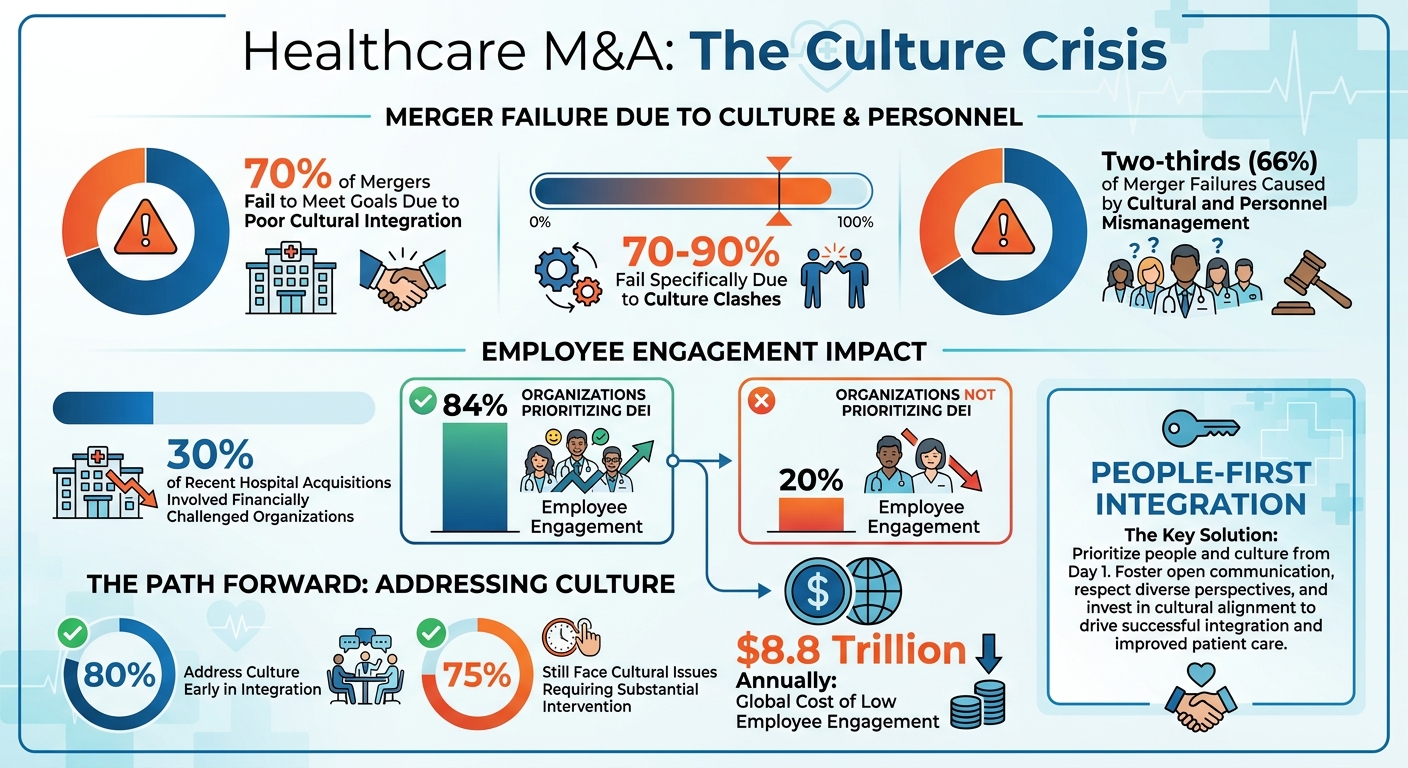
Healthcare M&A Failure Statistics and Cultural Integration Impact
Studies reveal that cultural and personnel mismanagement is responsible for about two-thirds of merger failures [4]. This challenge often turns seemingly promising deals into operational disasters.
Angela Sanghera, Partner, Operations Mergers and Acquisitions at KPMG Canada, explains this disconnect:
Leaders often claim that people are a company's biggest asset. Yet, during a merger, they often neglect integration plans for culture and employee expectations after a deal closes [4].
When cultures clash during a merger, it creates a divisive "us vs. them" mentality. This environment not only disrupts operations but also pushes top talent toward competitors, often at a time when retaining skilled employees is critical [4]. The uncertainty and upheaval that accompany mergers give competitors an opportunity to attract these valuable team members.
In healthcare, the stakes are even higher. Around 30% of recent hospital and health system acquisitions involved organizations already facing financial challenges. For these entities, focusing solely on legal, financial, and IT aspects while neglecting cultural integration can exacerbate vulnerabilities [5][3].
The healthcare sector adds another layer of complexity, where cultural misalignment doesn’t just affect internal operations - it can also endanger patient safety and disrupt clinical practices.
Healthcare mergers come with unique challenges, largely because the industry deals with life-and-death scenarios. Each health system has its own clinical practices and protocols for addressing medical issues. These practices, while difficult to measure, are critical for maintaining patient safety [6].
For clinical staff, particularly in community and rural hospitals, mergers often bring fears of losing long-standing traditions and autonomy. When new protocols are introduced without fully understanding the existing workflows, staff may perceive these changes as rigid mandates rather than helpful updates [5][6]. This disconnect can breed resistance and dissatisfaction.
At the same time, IT and operational leaders face the daunting task of integrating complex systems like Electronic Health Records (EHRs) while ensuring that patient care continues without interruption. Unlike other industries, where operations can pause for upgrades, healthcare systems must remain functional 24/7. This constant pressure contributes to burnout and turnover among staff [5][6].
Even more troubling, many healthcare mergers fail to deliver on promises of improved care, better patient experiences, or cost savings. Cultural misalignment often lies at the heart of these failures. When staff feel their autonomy is being stripped away, they are less likely to embrace new workflows or safety protocols, undermining the very goals of the merger [5][3].
Addressing these distinct challenges is essential for creating successful integration strategies in healthcare mergers.
When healthcare organizations merge, their contrasting leadership styles and decision-making approaches often clash. For example, some systems lean toward innovation and taking risks, while others focus on maintaining stability and minimizing risks [1]. Academic medical centers typically operate with less hierarchy and a more entrepreneurial mindset, whereas regulated clinical enterprises prioritize immediate service delivery [7]. Smaller hospitals, like orthopedic centers, often foster a flexible, team-driven environment, which can conflict with the structured, service-focused culture of larger multi-hospital systems [7]. These differences in values can ripple through clinical practices and safety protocols, creating friction.
Each healthcare organization develops unique clinical practices and safety standards - ranging from how safety issues are escalated to specific patient care procedures. When two organizations come together, these differences can disrupt operations and impact patient outcomes [6]. If the acquiring organization imposes its standards without aligning them with existing workflows, staff often perceive these changes as top-down mandates rather than collaborative improvements [6].
Rachel Mwema, Management Specialist at Ladnan Hospital, highlights this challenge:
Merging two healthcare organizations brings together different cultures, which can lead to conflict or inefficiencies if not managed properly. [9]
Technology changes, like introducing new Electronic Health Records (EHR) systems, can make things even harder. Without proper training or integration with current workflows, clinicians may feel overwhelmed, increasing the likelihood of errors. Culture clashes are a significant factor in the failure of 70% to 90% of mergers, with low employee engagement often linked to more safety incidents [9]. To address these challenges, clear and transparent communication across teams is essential.
Communication issues are another major hurdle during mergers. Often, leadership focuses on legal and financial aspects, leaving employees out of the loop [9]. This lack of communication can be especially problematic when a formal organization merges with one that values informal, open communication. Misunderstandings can spread quickly, and rumors can take hold [1].
One example involved a small community hospital merger that fell apart due to abrupt, top-down changes and a lack of cultural sensitivity, which led to high turnover and the eventual collapse of the deal [5]. Dr. Allen Nazeri, Managing Director at American Healthcare Capital, stresses the importance of transparency:
Early disclosure fosters a culture of transparency, which can enhance trust between management and employees. When employees feel they are being kept in the loop, they are more likely to remain engaged. [9]
Mergers often bring uncertainty, and this can lead to resistance among employees. Concerns about job security, role changes, and the organization's future can lower morale, reduce productivity, and even prompt valuable staff to leave. As DeAnna Davis, CEO of DeAnna Davis Consulting, explains:
Employees from both sides may feel uncertain about their roles, job security, and the future of the company. This can result in decreased morale, lower productivity, and even talent attrition. [9]
In smaller community or rural hospitals, staff often worry about losing their traditions and autonomy. When new protocols are introduced without considering existing workflows, employees may view them as rigid mandates that ignore their expertise [5][6]. This resistance stems from genuine concerns about maintaining high-quality patient care based on familiar methods. Globally, low employee engagement costs an estimated $8.8 trillion annually, and in healthcare, disengaged staff can directly affect patient safety and care quality [9]. Addressing employee concerns early is crucial to ensuring a smoother cultural integration.
Unclear leadership roles and decision-making authority after a merger can lead to confusion and conflict. Without clear definitions of responsibilities, senior leaders may become disengaged or even obstruct the integration process [6]. This often results in competing power structures, with different leaders vying for control over the same decisions.
These conflicts are particularly challenging when a consensus-driven organization merges with one that prioritizes quick, decisive actions to address urgent needs [10]. While one approach values collaboration and buy-in, the other focuses on speed and efficiency. Without alignment, these differences can create significant friction.
Although 80% of organizations address culture early in the integration process, 75% of acquirers still face cultural issues that demand substantial intervention [10]. Establishing unified decision-making processes is key to maintaining operational and cultural stability in the long term.
Start evaluating cultural differences well before the merger takes place. Interviews, surveys, and document reviews can help uncover key aspects like leadership styles, core values, communication habits, decision-making processes, and DEI (Diversity, Equity, and Inclusion) policies. This early step is crucial for spotting potential challenges and planning for smoother integration.
José A. Cano, Ph.D., highlights the importance of this step:
"Conducting a cultural assessment before the merger or acquisition (through interviews, surveys, and/or document analysis to understand organisational cultures) is essential. This will identify differences between the organisations and allow for the planning of appropriate integration strategies." [1]
Using tools like InnoSurvey® to map cultural gaps can provide clarity on areas of potential conflict. Pay particular attention to how decisions are made and how conflicts are resolved - misalignments in these areas often signal future issues [1].
Once a clear picture of cultural differences emerges, focus on creating a strong communication plan to bridge those gaps.
Communication planning should begin before the deal is finalized. This builds trust and avoids confusion. Use an omni-channel approach - email, mobile apps, Teams, intranet, and town halls - to ensure everyone gets consistent updates. Explain the purpose of the merger, the reasoning behind cultural decisions, and how these changes will impact daily work [9] [2] [6].
Address pressing employee concerns - like job security, benefit changes, and role adjustments - immediately. Dr. Allen Nazeri, Managing Director at American Healthcare Capital, stresses the value of transparency:
"Early disclosure fosters a culture of transparency, which can enhance trust between management and employees. When employees feel they are being kept in the loop, they are more likely to remain engaged and committed to the company during the transition." [9]
Create two-way communication channels through surveys, focus groups, and Q&A sessions. For instance, Unison Health in Ontario used employee engagement surveys during its merger to refine its messaging in real time. Equip managers with consistent talking points and onboard new employees through structured orientation programs [2].
After establishing a solid communication plan, the next step is aligning leadership. Appointing a single CEO early in the process ensures a unified voice and avoids mixed signals [9]. Clearly outline leadership roles and decision-making authority to prevent power struggles [6]. Decide whether to adopt one organization’s culture, combine strengths from both, or create an entirely new culture - and share this decision openly with employees [8].
To smooth the transition, hold perception workshops to dispel misunderstandings and accelerate leadership training. Designate integration ambassadors to provide feedback on operational and IT changes [10].
Early alignment of clinical practices and escalation protocols is essential to maintain care quality and reduce patient risks. Support teams during Electronic Health Record (EHR) transitions to avoid burnout, and involve frontline staff in shaping new standards. This ensures that changes feel collaborative rather than imposed.
Translate high-level strategic goals into practical benefits for teams, patients, and the community. When clinical teams see how these changes improve patient safety and care quality, they are more likely to embrace them [6].
After standardizing protocols, it’s equally important to respect and preserve existing practices that hold local significance.
In mergers involving rural or community hospitals, retaining local branding or specific community-focused practices can help maintain trust and keep key staff on board [6]. Use the Integration Management Office (IMO) to test cultural adjustments on a smaller scale before rolling them out across the organization [10]. Post-merger leadership outreach is also critical to prevent departments from reverting to siloed mindsets [9].
Cultural integration isn’t a one-time task - it requires ongoing monitoring and adjustments based on employee feedback. Embedding DEI into the shared culture is particularly impactful. Organizations that prioritize DEI report far higher employee engagement levels (84% compared to 20%) [9].
Measuring cultural integration is a critical step in ensuring a merger achieves its intended goals. By tracking the right data, organizations can turn strategies into actionable steps that support both clinical excellence and operational effectiveness.
Successful measurement involves combining qualitative feedback with quantitative metrics. Employee surveys, retention rates, clinical outcomes, and financial performance all contribute to a clear picture of how well the merger is progressing [12]. Tools like regular pulse surveys and integration scores can help identify potential issues early, preventing them from escalating [11].
Leadership alignment is another key indicator to watch. Tracking how leaders from both organizations collaborate - through cross-organizational meetings and team performance metrics - provides insight into cultural integration [11]. At the same time, operational efficiency metrics, such as departmental productivity and employee output, can reveal whether teams are working cohesively or remaining siloed.
Once leadership and operational metrics are in place, the focus shifts to team-level indicators.
Employee retention is a clear signal of cultural harmony - or lack thereof. Comparing turnover rates before and after the merger can highlight unresolved cultural challenges. Pulse surveys and focus groups offer real-time feedback, allowing organizations to fine-tune their communication and integration efforts [9].
Engagement metrics should be tracked continuously, rather than relying on annual surveys. This approach provides a more accurate view of employee sentiment. Pay close attention to Diversity, Equity, and Inclusion (DEI) metrics, as organizations that prioritize DEI during mergers report engagement rates of 84%, compared to just 20% for those that don’t [9]. Considering that low engagement costs the global economy $8.8 trillion annually, these metrics carry both cultural and financial weight [9].
Cultural integration also affects patient care. Monitoring clinical standardization metrics ensures that consistent protocols are followed across the organization. Key indicators include readmission rates, infection rates, medication errors, and patient falls. Special attention should be given to patients with limited English proficiency, as they may face higher risks during transitions. Metrics like interpreter service usage and error reporting by demographic group can help address these vulnerabilities [13].
| Metric Category | Indicators |
|---|---|
| Clinical Outcomes | Readmission rates, infection rates, mortality rates, diagnostic accuracy |
| Patient Safety | Medication errors, patient falls, wrong-site procedures, surgical complications |
| Patient Experience | Satisfaction scores (HCAHPS), patient feedback, follow-up visit compliance |
| Operational Efficiency | Medical supply availability, staff onboarding time, protocol adherence rates |
High levels of employee engagement often lead to fewer safety incidents and better patient satisfaction, making engagement data a valuable proxy for clinical quality [9]. Interim processes for scheduling and consultations are also essential to maintain seamless patient care during operational shifts.
Financial performance is another lens through which cultural integration success can be assessed. Metrics like revenue growth, cost savings, and operational efficiency should align with pre-merger expectations. Tracking output per employee and departmental efficiency helps determine whether workflows are being streamlined or duplicated. These financial insights can confirm whether cultural integration is driving the desired performance improvements [9].
By combining financial, employee, and patient metrics, organizations can gain a well-rounded view of their integration progress. For instance, strong retention and improved patient outcomes paired with underwhelming financial results may point to operational inefficiencies. Conversely, robust financial performance alongside high turnover could signal deeper cultural issues.
For more tailored strategies on measuring cultural integration success, healthcare organizations can explore the expert services offered by Phoenix Strategy Group (https://phoenixstrategy.group).
Cultural integration plays a critical role in determining whether a healthcare merger thrives or falters. Nick Hernandez, Founder & CEO of ABISA, LLC, puts it bluntly:
The most common reason mergers and acquisitions fail: culture [2].
As more CEOs pursue acquisitions, understanding how to align cultures becomes non-negotiable.
The work doesn’t stop at signing the deal. Integration should be treated as a human transformation supported by technical processes - not the other way around [3]. This involves actively monitoring employee morale, keeping communication lines open, and adjusting strategies based on real-time feedback. Structured 100-day integration plans can help capture synergies faster while minimizing talent loss [14].
Post-merger success hinges on making deliberate cultural decisions - whether it’s adopting one culture, merging both, or creating something entirely new - and ensuring those choices are clearly communicated [2]. Leadership teams must also clarify decision-making authority and define future roles early on to keep senior leaders engaged and provide frontline staff with the support they need [3]. These decisions directly influence clinical workflows, patient safety protocols, and the overall continuity of care.
Investments in change management, structured onboarding, and ongoing feedback are key to long-term success. These efforts not only protect clinical teams from burnout but also ensure seamless patient care and foster trust - foundations for sustained performance improvements. Prioritizing cultural integration safeguards patient outcomes, retains top talent, and strengthens financial performance.
For expert guidance through these complex transitions, Phoenix Strategy Group offers strategic advisory services tailored to growth-stage companies.
Before finalizing a healthcare merger, it’s crucial to evaluate important workplace dynamics like organizational values, communication styles, and day-to-day practices. Spotting potential conflicts ahead of time gives you the chance to develop strategies that bring teams together smoothly. This preparation helps minimize disruptions and keeps the transition on track.
Integrating EHRs successfully requires careful planning, open communication, and active staff participation. Start with a detailed plan that fits seamlessly into existing workflows. Early feedback from your team is essential to identify and address potential concerns upfront. Providing clear and thorough training can also ease stress and build confidence.
A phased rollout approach allows staff to adapt step by step, reducing overwhelm. Additionally, having a dedicated support team on hand ensures technical issues are resolved quickly, keeping the process smooth. These measures help maintain uninterrupted patient care while supporting staff throughout the transition.
Key indicators that can signal early issues with culture integration are leadership alignment, staff morale, employee turnover rates, and communication effectiveness. These metrics help assess whether the organizations involved in the merger are blending their cultures smoothly or facing challenges.