Published on
December 25, 2025

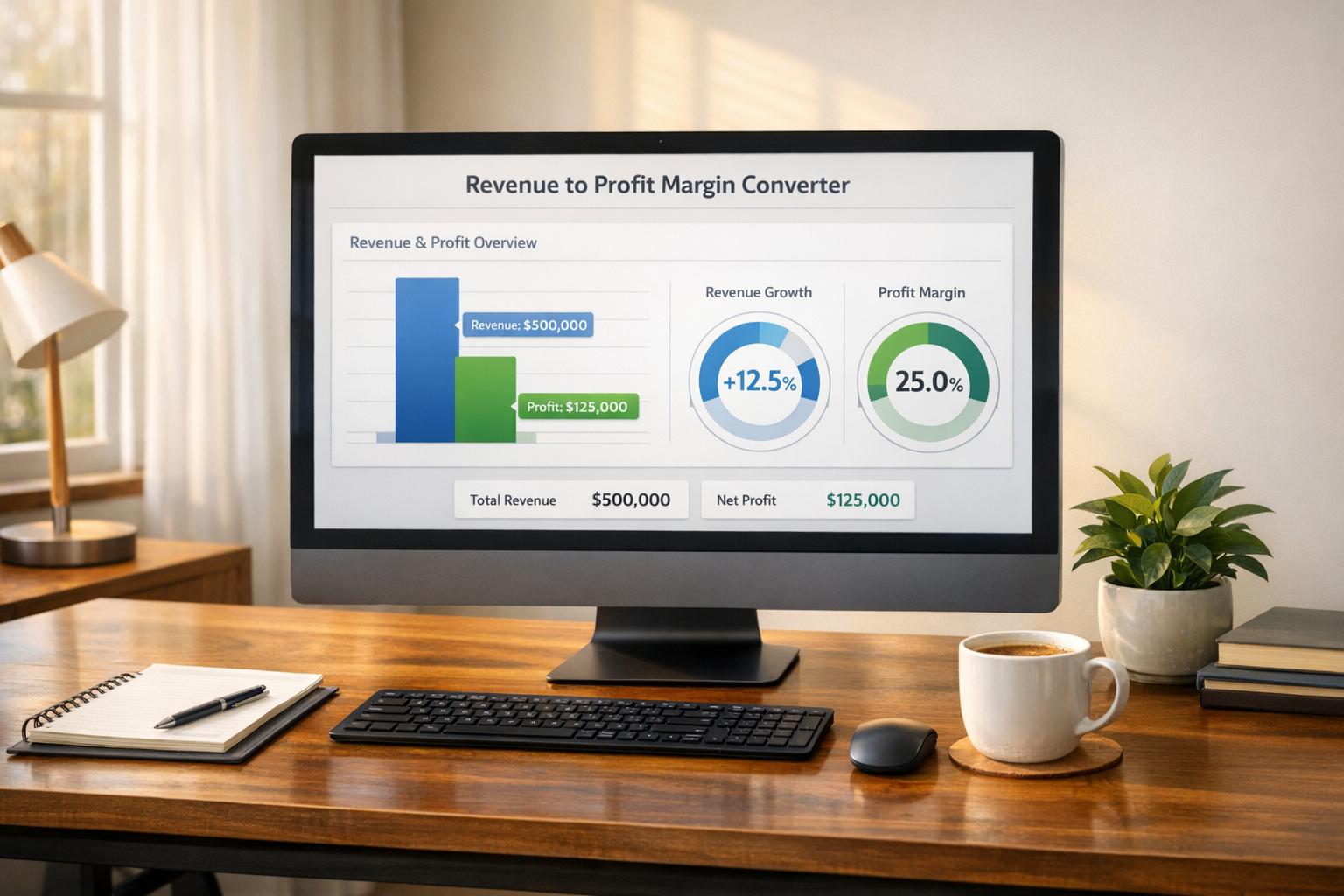
Running a business means keeping a close eye on your finances, and understanding profitability is at the heart of that. A tool like our Revenue to Profit Margin Converter can simplify this process by turning raw numbers into clear metrics. Whether you're a startup founder or managing an established company, knowing how much of your revenue turns into profit after costs is crucial for growth.
Profit margins—gross, operating, and net—tell a story about your business efficiency. They reveal how well you manage expenses and whether your pricing strategy works. For instance, tracking these figures over time can help you spot trends, like rising costs eating into your bottom line, so you can act before it’s a problem. Beyond internal planning, these insights are vital when pitching to investors or applying for funding, as they demonstrate financial health.
Instead of crunching numbers manually or wading through complex spreadsheets, use a straightforward calculator to break down your earnings. With just a few inputs, you’ll see where your money goes and how to improve. Dive into our free tool today and take control of your financial future!
Great question! Gross margin shows how much you keep after covering the direct costs of your goods or services—think of it as your first profitability checkpoint. Operating margin goes a step further by factoring in your day-to-day expenses like rent or salaries, giving you a sense of how well your core business runs. Net margin is the big picture: it’s what’s left after all costs, including taxes, and tells you your overall profitability. Each metric helps you spot where you might cut costs or boost efficiency.
This tool offers a simplified calculation that works well for most businesses as a starting point. However, every industry has unique factors—think depreciation, interest expenses, or one-off costs—that might not be captured here. We include a disclaimer with your results to remind you of this. For a fully detailed analysis, you might want to consult with an accountant or use specialized software tailored to your field.
Knowing your profit margins is like having a roadmap for your business health. It helps you understand where your money is going and whether you’re pricing your products or services effectively. Low margins might mean you need to rethink costs or pricing, while strong margins can signal room for growth or investment. Plus, if you’re seeking investors or loans, these numbers are often the first thing they’ll look at to gauge your financial stability.