Published on
April 25, 2026

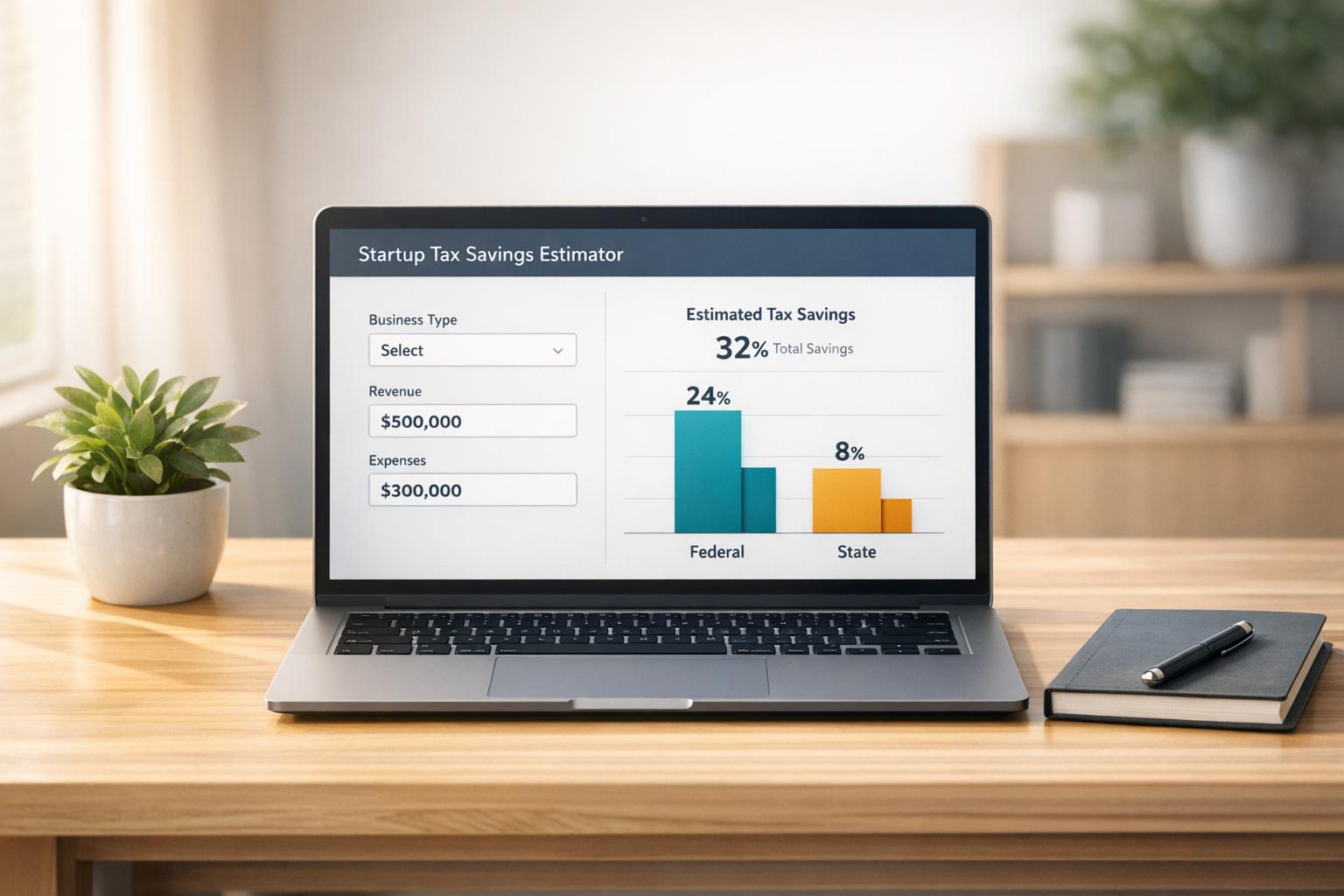
Starting a business comes with a laundry list of challenges, and managing taxes often tops that list. For new entrepreneurs, figuring out how much you might owe—or save—can feel like a guessing game. That’s where a tool like our Startup Tax Savings Estimator comes in handy. It’s designed specifically for founders who want a quick, no-nonsense way to gauge their potential tax burden based on business structure, revenue, and expenses.
Every dollar counts when you’re building a company from the ground up. Understanding deductions and local tax differences can help you keep more of your hard-earned cash. Whether you’re running a sole proprietorship in Texas or an LLC in California, having a rough estimate of your federal and state obligations empowers better financial decisions. Our calculator breaks down taxable income and highlights possible savings, so you’re not left scrambling at tax time. Plus, it’s free and easy to use—no accounting degree required. Just input a few details, and you’ll get a clear snapshot to discuss with your advisor. Take control of your startup’s finances today and see how much you could save!
This tool gives a solid ballpark figure based on simplified federal tax brackets and approximate state rates. For instance, we use a flat 21% for C-Corps and graduated rates for individual-based structures, while state taxes range from 0% in places like Texas to 8% in California. But keep in mind, real tax situations can get messy with credits, exemptions, or unique deductions. It’s not a substitute for a CPA’s advice, just a starting point to help you plan.
You can input any business-related costs that are typically deductible, like office supplies, travel, equipment, or even software subscriptions. The tool includes a tooltip with examples to nudge you in the right direction. Just remember, the IRS has specific rules on what qualifies, so double-check with a tax pro to make sure you’re claiming everything correctly.
State tax rates vary wildly across the U.S., and they can make a big dent in your overall tax bill. Some states, like Texas or Florida, have no income tax, while others, like California or New York, can hit you with rates up to 8% or more. This estimator adjusts for those differences based on your selection, giving you a clearer picture of what you might owe locally alongside federal taxes.