Published on
February 23, 2026

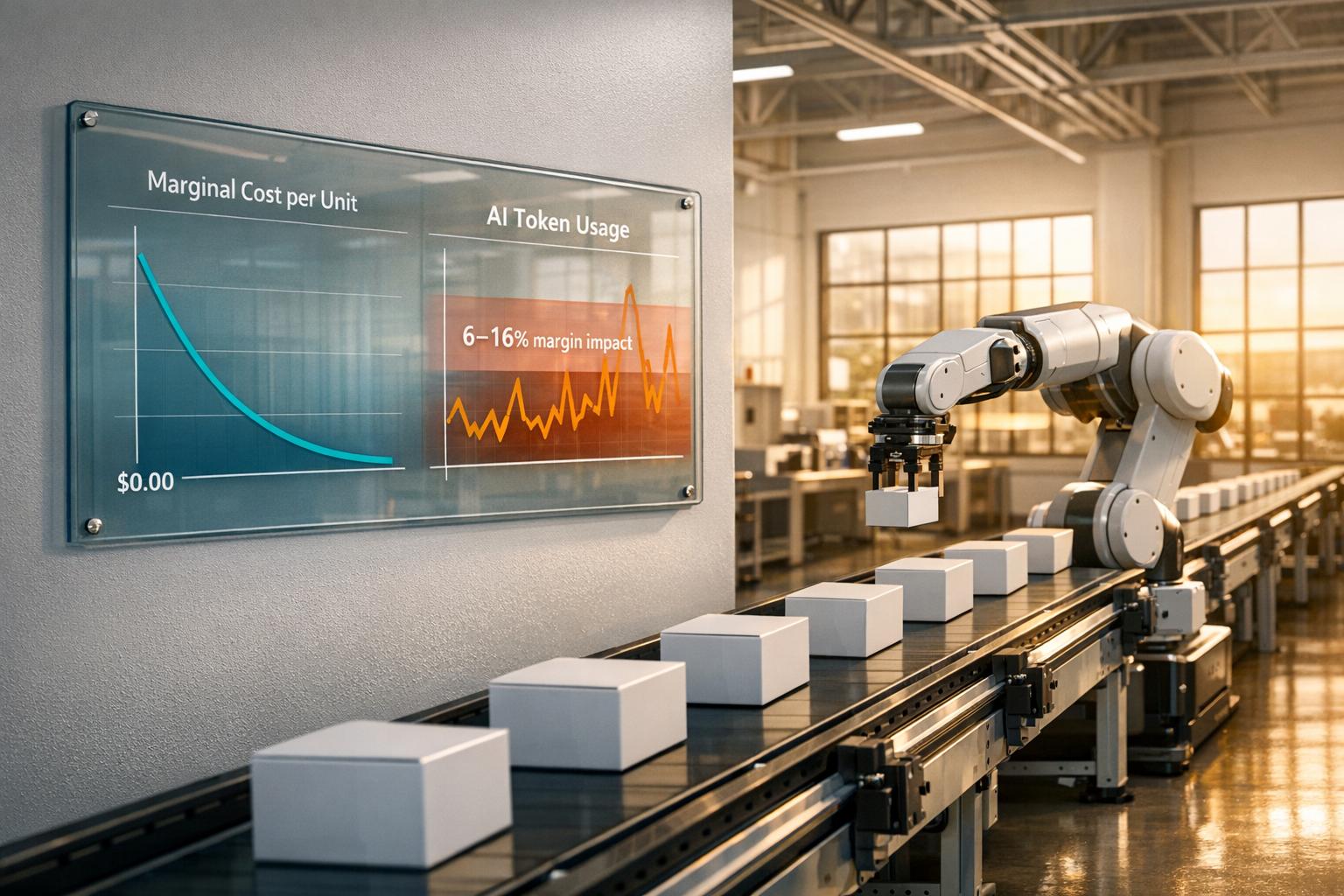
Unit economics measures the profit from each product or service sold. It’s simple: revenue per unit minus costs per unit. Positive results mean your business is scalable; negative results signal potential losses as you grow. Automation can drastically improve margins by cutting variable costs, especially for repetitive tasks. For example, AI tools can handle customer support without additional hires, reducing marginal costs to near zero.
Key insights:
Phoenix Strategy Group helps companies improve margins through automation, financial modeling, and real-time monitoring tools. Their approach focuses on reducing costs while maintaining profitability as businesses scale. Automation is a game-changer, but it requires disciplined planning to succeed.
Automation does more than just cut expenses - it fundamentally shifts how costs are structured. In traditional business models, every new customer or transaction typically leads to proportional increases in labor, materials, and overhead. With automation, however, the marginal cost of repetitive tasks drops significantly, often nearing zero. For instance, AI tools can handle customer support tasks at scale without the need to hire additional staff. This allows businesses to grow their capacity without the usual surge in costs tied to expansion [1][2].
A clear comparison can be seen when looking at traditional SaaS margins versus automation-driven models. SaaS businesses often achieve gross margins of 60-80% because adding customers incurs minimal incremental costs. On the other hand, automation-driven AI models operate differently, with fluctuating token-based costs that can lower margins to 50-60% [2][3]. For example, OpenAI reported a 48% gross margin on $6.1 billion in revenue [3][4]. Usage volatility plays a big role here, with token costs jumping from $25 to $40 for every $100 in revenue. This shift reduces contribution margins from 75% to 60% [2][4].
This margin squeeze is a widespread issue - 84% of AI SaaS companies see their gross margins drop by 6-16% due to unpredictable usage spikes [2][4][5]. To stay competitive, companies need to adjust pricing to reflect token costs, implement caching strategies, and constantly review their unit economics. Phoenix Strategy Group, for instance, uses fractional CFO teams to refine financial models, enabling businesses to monitor per-unit costs and margins in real time. These efforts help ensure that pricing strategies and other measures effectively counteract the challenges posed by usage volatility [4][5].
Traditional SaaS businesses follow a "build once, sell many" approach, which creates predictable cost patterns. The main expenses - hosting infrastructure, customer support, and software maintenance - are categorized as the cost of goods sold (COGS). Meanwhile, sales, marketing, and R&D for new features fall outside this calculation [6]. Typically, cloud services account for the largest share of direct costs, followed by salaries for support teams and tools needed to maintain customer satisfaction. Because adding a new customer doesn’t require rebuilding the product, incremental costs remain low. This predictability allows for scalable pricing strategies that can grow alongside the business.
Early-stage SaaS startups often achieve gross margins of 50-70%, largely due to initial development costs and operational inefficiencies [6]. However, as companies scale, leading performers regularly hit 80% or more [6][8]. Stripe highlights:
a gross margin above 75% is typically considered good for a SaaS business. This indicates a healthy business model with fine-tuned operations and pricing [6].
Salesforce offers a prime example. In FY2024, the company reported subscription revenue accounting for 94% of total revenue, paired with an operating margin of 14.4% [7]. These figures underscore the efficiency and profitability potential of traditional SaaS models, setting a benchmark for assessing the impact of automation.
One of the main hurdles for traditional SaaS models is linear scaling. For instance, a 30% revenue increase often requires a similar rise in headcount, which limits margin growth [11]. Operations teams typically spend 60-70% of their capacity on repetitive tasks, which further hampers scalability [11]. A real-world example comes from Drift during March 2020, when a surge in free-tier users during the pandemic strained their margins. Their engineering team responded by re-architecting their chatbot tool, cutting operating costs by 80% [10].
Value-based pricing enables companies to generate higher revenue relative to delivery costs without altering the underlying cost structure [6]. To optimize this, businesses must closely monitor unit-level metrics, such as the cost per customer and cost per feature, to identify segments that erode margins [10]. Notably, only 29% of organizations report achieving the cost savings they expect from SaaS investments, emphasizing the importance of ongoing metric tracking [10]. For early-stage companies, an LTV:CAC ratio of 1-2x is common, but as they grow, they should aim for a 3:1 ratio or better, with payback periods under 12 months [9].
This traditional model lays the groundwork for understanding how automation-driven approaches can disrupt and improve these patterns, a topic explored in the next section.
Automation is reshaping how businesses allocate their budgets. Instead of relying on labor costs that grow with customer demand, companies now focus on upfront investments in technology like AI platforms, robotics, and automated systems. This shift reduces the "labor share" of revenue, reallocating spending to fixed technology costs [13] [14]. While these initial investments can be steep - particularly for smaller or older businesses [19] - the long-term benefits are undeniable. For example, automation has been shown to boost labor productivity by 11.4% [14]. A striking case is the IRS, which adopted robotic process automation from UiPath in February 2022. This upgrade slashed the time needed for a specific task from one year to just 72 hours [13]. By transforming expense structures, automation paves the way for improved gross margins.
The impact of automation on margins is hard to overlook. By turning variable labor costs into fixed technology assets, businesses can achieve much higher contribution margins once the initial investment is recouped [18]. Companies that lead in automation - spending over 20% of their IT budgets - have cut process costs by 17%, compared to just 7% for slower adopters [16]. Over time, these investments pay off significantly. Operating margins, for instance, can rise from 15–20% to 35–40% within three years by optimizing asset use and minimizing inefficiencies [18]. Procter & Gamble provides a compelling example: in 2023, it used AI and automation to optimize inventory levels during product changes, saving around $60 million annually [16]. Similarly, firms with dedicated automation Centers of Excellence reported 14% savings, outperforming those without such centers, which saved 10% [16]. However, these margin gains also highlight the complexities of scaling automation effectively.
Despite its advantages, scaling automation comes with its own set of challenges. A major hurdle is the skills gap - automation requires a technically skilled workforce, a concern frequently raised by CFOs [12] [19]. Additionally, automation adoption skews heavily toward larger firms, with 75–85% of them implementing it, compared to just 44% of smaller businesses [12] [17]. The approach to implementation also matters. Companies that integrate automation alongside their workforce see better results, achieving 7.3% revenue growth compared to 3.4% for those focusing solely on headcount reduction [12]. As Philippe Aghion and his colleagues explain:
Automation can increase labor demand and can generate productivity gains that are broadly shared across workers, consumers and firm owners [20].
Automation doesn't just improve margins - it also enables greater pricing flexibility. Automated businesses often experience slower price growth, allowing them to counter inflationary pressures while staying competitive [17]. A standout example is Capital One's "Auto Navigator." This machine learning-based platform streamlined auto loan underwriting to mere seconds, helping the company earn high marks in JD Power's 2022 US Consumer Financing Satisfaction Study [16]. Moreover, dynamic pricing strategies - adjusting prices based on daily demand forecasts - can further maximize the use of fixed assets and boost margins [18]. For instance, in March 2021, a healthcare provider in the Asia-Pacific region automated support and patient care processes. This not only increased their functional capacity by 30% but also doubled their cash flow without adding staff [15].

Phoenix Strategy Group focuses on helping growth-stage companies shift from unpredictable labor costs to more stable, technology-driven expenses. By doing so, businesses can reduce their reliance on variable wages and instead invest in fixed automation solutions. This aligns with an industry trend where over 85% of companies cite cost savings as the main driver for automation. This transition not only helps control rising labor costs but also improves overall financial performance by cutting expenses and boosting profit margins [12].
Through advanced financial modeling and data engineering, Phoenix Strategy Group ensures that companies see early returns on their automation investments. By slowing the growth of wage bills and eliminating inefficiencies through quality control, businesses can improve their margins. Tools like the Weekly Accounting System and Monday Morning Metrics provide real-time insights, allowing leadership teams to monitor these improvements and adjust strategies as needed. These enhanced margins also help businesses tackle the challenges of scaling effectively.
Scaling automation comes with its own set of hurdles, particularly for smaller businesses that often face technical skill gaps. Phoenix Strategy Group addresses this by offering fractional CFO and data engineering services, which provide the expertise needed to bridge these gaps. This is especially important given that only 44% of smaller firms adopt automation compared to 75% of larger companies [12]. Instead of focusing solely on reducing headcount, the firm emphasizes using automation to enhance workforce productivity. As the Richmond Fed highlights:
Automating firms anticipate wage bill growth in 2024 that is closer to those firms not automating... suggesting that firms implementing automation expect to see some return on their investment in the form of reduced wage bill growth [12].
Phoenix Strategy Group also helps businesses refine their pricing strategies to maximize the benefits of automation. By using tools like revenue engine analysis and unit economics evaluation, they enable firms to maintain competitive pricing while improving margins. This is particularly vital for companies that continue hiring while automating, as they often experience revenue growth of 7.3%, compared to just 3.4% for those focusing purely on workforce reductions [12]. Additionally, their M&A advisory services help companies showcase sustainable, automation-driven margin improvements, making them more attractive for potential acquisitions or exits.

Traditional SaaS vs Automation-Driven Models: Gross Margins and Cost Comparison
Understanding the trade-offs between different approaches is crucial for balancing margins and scalability.
Each unit economics model comes with its own set of challenges and benefits. Traditional SaaS models, for instance, boast 80-90% gross margins because the cost of serving an additional customer is nearly zero [4]. However, these models often deliver a "soft ROI", where the value is harder to measure, and pricing is typically tied to seat counts [4]. While this creates predictable revenue streams, it also limits the ability to capture the full value of the service provided.
On the other hand, automation-driven models flip the script. They deliver "hard ROI" by executing tasks and closing the loop, but gross margins drop to 50-60% due to the costs associated with computing and inference [4]. As Bessemer Venture Partners explains:
Unlike classic SaaS, where serving one more customer costs virtually nothing, every AI query incurs a non-trivial expense [4].
The financial strain of AI is evident: 84% of companies report a gross margin erosion of over 6% from AI-related costs, and 25% fail to meet forecasts by more than 50% [5].
The table below compares these models and introduces how Phoenix Strategy Group stands apart:
| Feature | Traditional SaaS | Automation-Driven Models | Phoenix Strategy Group Services |
|---|---|---|---|
| Gross Margins | 80-90% [4] | 50-60% [4] | Higher than traditional services [4] |
| Primary Risk | High churn, low adoption | Technical debt, brittle integrations | Dependency on external partners |
| Cost Predictability | High [5] | Low (probabilistic workflows) [5] | Moderate (depends on automation rate) |
| ROI Type | "Soft" (productivity tools) [4] | "Hard" (executes tasks) [4] | Clear cost reduction vs. manual labor [4] |
| Scalability | Linear (more seats needed) | Exponential (handles volume without proportional cost) | Managed (optimized workflows with expert oversight) |
Phoenix Strategy Group takes a hybrid approach that blends automation with strategic oversight. Instead of merely deploying technology, they focus on targeting automation in areas that yield the highest profitability. By combining automation with human checkpoints for critical decisions, they offer measurable cost reductions while avoiding common pitfalls like untracked token consumption or "zombie infrastructure" [5]. This approach not only minimizes margin erosion but also aligns automation efforts with KPIs that directly improve margins, going beyond the simplistic "labor hours saved" metric.
Automation is transforming the way businesses approach unit economics, making it essential to adopt a strategic mindset to protect and improve margins. While traditional SaaS models are known for their high gross margins, automation introduces new cost dynamics that require careful oversight and planning. The key to success lies in combining automation with human oversight to achieve measurable, tangible results.
To adapt to these financial shifts, focus on practical strategies. Pinpoint high-volume, repetitive tasks where automation can deliver clear cost savings. Keep a close eye on metrics that directly influence contribution margins, such as infrastructure expenses, token usage, and workflow efficiency. Treat automation as a calculated financial move aimed at minimizing margin erosion while maximizing returns.
Phoenix Strategy Group supports growth-stage companies in navigating these changes by offering fractional CFO services, FP&A system implementation, and unit economics analysis. Their expertise helps businesses gain the financial clarity needed to evaluate automation's impact on margins and make informed decisions. This approach ensures companies can harness the benefits of automation without losing the strategic oversight critical for long-term success.
The potential for better margins through automation is substantial, but it demands a disciplined approach. By prioritizing measurable results, maintaining cost transparency, and aligning automation efforts with solid unit economics, businesses can achieve sustainable and profitable growth.
To strengthen your unit economics, focus on automating repetitive tasks that often drain time and resources. Key areas to target include invoice processing, payroll, data entry, and reconciliation. Begin by pinpointing bottlenecks - like manual approvals or tedious data entry - that slow down workflows. Then, adopt tools equipped with features like integrations or optical character recognition (OCR) to streamline these processes.
This strategy not only reduces costly errors but also frees up your team to concentrate on higher-value tasks. The result? Lower operational costs, improved efficiency, and healthier profit margins - all of which contribute to long-term growth.
To keep AI token costs in check as usage increases, begin by examining the usage object in your API responses to monitor token consumption. Set up automated tracking with a simple tool, like a Python logger, to catch any unexpected spikes in usage. You can also implement a cost tracking system, such as Phoenix's tools, to uncover hidden charges, streamline usage, and prevent budget overruns. This approach ensures better cost management as your AI operations expand.
Key indicators to determine if automation is boosting margins include cost savings, fewer errors, and increased productivity. These improvements often show up in areas like quicker processing, lower labor expenses, and better overall efficiency. Monitoring these metrics gives businesses a clear picture of how automation affects their profitability.