Published on
June 20, 2026

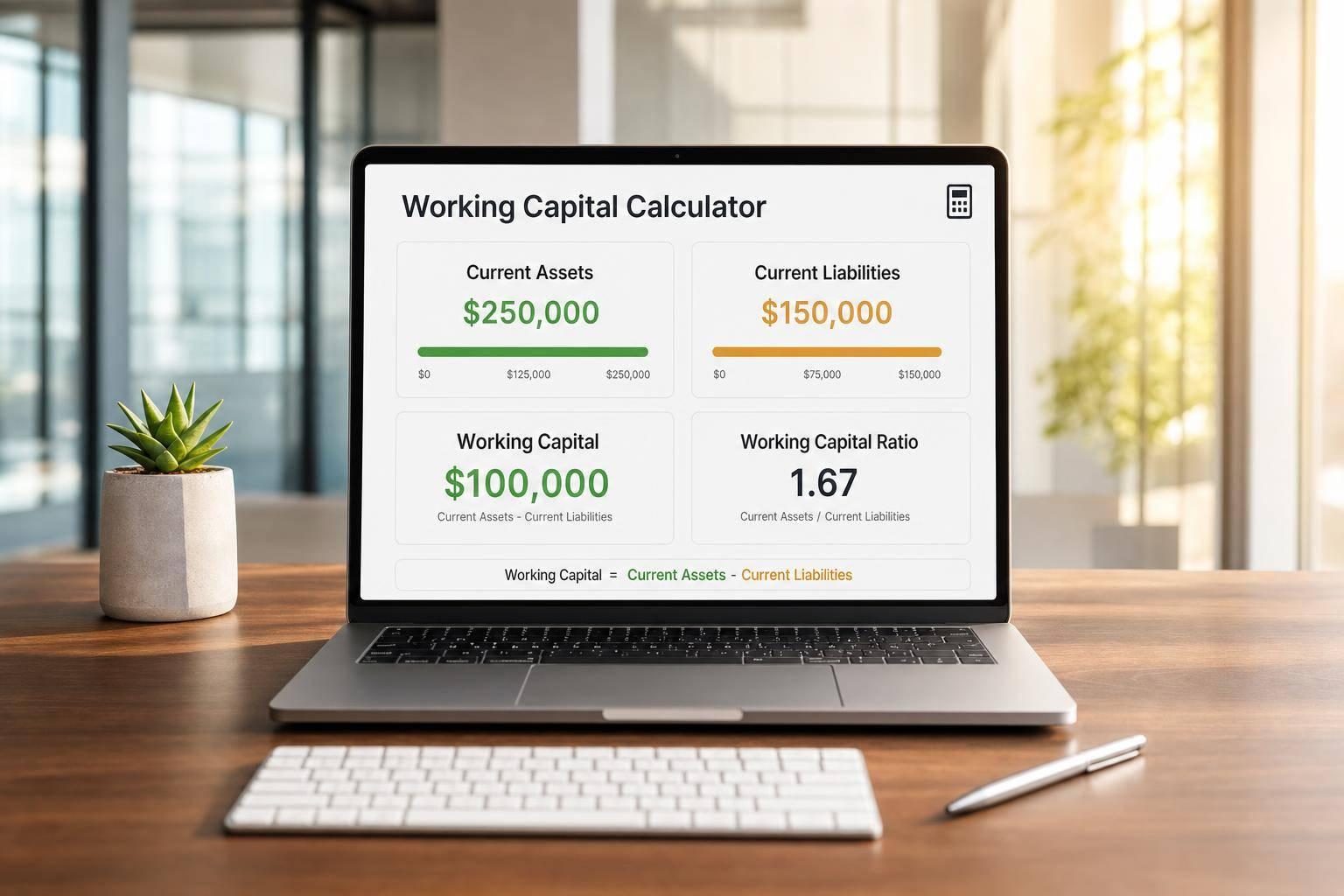
A Working Capital Calculator helps you measure how much room a business has to handle its short-term obligations. By comparing current assets with current liabilities, you can get a fast read on operational liquidity without digging through a full financial model. This is especially useful for owners, managers, lenders, and students who need a practical number they can interpret right away.
This tool calculates net working capital by subtracting current liabilities from current assets. If liabilities are greater than zero, it can also show the working capital ratio, giving you another way to evaluate short-term financial strength. You can enter totals directly or use optional line items such as cash, receivables, inventory, prepaid expenses, accounts payable, short-term debt, and accrued liabilities.
A positive result may suggest a business can cover near-term obligations more comfortably, while a negative result can signal pressure on cash flow. The built-in line items also make the numbers easier to verify, since you can see how each category contributes to the totals. For a clean, focused look at liquidity, this Working Capital Calculator keeps the process simple and easy to understand.
Net working capital shows whether a business has enough short-term assets to cover its short-term obligations. A positive result usually suggests more financial flexibility in day-to-day operations, while a negative result can point to tighter liquidity. It’s a simple but useful snapshot, especially when you want a quick read on near-term cash flow position.
The working capital ratio compares current assets to current liabilities. It’s calculated by dividing current assets by current liabilities, which gives you a sense of how comfortably short-term obligations may be covered. A higher ratio can indicate stronger liquidity, but context matters—a ratio that looks healthy in one industry may be less meaningful in another.
Because dividing by zero isn’t mathematically valid. If current liabilities are zero, the tool will still calculate net working capital, but it will note that the working capital ratio can’t be computed. That keeps the result accurate and avoids showing a misleading number.