Published on
May 11, 2026

Opportunity Zones (OZs) offer tax benefits for investments in economically distressed areas. Created in 2017, the program incentivizes investments through Qualified Opportunity Funds (QOFs). Key benefits include:
The 2025 One Big Beautiful Bill Act (OBBBA) made the program permanent, introducing OZ 2.0. Starting January 1, 2027, OZ 2.0 replaces the fixed 2026 tax deadline with a rolling 5-year deferral period. It also tightens eligibility criteria for OZ designations and enhances rural fund benefits.
For pre-2027 investments, deferred gains must be recognized by December 31, 2026. Taxes will be due by April 15, 2027. Planning ahead is vital to manage tax liabilities and maximize the program's advantages.
Opportunity Zones are defined at the census tract level, which are small, stable geographic areas within counties. Governors of states and territories nominate eligible tracts based on specific economic distress indicators like poverty rates and median family income (MFI) compared to surrounding areas or the state. These nominations are then certified by the U.S. Secretary of the Treasury.
Initially, about 12% of all U.S. census tracts were designated as Opportunity Zones. However, the One Big Beautiful Bill Act of 2025 introduced stricter rules for future designations. Starting January 1, 2027, eligible tracts must have a median family income below 70% of the statewide or metro area median (reduced from 80%) and cannot exceed 125% of the state or metro median when using poverty-based criteria. The act also removed the option to designate contiguous tracts that don’t meet low-income requirements, narrowing the focus to areas with clear economic distress.
The next redesignation process begins on July 1, 2026, with new designations taking effect on January 1, 2027. This marks the start of a 10-year redesignation cycle, allowing governors to update Opportunity Zone maps based on current economic data. These criteria are critical for determining which areas qualify for investment under the program.
To benefit from Opportunity Zone tax incentives, investments must be made through a Qualified Opportunity Fund (QOF). Investors cannot directly purchase property and still access the tax benefits. A QOF must be structured as a corporation (such as an S corporation, REIT, RIC, or REMIC) or a partnership for federal tax purposes. These entities self-certify annually using IRS Form 8996. Managing these complex compliance and certification requirements often requires the expertise of fractional CFO services to ensure long-term tax eligibility.
At least 90% of a QOF’s assets must be invested in Qualified Opportunity Zone Property (QOZP), which includes stock, partnership interests, or tangible business property within designated zones. Compliance with this 90% rule is checked twice a year: at the end of the first six months of the fund’s taxable year and on the last day of the taxable year.
QOFs can also invest in Qualified Opportunity Zone Businesses (QOZBs), which must generate at least 50% of their gross income through active business operations within the zone. For used property, the fund must "substantially improve" the asset by investing an amount equal to or greater than the original purchase price (excluding land value) within a 30-month period. These requirements ensure that QOF investments directly contribute to economic development in Opportunity Zones.
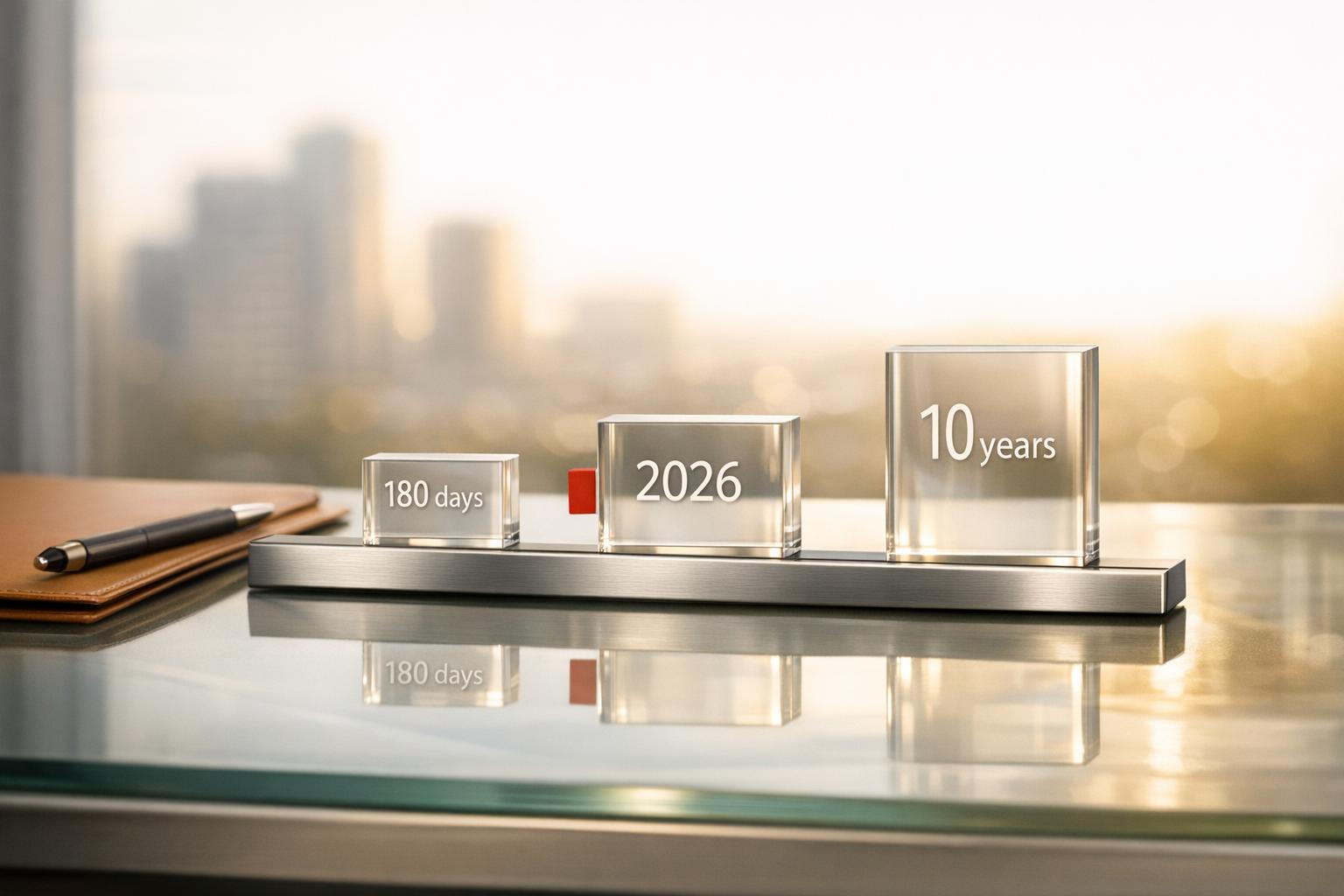
When you realize a capital gain, you can defer the taxes owed by reinvesting that gain into a Qualified Opportunity Fund (QOF) within 180 days. This applies to both short-term and long-term capital gains, as well as Section 1231 gains from business property sales.
Under the original Opportunity Zone program (often called OZ 1.0), all deferred gains had to be recognized by December 31, 2026. This meant you’d need to pay taxes on the original gain by that date, even if you hadn’t sold your QOF investment. However, the One Big Beautiful Bill Act of 2025 introduced the OZ 2.0 framework. Starting January 1, 2027, investments made under OZ 2.0 benefit from a rolling 5-year deferral. For example, if you invest a $500,000 gain in March 2028, you won’t need to recognize that gain until around 2033.
Additionally, holding your QOF investment for five years allows for a basis step-up, reducing the taxable portion of your deferred gain. Standard QOFs offer a 10% basis increase, while Qualified Rural Opportunity Funds (QROFs) provide a 30% increase. For instance, if you defer a $1,000,000 gain in July 2028 through a rural fund, your taxable gain in 2033 could drop to $700,000. This reduction could save you approximately $47,600 in federal taxes.
And that’s just the start - holding your QOF investment unlocks even more tax perks.
The 10-year holding benefit builds on the deferral advantage by eliminating taxes on any appreciation your QOF investment generates. After holding your investment for a decade, you can exclude 100% of the federal capital gains tax on post-investment growth. To claim this benefit, you must elect it under §1400Z-2(c) when you sell or exchange your QOF interest [1].
Here’s an example: Suppose you invest $500,000 in a QOF in January 2028. By January 2038, the investment grows to $1,200,000. If you elect the 10-year exclusion, the $700,000 in appreciation becomes entirely tax-free, potentially saving you around $166,600 in federal capital gains taxes. Plus, this exclusion also eliminates depreciation recapture taxes on real estate investments, which could otherwise be taxed at rates as high as 25% or more [1][4].
"This is the crown jewel of Opportunity Zone investing. If you hold your QOF investment for at least 10 years, any appreciation that happens after you invested becomes entirely tax-free."
If you’re looking to defer taxes on a capital gain, you have 180 days to reinvest it into a Qualified Opportunity Fund (QOF). This window starts the moment you realize the gain. Miss it, and your chance for tax deferral is gone [8][9].
Now, the starting point for those 180 days depends on how the gain was generated. If you sold an asset directly - like stocks or real estate - the clock begins on the sale date. But if the gain comes from a partnership or S-corporation and is reported on a K-1, you’ve got some options. You can start the countdown on the date the entity realized the gain, on December 31 of that tax year, or on March 15 of the following year (the original due date for the K-1) [8][9]. For gains under Section 1231 (business property), the 180-day window typically kicks off on the last day of your tax year [1].
Here’s an example to make it clearer: Say your partnership sold a property on July 15, 2027. You could start the 180-day period on July 15, December 31, 2027, or even March 15, 2028. If you pick March 15, 2028, you’d have until about September 10, 2028, to invest in a QOF [9].
But remember, once this deferral window closes, certain actions can trigger immediate tax liability.
Certain events can bring your deferred gain roaring back into taxable territory. The most common? Selling or exchanging your QOF investment. As soon as you dispose of your interest, the deferred gain becomes taxable [11]. Gifting your QOF investment outside of a revocable grantor trust also triggers taxation [11].
Other triggers include receiving a distribution from a QOF partnership that exceeds your investment basis or the QOF itself dissolving [11]. And here’s a critical one: If you fail to file Form 8997 each year to report your QOF holdings, the IRS has the authority to terminate your deferral election [7].
"Deferral doesn't mean forgiveness. On December 31, 2026, deferred gains become taxable, regardless of whether you've sold the investment or received cash."
For investments made before January 1, 2027, under the original Opportunity Zone (OZ 1.0) framework, December 31, 2026, is a date you can’t ignore. On that day, all deferred gains tied to these investments must be recognized - even if you’re still holding onto your QOF investment [6][7]. The resulting tax bill will be due by April 15, 2027 [6][10]. Thomas Wall, Partner at Anchor1031, has even referred to December 31, 2026, as "the most consequential date in the history of the opportunity zone program" [6]. Nationwide, tax liabilities tied to this deadline could hit $10 billion [7].
If your QOF investment has dropped in value, there’s a silver lining: your taxes will be based on the lesser of the original deferred gain or the fair market value as of December 31, 2026 [6][10]. In this case, getting a professional valuation could help lower your tax bill significantly.

Opportunity Zone Investment Tax Benefits by Holding Period
Holding an investment in an Opportunity Zone for the long term can lead to substantial tax advantages. The longer you hold, the more benefits you unlock, making these investments especially appealing for patient investors.
During the first five years, the primary benefit is the deferral of the original capital gain. However, at the five-year mark, things get even better. Investors receive a basis step-up that reduces the taxable portion of the deferred gain. Under the updated OZ 2.0 rules (applicable to investments made after December 31, 2026), this step-up is 10% for standard Qualified Opportunity Funds and 30% for Qualified Rural Opportunity Funds [3][5]. For example, if you defer $1,000,000 in a rural fund, the taxable amount drops to $700,000 when the gain is recognized [3][5].
The benefits become even more compelling after 10 years. At this milestone, you can elect to step up the basis of your Qualified Opportunity Fund (QOF) investment to its fair market value at the time of sale. This eliminates 100% of the federal capital gains tax on any appreciation earned within the fund [3][1][5]. Additionally, depreciation recapture taxes - which are typically taxed as ordinary income - are also eliminated [5][4].
"The ability to achieve unlimited tax-free growth makes Opportunity Zones the greatest tax incentive ever created"
- Jimmy Atkinson, Founder of OpportunityZones.com [5]
| Holding Period | Deferral Status | Basis Step-Up on Deferred Gain | Treatment of New Gains |
|---|---|---|---|
| < 5 years | Active (Rolling 5-year clock) | None | Taxable |
| 5–10 years | Ends at Year 5 | 10% (30% for Rural Funds) | Taxable |
| 10+ years | Recognized at Year 5 | 10% (30% for Rural Funds) | Tax-Free (FMV Step-up) |
Under the OZ 2.0 framework, the tax-free appreciation benefit can last for up to 30 years from the investment date [3][12]. If you hold your investment beyond that period, the basis steps up to the fair market value as of the 30th anniversary. Only the growth occurring after that point becomes taxable [3]. This change is a major upgrade from the original OZ 1.0 rules, which capped tax-free growth at December 31, 2047 [12][3].
Opportunity Zone investments come with major tax advantages, but timing is everything. To avoid unexpected tax bills, investors need to stay on top of deadlines and key recognition dates. For those who made OZ 1.0 investments before 2027, December 31, 2026, is a crucial date. On that day, deferred gains must be recognized, and taxes are due by April 15, 2027. The challenge? You might owe taxes even if you haven’t received any cash distributions from your investment.
The numbers are staggering - nationwide, deferred gain-related tax liabilities are expected to hit $10 billion[7]. Beyond crunching tax numbers, liquidity planning becomes a must. If the value of your Qualified Opportunity Fund (QOF) investment drops, getting a professional valuation can help. Why? The IRS taxes you on the lower amount between your original deferred gain and your investment’s current fair market value. Since the 2026 recognition event doesn’t coincide with a cash payout, you’ll need alternative funding sources. Options include refinancing, secondary sales, or offsetting gains with capital losses. It’s a smart move to work with fund managers early in 2026 to secure formal valuations and map out your tax strategy.
The rules don’t stop there. Semi-annual compliance tests and state-level differences add more complexity. For instance, states like California, Massachusetts, and North Carolina don’t recognize federal Opportunity Zone tax benefits. This makes expert advice critical. Phoenix Strategy Group provides financial advisory services to help both growth-stage companies and investors navigate these challenges, ensuring they comply with regulations while optimizing tax benefits through strategic planning and precise financial modeling.
Don’t overlook filing requirements either. Annual Form 8997 filings are mandatory - skipping them could cancel your deferral election altogether. With the introduction of OZ 2.0, which offers rolling five-year deferrals for investments made after 2026 and increased 30% basis step-ups for rural funds, the program has shifted into a more permanent structure. Experienced advisors can help you tap into these benefits while staying compliant with evolving regulations. Staying proactive is the key to making the most of these opportunities.
The main distinction lies in the deferral timeline. Under OZ 1.0, gains needed to be recognized by December 31, 2026. In contrast, OZ 2.0 introduces a rolling five-year deferral period tied to each investor’s investment date. This change provides greater flexibility, allowing investors to defer capital gains for up to five years from the date of their investment.
If your QOF investment doesn’t generate enough cash to cover the 2026 tax bill, there are a few strategies you can consider. Options like harvesting losses, leveraging available deductions, or exploring other deferral methods can help you manage the tax liability. These approaches let you address the tax burden without depending solely on cash distributions from your investment.
Failing to file Form 8997 means you risk not properly reporting your Qualified Opportunity Fund (QOF) investments and deferred gains. This could jeopardize your compliance with Opportunity Zone rules, potentially resulting in penalties or even the loss of valuable tax benefits. To steer clear of these problems, make sure to file on time.